

Get stories like this delivered straight to your inbox. Sign up for The 74 Newsletter
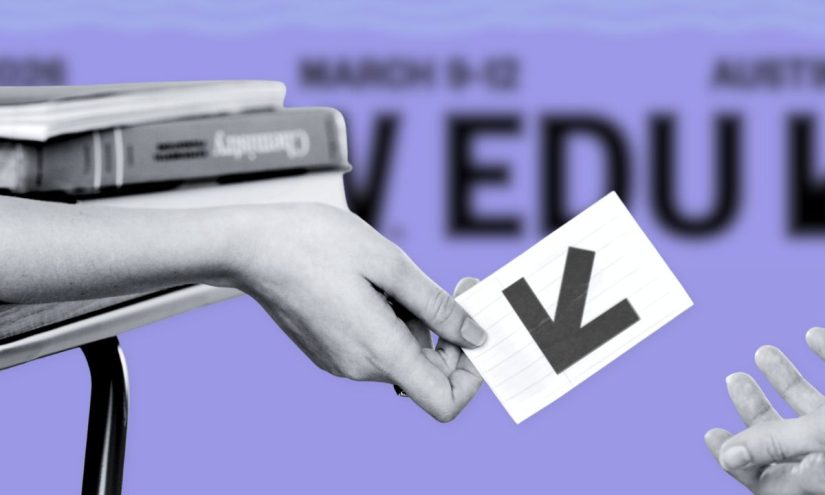
South by Southwest EDU returns to Austin, Texas, running March 9–12. As always, it’ll offer a huge number of panels, discussions, film screenings, musical performances and workshops exploring education, innovation and the future of schooling.
Keynote speakers this year include Monica J. Sutton, creator and host of the children’s education series Circle Time with Ms. Monica, Yale psychology professor and Happiness Lab podcast host Dr. Laurie Santos, appearing alongside Common Sense Media’s Bruce Reed, and bestselling author Jennifer B. Wallace, whose work centers on the human need to feel valued — and to add value.
Also featured: former Presidential Science Advisor Arati Prabhakar, who will join a panel on “moonshot” thinking and the future of AI-driven learning. And a new documentary traces the career of longtime Sesame Street star Sonia Manzano.
Artificial intelligence this year plays a bigger role than ever. Dozens of sessions examine AI’s expanding role in classrooms, from adaptive tutoring and authentic assessment to teacher burnout, algorithmic bias and what it means to be literate in an age when machines can write, reason and create.
This year, the Austin Convention Center, which typically hosts the event, is under construction. So sessions will be held at four venues around downtown Austin. Organizers are also planning a “SXSW EDU Clubhouse” at the historic Antone’s, which will host daily performances, keynote livestreams and social events each night.
What Education Leaders Can Learn from the AI Gold Rush
Because of the event’s multiple venues, space may be limited, so organizers recommend booking reservations for keynotes, featured sessions and workshops. They’ve provided an explainer with details.
To help guide attendees, we’ve scoured the 2026 schedule to highlight 26 of the most significant presenters, topics and panels:
Monday, March 9:
9 a.m. — Missing Millions: Confronting the Attendance Crisis: Researchers, district leaders and family engagement specialists examine the chronic absenteeism epidemic that has left millions of American students disconnected from school since the COVID pandemic. This panel presents the latest data on what is actually driving absenteeism — from housing instability and health crises to school climate and whether students feel they matter. It’ll explore which interventions are producing genuine, sustained improvement.
11 a.m. — The Honesty Gap: Why Your Kid’s Test Score Lied to You: This panel presents evidence that score inflation on standardized tests, state-level proficiency standards and the federal retreat from accountability are making it harder than ever for families to get an accurate picture of their child’s true academic standing — and what policymakers can do about it.
1:30 p.m. — Reimagining Early Learning: Connection in a Digital Age: This Opening Keynote features Monica J. Sutton, educator, entrepreneur and creator of Circle Time with Ms. Monica, who traces her journey from preschool classroom to digital learning spaces reaching millions of families worldwide. Sutton challenges educators to evaluate every innovation through a developmental lens, asking: Does this technology honor how young children learn, grow and thrive, while protecting curiosity and connection?
2 p.m. — From Mystery to Mastery: What Students Say About AI Literacy: What do real students think about AI? How do they want to learn about it? This session, by MIT Media Lab’s Jaleesa Trapp and LEGO Education’s Jenny Nash, explores strategies for building AI literacy through hands-on computer science that fosters critical thinking and ensures safe, responsible AI use.
Pre-K Teachers Are Hesitant to Use Artificial Intelligence —Why?
2 p.m. — Civic Education in a Divided Nation: Civics teachers, researchers and policy advocates will examine how teachers are navigating the nearly impossible task of teaching democracy, elections and civic participation in classrooms where students and families often hold deeply opposed political views. The panel shares new findings from America’s Promise Alliance’s State of Young People research and explores strategies for creating classrooms where hard but evidence-based conversations happen productively — and where students develop the civic skills needed to participate in and repair a fractured democratic system.
4 p.m. — Born to Be Wired: 4 Rules for AI in Early Childhood: Child development experts offer a science-backed framework for evaluating AI for young learners without compromising the play, exploration and human attachment that are foundational to healthy development. This session offers an “urgent exploration” of AI’s impact on brain architecture and what educators, parents and policymakers must know to protect young minds.
4 p.m. — Uncheatable: Authentic Assessment in the Age of AI: A panel of educators explores the causes of low student engagement, absenteeism and cheating, sharing classroom-tested solutions for creating assignments that are cheat-resistant by design. Rather than relying on cheat-detection software and pedagogy that punishes students for cheating, panelists will share how to foster a culture of academic integrity based on student agency, purpose and ownership of learning.
4 p.m. — Feeding Kids Like We Give a Damn: Transforming School Food: In this featured panel, Rep. Jim McGovern (D-Mass.), Chef Ann Foundation CEO Mara Fleishman, University of Pennsylvania student Maya Miller and Duke World Food Policy Center Director Norbert Wilson make an evidence-based case that school nutrition is an educational issue, not merely a logistical one. Panelists connect chronic hunger and poor nutrition directly to cognitive function, attendance, behavior and academic performance, and present district-level models that have transformed school meals into assets for learning.
Tuesday, March 10:
9 a.m. — Exclusion to Empowerment: Women, Tech, & the Future of Learning: This featured session stars Roya Mahboob, CEO of the Digital Citizen Fund, who will draw on her experience growing up in Afghanistan to trace how exclusion compounds across the pipeline from K–12 classrooms to corporate boardrooms. Mahboob offers evidence-based interventions that have demonstrated real impact on girls’ participation and persistence in tech, as well as a vision for education that is inclusive, practical and full of possibility.
Students Want Schools to Incorporate AI in Learning But Express Some Fears
9 a.m. — Voice AI & Assessments: Science, Ethics, & Potential: A candid discussion on the science, ethical considerations and implementation challenges of using Voice AI for assessment in K–12 classrooms. Learn what’s promising, what’s problematic and what’s on the horizon as experts explore how Voice AI differs from other AI tools such as large language models (LLMs), and how it can be integrated in ways that truly support students and educators.
12:30 p.m. — Improving Young Minds & Mental Wellbeing in the AI Era: In this keynote, Bruce Reed, Head of AI at Common Sense Media, and Dr. Laurie Santos, Yale psychology professor and host of The Happiness Lab podcast, examine how rapidly evolving AI technologies and social media are shaping young people’s mental health — and how families, educators and policymakers can respond. They explore the science of well-being, the risks of algorithm-driven systems and common-sense guardrails to protect young minds.
2 p.m. — Reframing Dyslexia as a Hyper-Ability: This panel challenges the deficit framing that has long defined how schools, families and students themselves understand dyslexia. In an interactive session, a think tank-style panel will present a strength-based model of dyslexia support and examine how AI tools are beginning to unlock academic access for students whose abilities have been systematically undervalued.
3 p.m. — Left Behind: Director Anna Toomey’s feature documentary tells the story of five mothers determined to establish the first public school in New York City for children with dyslexia. Toomey follows their battle to open the South Bronx Literacy Academy, addressing a learning disability that affects about 20% of the public. A post-screening discussion connects the film’s themes to national debates about reading instruction and equitable access.
From Education to Anthropic: What Impact Will AI Have on Learning?
4 p.m. — What If Less Is More? Chronic Absenteeism’s Unexpected Fix: As chronic absenteeism reaches historic highs, schools are doubling down on academics, interventions and incentives. But they may be missing underlying emotional and psychological factors driving absenteeism: stress, anxiety and lack of belonging. This session looks at how rest, youth voice/choice and emotionally safe environments can re-engage students.
5:30 p.m. — STREET SMART: Lessons from a TV Icon: Director Ernie Bustamante’s feature-length documentary offers a portrait of Sonia Manzano, the trailblazing actress who played Maria on Sesame Street for 44 years. A conversation with Manzano herself follows the screening, exploring how public media can reach children when formal schooling often fails, and what Sesame Street’s legacy means in the age of AI-generated children’s content.
Wednesday, March 11:
10 a.m. — Schooled: The Musical: This performance offers an early look at a show in development that began as a teacher performance at a school meeting. In this Hamilton-meets-The Sound of Music-meets-Good Night and Good Luck story, set against today’s culture wars, three high school students and their teachers navigate questions of identity, purpose and what school can and cannot teach. A Q&A with Peter Nilsson, the show’s creator, follows the performance.
11 a.m. — What Does it Mean to be Literate in the Age of AI?: This solo session by Toby Fischer, an Ohio educator, offers a sweeping reimagination of literacy for the 21st century, arguing that reading and writing instruction must now encompass the ability to critically evaluate AI-generated text, recognize the hallmarks of synthetic content, prompt AI systems effectively and to understand the social and ethical contexts in which AI-generated language circulates.
12:30 p.m. — Keeping Teachers at the Center of AI in Schools: This keynote by Adeel Khan, Founder & CEO of MagicSchool AI, makes the case that teacher expertise, relationships and professional judgment must guide technological change. Drawing on his experience building the popular platform, Khan will share unfiltered insights on what’s working and what’s not, offering a framework for evaluating AI tools through the lens of educator agency.
2 p.m. — Failing Forward: Moving from Tools to Transformation with AI: This panel examines why so many school AI initiatives rely on tools that “just aren’t there yet.” Panelists share case studies of implementations that stumbled, the lessons of those failures and the educator-driven, grassroots efforts that can move schools from dabbling with AI tools to using them for real instructional transformation.
Thursday, March 12:
10 a.m. — Moonshots That Move the Needle: This featured panel convenes former Presidential Science Advisor Arati Prabhakar, Renaissance Philanthropy President Kumar Garg, Carnegie Learning VP of R&D Jamie Sterling and Bezos Family Foundation Chief of Staff Eden Xenakis to explore how bold learning goals can accelerate AI-driven innovation in education. They’ll examine how “moonshot-centered” models can rally diverse innovators around a shared outcome and catalyze the funding needed to scale breakthroughs.
10 a.m. — From TikTok to Toolbelt: Preparing Gen Z for Work: Dubbed the “toolbelt generation,” more than half of Gen Z respondents in a recent survey said they’re considering a skilled trade career. And schools are working to modernize career preparation, including by tapping immersive technology to expose students to in-demand skilled trades. This panel, moderated by The74’s Greg Toppo, will discuss how we can harness tech to engage students in learning while preparing them to successfully meet workforce demands.
11:30 a.m. — Afraid of AI? In Cleveland, It’s Enabling Economic Mobility: This session offers a ground-level counternarrative to AI anxiety, presenting a community college and workforce development partnership in Cleveland that is using AI-powered tools and training to open new economic pathways for adults who were left behind by earlier rounds of technological change. Speakers will examine what equitable AI adoption looks like in a post-industrial city and what conditions made the initiative work.
Why AI Literacy Instruction Needs to Start Before Kindergarten
11:30 a.m. — Rethinking Higher Education to Build an AI-First Workforce: Leaders from higher education, industry and workforce policy examine whether universities are structured to produce graduates who can thrive in a labor market being remade by AI. The panel will ask which degrees and credential pathways are producing AI-ready graduates, where institutions are falling behind, and what structural changes will move the needle most.
11:30 a.m. — The Reading Reboot: Directed by Scott Barnett, this feature-length documentary follows bestselling author James Patterson to the front lines of America’s reading crisis to examine how the Science of Reading — a vast body of evidence-based research — is changing how children are taught to read. A post-screening discussion with literacy researchers and classroom teachers will examine what the film gets right and what systemic change will actually require.
2 p.m. — From Burnout to Bandwidth: Using AI to Reclaim Your Day: This workshop, conducted by two top officials with the Illinois-based Education Research and Development Institute, will offer practical AI tools that automate routine tasks, generate content, analyze data and simplify communication, freeing teachers to focus on students and strategy and reducing the risk of burnout.
2:30 p.m. — How to Support Resilient Youth in an AI World: This featured panel, with Martin McKay of Everway, Hello Sunshine CEO Maureen Polo and the Brookings Institution’s Rebecca Winthrop, draws on a landmark report spanning 50 countries to explore what it means to protect children’s cognitive, social and emotional development in an AI-saturated world. Speakers will move beyond the question of whether AI should be used in schools to ask how it can be designed to strengthen young people’s capacity to think, relate and thrive.
Did you use this article in your work?
We’d love to hear how The 74’s reporting is helping educators, researchers, and policymakers. Tell us how
