

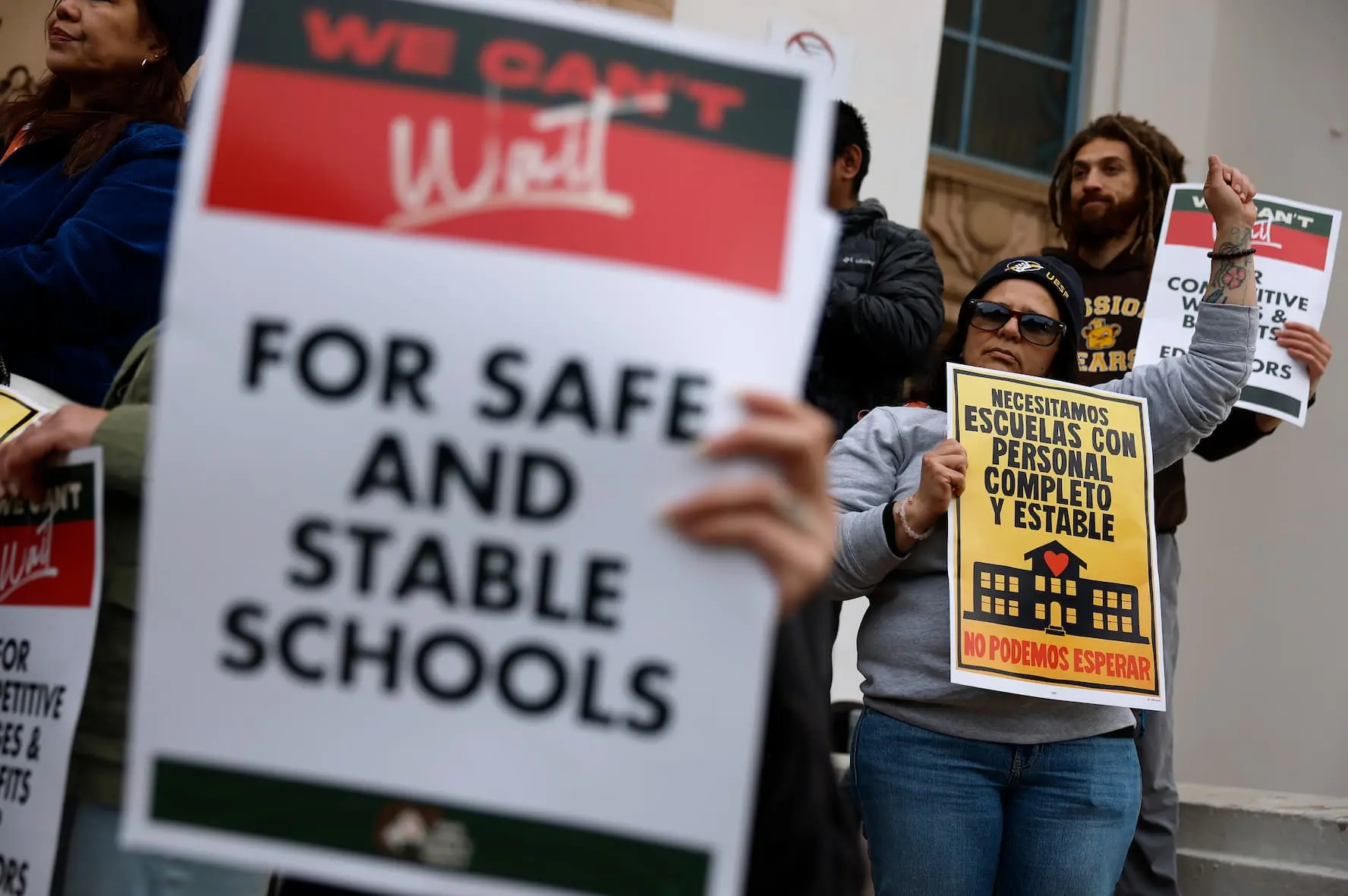
The COVID-19 pandemic wreaked havoc on our schools. Test scores on the National Assessment of Educational Progress, which were already declining going into the pandemic, dropped off precipitously and have yet to recover. Attendance fell dramatically. Chronic absenteeism surged during the heavily disrupted 2021-22 school year and remains well above the pre-pandemic level today. These academic and engagement challenges continue to affect our schools.
The pandemic also caused persistent changes to school operations. Among the more notable changes is a greater emphasis on students’ mental health, which has led to, among other things, teachers giving students less homework and allowing students to retake exams, resulting in post-pandemic grade inflation. Classrooms have also become broadly more reliant on technology.
Public confidence in our schools has eroded alongside these shifts. A 2025 Gallup Poll found that 73% of adults are dissatisfied with public schools, up from 62% in 2019 and 57% at the turn of the century. Public trust in our schools is at its lowest point in recent history.
Not surprisingly, teachers have struggled, too.
In a recent article, we document changes in teacher working conditions from 2017 to 2023—spanning years before, during, and after the pandemic—using annual data from the 5Essentials (5E) Survey in Illinois. We find that teacher working conditions declined with the onset of the pandemic, and they continued to decline after schools returned to normal operations. Teachers report worsening working conditions along most dimensions, with the largest declines in working conditions that involve interactions with students and their families. Our findings, combined with data from other sources, point to a clear message from teachers about what’s not working in schools. But is anyone listening?
What teacher surveys tell us
Survey data provide valuable insight into how teachers experience their jobs and their day-to-day responsibilities. RAND’s American Teacher Panel, for example, asks about issues ranging from salary satisfaction to the use of artificial intelligence in the classroom. Other research-based surveys explore related topics, though often with narrower scope. Many school districts also collect teacher feedback through their own instruments; however, such results are not always publicly available.
The 5E Survey in Illinois is an appealing survey instrument to measure changes in teacher working conditions since the pandemic. It is a statewide survey developed and administered by researchers at the University of Chicago Consortium on School Research, and it is used by the Illinois State Board of Education to monitor school conditions. It is an exceptionally rich survey that includes 20 different working-condition indicators, many of which have been shown by prior research to be of great importance to teachers. Examples include teacher safety, the level of classroom disruptions, and instructional leadership.
The 5E Survey has been administered annually in Illinois for many years. Since 2019—when it was incorporated into the state’s Every Student Succeeds Act (ESSA) plan—it has near universal coverage of Illinois schools. It also has a high teacher response rate. This reduces concerns about responses from teachers that are not representative of the larger workforce.
Illinois teachers’ working conditions declined with the onset of the pandemic, and the decline continued after the pandemic
From 2017 to 2019, data from the 5E Survey indicate that teacher working conditions were stable or improving, but this changed when the pandemic hit. Between 2019 and 2023, teachers reported large, across-the-board declines in their working conditions. The declines along some dimensions coincided with the onset of the pandemic. However, it surprised us that, along many dimensions, the largest declines occurred after the pandemic—between the spring of 2021 and the spring of 2023.
These broad trends are shown in Figure 1, where we combine the 20 individual working condition indicators into two indices that capture conditions related to: (a) the professional work environment, and (b) teacher interactions with students and their families. Both indices indicate a substantial decline in working conditions, and the largest declines relate to teachers’ interactions with students and their families.
That teachers report a substantial increase in defiance, inappropriate language, threats, and serious disruptions should concern all of us. It is tempting to blame smartphones, but widespread smartphone use predates the pandemic, and the disruption trend did not turn sharply negative until after 2019. Smartphones may be a contributing factor, but teachers are telling us that something since the pandemic has fundamentally altered the classroom environment.
Is anybody listening?
Our findings mirror those in other surveys and similarly spirited investigative journalism. RAND’s 2024 State of the American Teacher Survey asks teachers about the most stressful part of their jobs, and the most common answer is managing student behavior, given by 45% of teachers. EdWeek’s 2026 survey finds nearly two-thirds of teachers (64%) reported that student behavior has gotten either “a lot” or “a little” worse in the past year. The Milwaukee Journal Sentinel (MJS) also recently analyzed exit surveys from Milwaukee Public Schools. Although these surveys are optional and their response rate is unknown, a substantial share of departing teachers cite lack of support, lack of respect, or safety concerns as reasons for leaving. One teacher wrote, “I wish we could find ways to deal with disruptive students so they stop impacting the learning of the students that show up every day wanting to learn.”
The decline in teacher working conditions is problematic for two key reasons. First, it is surely contributing to the declining prestige and desirability of the teaching profession. Everyone knows a teacher, and people talk. Amid ongoing (and seemingly never-ending) concerns about teacher shortages, we should re-focus on professionalizing teaching by allowing teachers to focus on what they’re trained to do, which is teach. Teachers are telling us that they increasingly feel they cannot do this.
Second, teachers’ working conditions are students’ learning conditions. Test scores cratered during the pandemic and have yet to recover. There are also other troubling indicators that K-12 schools are failing in their core educational mission, such as a recent report from UC San Diego—historically an elite public university—showing that an alarming share of incoming freshman lack basic middle- and elementary-school arithmetic skills.
Teacher reports of an increasingly disrupted learning environment indicate a clear problem in our schools. But teachers’ warnings will only matter if we choose to hear them.
In Milwaukee, the MJS reports that the district collects the exit survey data, but there is no indication it uses the data for anything. Disconcertingly, the district piloted a digital exit survey last year, but the Interim Chief School Administration Officer told the MJS “he was unsure if they saved the results anywhere.”
Teachers are telling us that our schools are in crisis. We need educational leaders who are both willing to listen and can rise to meet this moment.
