

Get stories like this delivered straight to your inbox. Sign up for The 74 Newsletter
Americans used to respect one another despite deep disagreements. Boomers, Gen X and Millennials learned about such across-the-aisle partnerships in school and in the news: Supreme Court Justices Antonin Scalia and Ruth Bader Ginsburg had lunch together almost every day.
The late Justice Oliver Wendell Holmes urged “not free thought for those who agree with us, but freedom for the thought that we hate.” Abraham Lincoln mused, “I don’t like that man; I must get to know him better.”
These days, many Americans not only lack respect for those with different views, but actually think they are worse people. Opinions of one’s opposing party are historically negative. A 2022 Pew study found that large majorities of both Republicans and Democrats considered members of the other party immoral, dishonest and closed-minded.
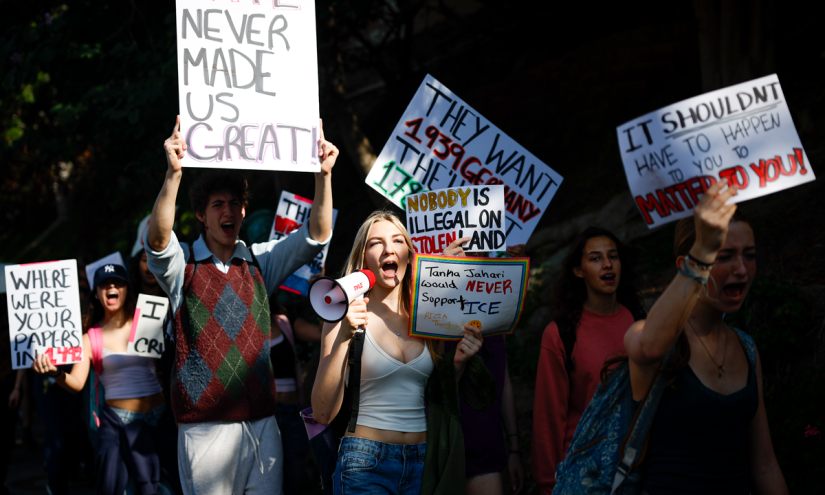
Unfortunately, but not surprisingly, such dislike for and dehumanizing of people with different views has taken root among young people. According to an NBC poll, half of college sophomores would not room with someone who voted differently than they did, most wouldn’t date such a person, and almost two-thirds did not think they would marry one.
Saddest of all: Researcher Isobel Heck has found that young people are as polarized as adults by sixth grade, and the roots of pernicious us-and-them thinking emerge as early as preschool.
Some observers believe increased division could be good if anger at “the other side” drives civic participation or clarifies people’s positions. However, animosity also fuels hatred and violence, and leads some people to withdraw from shared decision-making and public conversation. At an October gathering, a high school senior reported that many young people simply won’t voice their thoughts for fear of backlash.
Amid Polarization, Civics Education Enjoys Bipartisan Support, Survey Finds
How can adults ask Gen Z, Gen Alpha and those who come after them to engage thoughtfully across differences when grownups themselves do not work across divides? Here are five strategies for adult mentors:
- Give young people opportunities to explore ideas. Classrooms and school hallways have become high-risk places for disagreement. Students fear being judged in ways that cost relationships and permanently mark them on social media. But conversations may also be difficult with family members, who may be unavailable or unprepared for tough discussions. Young people need forums where they can test ideas without consequences, with trusted, well-prepared adults who won’t treat them like children.
Youth organizations and community centers can offer those forums. Leaders — mentors, clergy, coaches and program directors — must create thoughtfully designed discussion opportunities. Afterschool or weekend programs can be especially valuable in helping socioeconomically disadvantaged young people explore ideas when family, school or social resources are less available.
- Be vigilant when airing perspectives and creating space for discussion. Even when teachers, mentors and clergy try to frame things benignly, there is almost no neutral discussion of sociopolitical issues right now. Being well-intentioned is not enough. Leaders who engage with young people must recognize the difficulty, be clear about their own biases, sharpen their own preparation to navigate difficult conversations, show courage and signal and model openness. National initiatives such as Essential Partners, Unify America, Braver Angels and Living Room Conversations can give adult leaders their own opportunities to observe, practice and model open discussion.
- Talk to young people directly about your own changes of heart. While vulnerability takes courage, it is important for leaders and mentors to admit to young people that they were once firmly convinced of something that later seemed like the dumbest thing they ever heard. They can tell the story of how they developed opinions, checked sources and learned from others. Young people say it is daunting to approach mentors who are firm and eloquent in their convictions. Help them understand how perspectives evolve and model building confidence in a viewpoint that starts from uncertainty.
- Begin with a low-stakes topic. Start by discussing issues that are not so charged: the best candy, the coolest game, the worst TikTok challenge. If the young people are ready, move on to more complex approaches that still allow non-threatening progress — like dilemma analysis, in which participants assess different values, needs and options rather than quickly seeking one right solution to a thorny issue. This gives them a trial run at thinking about stakeholders and perspectives. Building this muscle in a group when the stakes are low can make more complicated conversations — like discussions of climate change and politics — possible.
- Dispel zero-sum thinking. Being certain that “our” side winning is best for everyone while “their” side winning is bad for everyone is a terrible binary habit of mind to pass along. Leaders, mentors, teachers and family members who engage with young people can help them develop the “yes and” approach as opposed to the constant “but” response. This models empathy, a willingness to explore common ground and an openness to hearing varied perspectives.
It’s the leaders of today who created the situation young people are now struggling to deal with. It is the responsibility of all adults to help tomorrow’s leaders find a better path.
Did you use this article in your work?
We’d love to hear how The 74’s reporting is helping educators, researchers, and policymakers. Tell us how
