

Key points:
Schools have seen rising problems with student behavior since the pandemic. For too many K-12 districts, these student behavior challenges are leading to violence against teachers. According to a survey from the National Education Association (NEA) and the American Psychological Association (APA), 80 percent of teachers experienced at least one incident of verbal or threatening violence from students during the 2021 to 2022 school year and 56 percent experienced incidents of physical violence from students.
Violence against teachers in the workplace contributes to issues like burnout and some educators leaving the profession altogether. To support teachers in doing their jobs, and to create safe and positive learning environments, districts must consider these incidents in their approach to school safety.
The following three strategies are ways in which districts can help protect teachers from student-behavior-related violence.
Include student behavior incidents as part of comprehensive school safety planning
When many people think of school safety, they think of lockdowns and preparing for major school-wide threats. Comprehensive school safety plans must include all types of incidents, from the every day to the extreme.
Educator safety needs to be prioritized as a central part of proactive safety planning, especially as student behavior challenges rise. Having plans in place, such as who will support teachers as back up when an incident occurs or who will be notified, and when, is critical. Additionally, providing teachers and staff with proper de-escalation training can help them mitigate incidents before they intensify.
Empower teachers to get support quickly: How the right technology can help
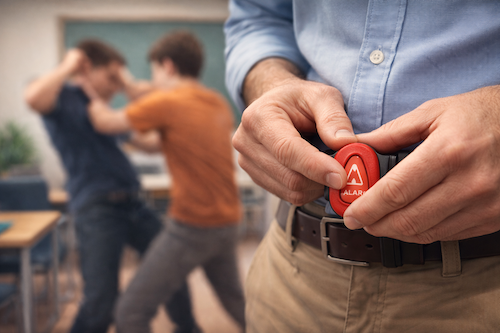
Sometimes, teachers need support to de-escalate situations, and technology can help improve response times and get staff on site quickly. When teachers are equipped with a wearable panic button, they can trigger an alert that shares their exact location.This reduces response times and can send appropriate support staff, from security personnel to counselors, to the location of the incident. When a teacher has a wearable panic button, they have backup with clear information quickly. When the right people are notified immediately, confusion is replaced by coordination and clarity. Without this technology, they must either call for help or leave the location to find help, which can lead to delays. For many, leaving a classroom to get help is not possible because they have other students for whom they are responsible. Look for technology that is simple, easy to use, and reliable in different types of scenarios. Make sure educator panic buttons do not rely on wifi to work.
Use data from past behavioral incidents to strategically adjust safety plans
Good safety planning involves constantly adapting based on each schools’ unique needs. Regularly looking at data, such as the time of day incidents are occurring, grade levels, ages with the most student behavior challenges, and locations where incidents are occurring most frequently can allow administrators to uncover patterns. Schools and districts can then address these situations more proactively by making adjustments to staffing and protocols. For example, if a district notices that incidents are often occurring in the mornings or in certain areas of the school, they can deploy SROs or additional faculty to these locations for extra monitoring so that teachers have more support available.
Districts must prioritize comprehensive planning to support teacher safety in the workplace. By proactively planning protocols for responding to student behavior incidents, deploying technology to support teachers, and conducting regular reviews of data, districts can make workplaces safer places for educators. Safer workplace environments reduce educator turnover and burnout, while allowing teachers to focus on their mission of educating students.
Dr. Roderick Sams, CENTEGIX
Dr. Roderick Sams, a former high school principal, is the Chief Development Officer at CENTEGIX, a provider of incident response solutions.
Latest posts by eSchool Media Contributors (see all)
