

The cancellation of over 80% of obligated funds of foreign assistance in 2025 ended 64 years of USAID’s leadership in global development and international education. While only about 3% of USAID’s 2024 spending of $40 billion went to education, U.S. funding was catalytic and complementary, giving both local and global visibility to the transformative power of education. This commentary goes beyond current conversations on the impact of USAID’s sudden departure from Africa’s development space, focusing instead on how countries such as Nigeria are responding by building new relationships with external and national actors and a new development model.
Between 2001 and 2024, USAID awarded $131.6 billion in foreign assistance to sub-Saharan countries. In 2024, this amounted to $12.7 billion, representing 31% of the agency’s total foreign assistance commitment. One of the top recipients of U.S. assistance in the region, Nigeria received $930 million in USAID disbursements in 2024, with around $24.3 million, or 2.6%, spent on education.
USAID’s education funding in Nigeria addressed the unmet needs of millions of out-of-school children, and complemented underfunded programming areas such as girls’ education, foundational learning, female teacher development, and integrated early childhood development. USAID was also the coordinating agent among education development partners, anchoring Nigeria’s Partnership Compact for the education sector, and serving as co-chair of the System Transformation Grant (STG) Task Team. USAID funding was also critical for education in humanitarian settings in Nigeria.
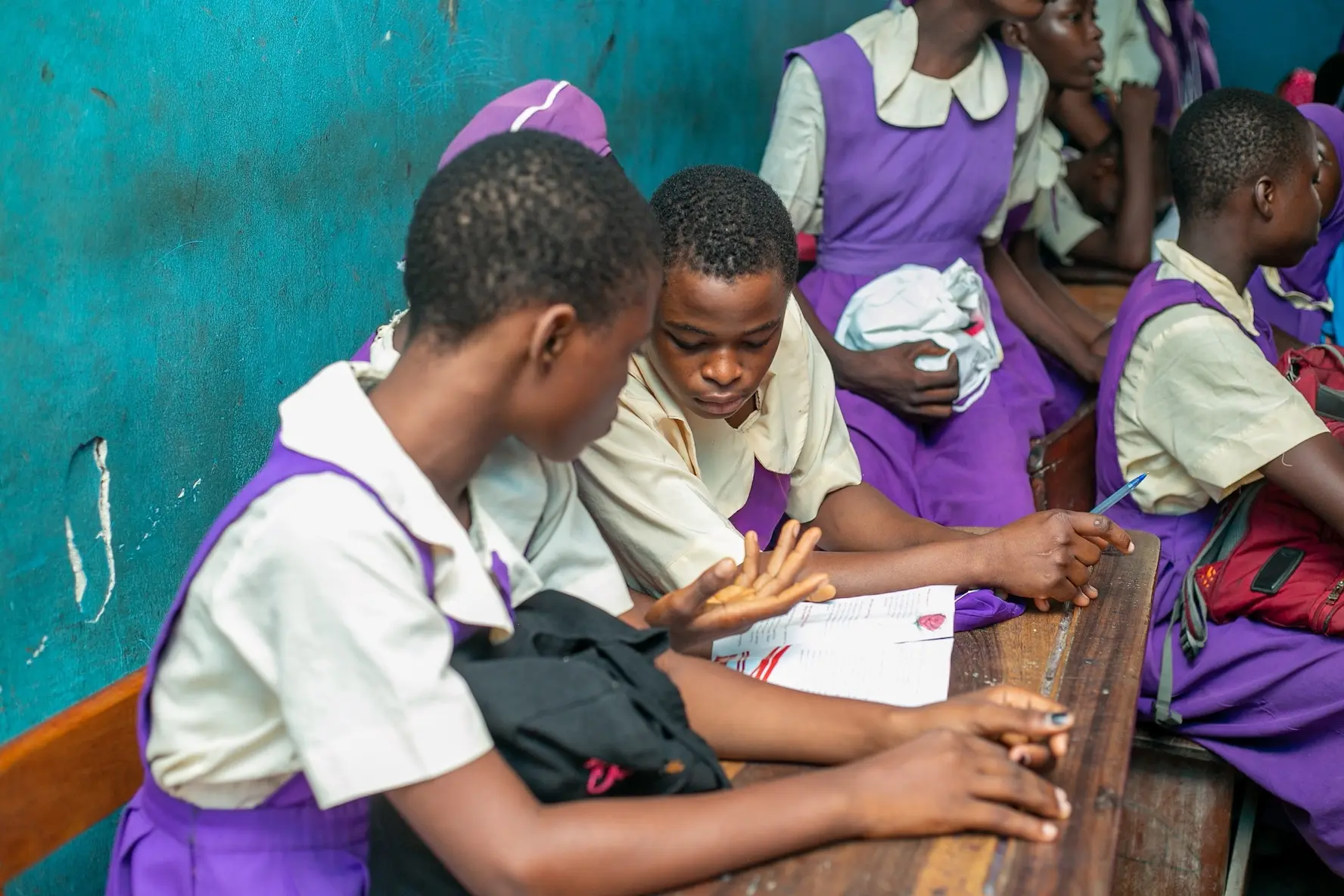
USAID’s retreat from Nigeria’s education system saw the hasty closure of flagship education projects such as Leveraging Education Assistance Resources in Nigeria (LEARN) to Read (2022-2026) and Opportunities to Learn (2022-2027). Program closure was especially hard-hitting in the humanitarian space. With USAID’s retreat, only around 38% ($13.7 million) of donor funding was released to the humanitarian education sector as of December 2025. USAID’s exit from Nigeria’s education space triggered multiple school closures in conflict-affected areas; terminated school safety projects, thereby reducing security for girls; and led to the retrenchment of thousands of female teachers. But perhaps most importantly, USAID’s exit marked the end of a movement for aid localization, downward accountability, and democratization of donor engagement in Nigeria’s education space.
Nigeria’s government responded quickly to USAID’s abrupt exit by launching a dual strategy of domestic resource mobilization complemented by new measures for efficiency and accountability in the education sector. Both approaches were affirmed by the Federal Minister of Education, Dr. Tunji Alausa, as early as June 2025, but were formally articulated on December 9, 2025, by the vice president at the inaugural Nigeria Education Forum (NEF), appropriately themed “Pathways to Sustainable Education Financing.” As the Forum’s concept note stated: “Education funding is currently inadequate to meet the needs of the system and the learners it serves in Nigeria. As at 2024, Nigeria’s education spending stood at 3% of its GDP, which is below the 4-6% benchmark and only about 8.2% of its budget allocated to education a far cry from the 20% UNESCO benchmark.”
To address this funding crisis, the vice president affirmed the government’s commitment to increasing public financing through new initiatives and called upon domestic stakeholders such as private sector operatives, local communities, and state governments to complement the government’s education sector financing. In addition, the VP addressed the second strategy by promising efficiency measures in Nigeria’s new education administration, such as prompt release of funding, transparent resource utilization, and strict adherence to education action plans.
Preliminary analysis of the 2026 National and State Appropriation Bills points to significant allocations to the education sector. Nigeria’s 2026 national budget, “Consolidation, Renewed Resilience and Shared Prosperity,” elevated the education sector to the third-highest-funded sector, coming just behind defence and infrastructure with a ₦3.5 trillion ($2.52 billion) allocation. While significant, this 2026 allocation does not represent an increase from 2025, and represents only 6% of the 2026 national budget (falling short of UNESCO’s 15 to 20% recommendation).
As Nigeria’s National Assembly debated funding gaps in the education sector, a new line of financing for education emerged from an unexpected domestic source. For the first time in Nigeria’s post-independence history, charitable donations from philanthropists were offered up to fill public finance gaps. The first came from Aliko Dangote, Africa’s richest man, who launched the Aliko Dangote STEM Scholarship and Girls Education program on December 11, 2025, committing to a ₦1 trillion or $688 million 10-year endowment that aims to “expand access to higher education, empower innovation, and give young Nigerians the tools to compete globally.” Over the period 2026-2036, the Scholarship program aims to reach 1,325,000students across Nigeria’s 36 states and the Federal Capital Territory (FCT).
A second story of domestic philanthropic support for Nigeria’s education sector soon followed on December 30, with the announcement that the Education Fund, launched by the First Lady of Nigeria in September 2025, had generated ₦25.5 billion ($179 million) in charitable donations from Nigerians for the completion of the country’s national library. Given the presence of leading private sector companies such as Premium Trust Bank, Samsung West Africa, and Seplat Energy as co-sponsors of the Nigeria Education Forum and the recent launch of the corporate social responsibility commitment of Nigeria’s Tier 1 Capital bank—Zenith Bank, to girls’ menstrual hygiene, point to a future of more charitable initiatives and support to the education sector.
In addition, there are signs of improved oversight of funds designated for the education sector. In December 2025, the Nigeria National Assembly summoned the Federal Minister of Education to appear before the Committee Hearings to account for the millions of Naira spent on safe schools’ programs, in light of the school abductions in Kebbi and Niger states that took place on November 1 and 21.
While domestic resource mobilization and efficiency dominate the Nigerian government’s official policy response, the government’s de facto actions and agreements signal a continued commitment to external financing through grants and loans. World Bank loans to the education sector, which are viewed by the Nigerian government as a “productive partnership in improving Nigeria’s education system,” fill critical funding gaps providing much needed financing for girls’ education, skills/technical and vocational education and training (TVET), and empowerment programs; systems strengthening; basic and foundational education interventions; education in emergencies; and other areas of critical need. The World Bank portfolio underscores the scale of external financing currently supporting Nigeria’s education sector. As of 2025, Nigeria’s active World Bank education portfolio totals $3.25 billion in loans, credits, and associated grants. Collectively, they constitute a substantial parallel financing stream shaping reform priorities and implementation within the education system amid USAID exits.
In addition to World Bank loans, the Nigerian government has signalled, in its draft Official Development Assistance (ODA) Policy and in its new One Policy approach to humanitarian assistance, its broad receptiveness to external financing on the condition that they align with and support the government’s policies and programs. A July 2025 investment of $288 million from the Global Partnership for Education (GPE), for example, aims to enhance foundational learning outcomes in Nigeria with a design that “aligns with domestic reform efforts, foster collaboration … and aspires to far-reaching socio-economic impacts”. While GPE is an established partner working across Nigeria’s education sector since December 2012, Co-Impact, a mission-driven global philanthropic collaborative working to advance inclusive systems change, gender equality, and women’s leadership seems set to be a new and exciting external funder to Nigeria’s humanitarian education sector. As 2026 rolls out, Co-Impact proposes to “help strengthen education and learning for children in conflict and crisis-affected states in Nigeria, where many have experienced disruptions to schooling, trauma, and exclusion that hinder their ability to learn, heal, and thrive, and also in recovery settings where education systems are stabilizing but remain fragile”. Given the 62% funding gap in the humanitarian education sector, Co-Impact’s planned intervention is both timely and strategic.
Co-Impact’s proposed intervention in Nigeria’s post-USAID programming ecosystem offers an opportunity for the global education community to learn important lessons beyond gap-filling. Lessons can be learned about how external impact investors can align with national governments’ education priorities and new coordination mechanisms, while at the same time supporting civil society organizations (CSOs) as partners to implement a strong social accountability role, tracking budgets, and conducting evidence-informed policy advocacy.
Such an approach will equip Nigerian nonprofits with the capacity to track the allocative efficiency and gender-responsiveness of new domestic and external resource inflows to the education sector while at the same time, developing new technical skills for service delivery and awareness creation activities supportive of the government’s education sector priorities and programs.
The post-USAID landscape for education sector programming in Nigeria is reflective of the complexity, blended nature, and dynamic reality of education financing and programming in Africa. This is a landscape in which national governments, faced with USAID’s exit, are increasing commitments to coordination and control, shaping a new reality in which domestic and external impact investors, as well as civil society organizations, must balance between alignment with government and an accountability role for CSOs.
