

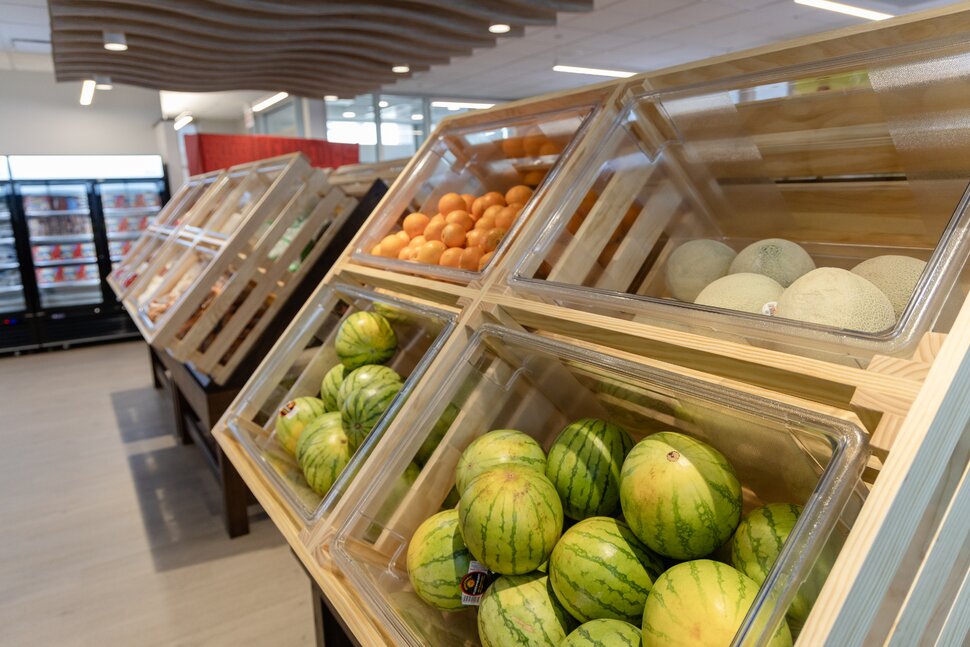
Veronica Herrero, president of the City Colleges of Chicago Foundation and executive vice chancellor of City Colleges of Chicago, shared insights on the college system’s recently expanded food pantry. The responses have been lightly edited for length and clarity.
U.S. News: The City Colleges of Chicago recently expanded its student food pantry into the Kennedy-King College Statesmen Market. What motivated this expansion, and how does this new model differ from the previous one?
Veronica Herrero: As part of its broader effort to address students’ basic needs, City Colleges of Chicago administered a basic needs survey, which revealed that 60% of Kennedy-King College students identify as food insecure, compared to 50% across the entire City Colleges system.
City Colleges of Chicago
U.S. News: How many students is the market equipped to support, and what has the feedback been from the CCC community?
Herrero: Since the launch of the newly enhanced and renamed Statesman Market in February, students have visited the market almost 1,500 times.
- The market receives weekly deliveries of approximately 4,000 pounds of food, with quantities adjusted based on demand and increasing as needed.
- In addition to food, the market’s structure and operations are designed to minimize barriers and maintain a welcoming environment.
- Feedback from the college community has been positive, with many students and staff highlighting how the space has improved the overall campus experience and provided a welcoming place to grab food on the go and for home.
- Students highlight the reliability of weekly access to food, the quality and variety of available items, and the critical role the market plays in supporting their overall well-being and ability to persist academically.
U.S. News: What advice would you give to other institutions looking to establish their own student markets, even on a smaller scale?
Herrero: We would recommend starting with a clear understanding of student need and building strong partnerships, both internal and external.
- It’s also important to create a welcoming, stigma-free environment and to integrate the market into broader student success strategies. Even on a smaller scale, consistency, visibility and cross-department collaboration are key to success.
- Build the market around student dignity. Let students shop freely instead of receiving pre-packed bags. Include culturally diverse foods – like rice, tortillas, lentils, plantains, spices and halal/kosher options – so that students from different backgrounds feel seen and can cook familiar meals.
- Find a strong local partner – like City Colleges of Chicago did with the Greater Chicago Food Depository –that shares your mission, understands the impact and the “why.”
- Set up a feedback system to better understand student needs and use their input to improve how the market serves them.
- Design the space to feel welcoming and stigma-free because marketplaces like this build community and inclusiveness.
Get Higher Ground in your inbox each week!
The must-read newsletter for leaders shaping higher education’s future.
By clicking “Sign Up”, you will receive the latest updates, including emails, from U.S. News & World Report and our trusted partners and sponsors, and you agree to our Terms and Conditions & Privacy Policy.
