

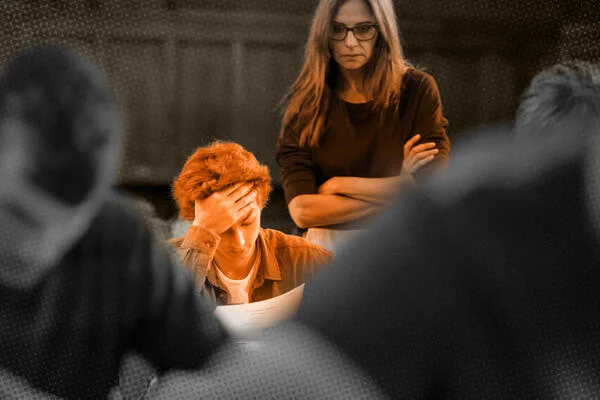
Princeton University’s faculty voted this week to proctor all in-person exams, fundamentally altering a 133-year-old honor system that has relied on students to monitor for and report cheating. But it was students, not just faculty, who pushed for the change. Students have found it increasingly difficult to identify cheating during in-class exams and fear teasing, doxing and ostracization by their peers for reporting suspected cheating to the Honor Committee.
Princeton isn’t the first institution to amend its honor code to include proctoring; in 2023, Stanford University faculty introduced proctoring for some in-person exams. In 2014—long before generative artificial intelligence was available to the public—Middlebury College’s economics department decided to proctor exams. In December, a collegewide proposal to introduce proctoring at Middlebury failed. Meanwhile, Stanford University’s Faculty Senate voted last month to allow proctoring of in-person exams following a pilot overseen by the Academic Integrity Working Group.
Princeton’s new policy will take effect on July 1, two months before fall-term classes begin.
“Much of the demand [to change the policy] came from students who felt that there was too much cheating going on. They felt they could not enforce the honor code any longer,” Kim Lane Scheppele, a professor of sociology and international affairs at Princeton, told Inside Higher Ed in an email. “AI was the breaking point—where everyone thought that this introduced stealth cheating that was harder to detect without in-person supervision.”
Going forward, “in-class exams shall be supervised by instructional staff,” according to the policy. Proctors will “serve as a witness to what happens but will not interfere with the students taking examinations,” and if the observers suspect cheating, they will make note of what they saw and report it to the Honor Committee. The process for hearing and appealing cases will not change, and “students will remain bound by the Honor Code.”
Prior to the full faculty vote, the proposal passed the Committee on Examinations and Standing and the Faculty Advisory Committee on Policy. It was also endorsed by current and former student chairs of the Honor Committee, as well as the Faculty-Student Committee on Discipline. The student government surveyed undergraduates and found that a majority either favored proctoring or were indifferent to the possibility, according to the proposal. This stands in contrast to Stanford, where students largely opposed proctoring due to concerns that it would make the campus more hostile and distrusting of them, and that unconscious biases might lead proctors to overmonitor Black and brown students.
But a lot has changed since Stanford introduced some proctors—AI use is now commonplace on college campuses. In a 2025 survey of 501 graduating seniors conducted by The Daily Princetonian, which first reported the proctoring news, 30 percent admitted to cheating at least once. Some 28 percent reported using ChatGPT on an assignment that specifically prohibited use of the tool—more than double the percentage of students who reported the same in 2024.
AI has made cheating harder to detect, Dean of the College Michael Gordin explained in the proposal.
“The ease of access of [AI] tools on a small personal device [has] also changed the external appearance of misconduct during an examination, which is much harder for other students to observe (and hence to report),” he wrote.
Keeping Up With AI
Whether proctoring actually works to prevent cheating depends on how it’s deployed, said Tricia Bertram Gallant, director of the Academic Integrity Office and Triton Testing Center at the University of California, San Diego. She calls proctoring a “medium-security” intervention.
“If you’ve got a 30-person class and you can see everybody, you can watch, you can check IDs, you can watch for phones and you can watch for Meta glasses. Then it might be high security,” Bertram Gallant said. “But if it’s 600 people in a class—depending on the number of proctors you have—it’s very difficult to check IDs when there’s a 10-minute turnaround between classes.”
ID checks prevent contract cheating, or students hiring other students to attend class and take the test for them. Contract cheating has largely fallen by the wayside as AI tools—which are cheaper, faster and more readily available—gain popularity.
“Think about being 17 to 21 years old, and you’ve got all of these good AIs that are enticing you. They’re not just there, but [they are] actually enticing students to cheat or outsource,” she said. “Expecting students to both resist that temptation during an exam and monitor other people’s behaviors while they’re trying to concentrate on their own exam … I just think that’s a lot to ask, and I think it’s unfair.”
Like Princeton, Randolph College in Virginia also has an honor code. Proctoring policies haven’t changed yet, but Holly Tatum, a psychology professor at the college and expert in academic integrity, thinks they will be up for discussion in the years to come. As of now, students are given the option to take their test in a proctored room if they want to, Tatum said.
“I’ve heard from students that a lot of them like to go into that room just because they feel like, ‘Hey, I’ve been in here—I won’t be accused of doing anything wrong,’” she said. “I think you might be seeing more students [take that option] because they don’t want to be accused of using AI.”
Proctors Could Be a ‘Gift’ for Students
On top of what they consider the increasingly impossible task of monitoring cheating, Princeton students had another concern.
“Many reports that do arrive to the Honor Committee are now anonymous because of another technological development of longer standing—social media—which has reportedly deterred students from reporting openly out of apprehension of doxxing or shaming among their peer groups,” Gordin wrote.
For this reason or others, most students who witness cheating choose not to report it. According to the Daily Princetonian survey, 45 percent of graduating seniors knew that a peer had violated the honor code but chose not to report it, compared with 0.4 percent of students who did report. Lately, the reports that the Honor Committee does receive are largely anonymous, Gordin wrote.
Under the new policy, faculty observers will be required to submit their reports with names attached and to be available to serve as a witness for the Honor Committee.
The new proctoring rule applies only to in-person exams, not online tests, which present myriad other challenges. Most colleges that choose to proctor online tests outsource it to a third party, Tatum said.
“There are online proctoring services that universities and colleges can use, but they have a lot of problems,” she said. “One [method] that a lot of them use is to scan the room, then [the students] start. They can do eye tracking, they can lock down any browsers on your computer. But the problem is that students have figured out ways around it. They’ll have another computer. They’ll have a TV screen in the room that they’re looking at.”
Proctoring isn’t perfect, but neither are honor codes. Yet, Bertram Gallant sees the introduction of proctoring at Princeton as a benefit to students.
“I don’t think that Princeton saying, ‘We’re going to proctor now,’ is anything to mourn,” Bertram Gallant said. “You’re giving students a gift of saying, ‘You don’t have to worry about this. You just worry about telling us what you know, showing us what you can do, and we’ll take care of making sure that everybody is approaching this in a fair and honest way.’”
