

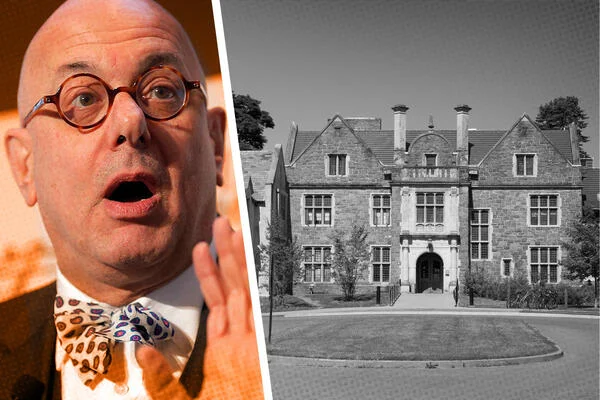
One trustee called the decision to end Botstein’s tenure “the end of our college as we know it today.”
Photo illustration by Justin Morrison/Inside Higher Ed | nancykennedy/iStock/Getty Images | Jemal Countess/Getty Images
After an independent law firm completed its investigation into Bard College president Leon Botstein’s ties to the late convicted sex offender Jeffrey Epstein, Botstein announced his retirement. He framed it as a decision he made on his own in a May 1 letter to the campus community: “After completing 51 years as the president of Bard, I am announcing that I will be retiring from the presidency at the end of this academic year, June 30, 2026,” he wrote. He plans to stay on the faculty as a music professor.
Neither Botstein’s letter nor statements from the Board of Trustees or the college made any mention that the board voted on Botstein’s future, and several faculty members told Inside Higher Ed they didn’t receive any communication about a vote. But according to an article in The Guardian on Friday, the board did decide to end the president’s decades-long tenure during a meeting in late April. In the weeks since, three board members—including the chair, billionaire James Cox Chambers—have stepped down. It is unclear why they decided to leave the board now.
“Bard College extends its deepest gratitude to Jim Chambers ’81, Mark Brossman, and Mostafiz ShahMohammed ’97 for their service and leadership on the Board of Trustees,” a Bard spokesperson said in a statement to Inside Higher Ed. “They have each demonstrated an extraordinary commitment to Bard’s mission of academic excellence. We look forward to them remaining an important part of the Bard community for years to come.”
Some remaining board members expressed concern about the legitimacy of the vote to end Botstein’s tenure. In emails exchanged by board members and seen by The Guardian, trustee Asher Edelman called the decision “the end of our college as we know it today.” He also criticized other board members for being “disrespectful” of Botstein and taking the vote without sufficient financial planning. Another trustee, Lucas Pipes, also criticized the vote: “We voted to end a 51-year presidency with no plan for what comes next,” he wrote in an email. Pipes said the vote was “compromised” because lawyers from WilmerHale, the law firm that investigated Botstein’s connections to Epstein, remained in the room during the vote.
The students of Take Back Bard, a student group that campaigned to oust Botstein, are largely unsurprised by the board’s vote and second-guessing, said Owen Denker, a Bard College senior and member of the group.
“We are not in the least bit shocked. It’s just part of a broader trend here,” Denker said. “When we heard the news that Botstein was resigning, we all knew it meant he was fired, and we all knew that because it took so long, [his departure] was an incredibly contentious decision.”
Botstein did not respond to Inside Higher Ed’s request for an interview.
For some faculty, the board member turnover has created “legitimate fear” that the board will undo its decision and bring Botstein back, Bruce Chilton, a religion professor, told The Guardian. Other faculty are unconcerned. Wyatt Mason, a writer in residence at the college, said he’s confident in the college’s stated succession plan. He said the “turmoil” portrayed in the Guardian article and other recent media coverage of the college is not reflective of what he sees and hears from others at Bard.
“It’s a joyous time of year that has not in any way been compromised by anything going on on campus,” Mason said. “Bard is—in my view—in an extremely stable position based on what I see with my students and what I hear from my faculty.”
Éric Trudel, a professor of French and chair of the Faculty Senate, is one of seven elected members on a faculty committee that will assist the board in choosing interim leaders and Bard’s next president. He said he’s also confident in the board’s leadership despite the emails shared with The Guardian.
“Right now, I don’t have any reason to believe that the Board of Trustees is dysfunctional or that it is not fulfilling its duty,” Trudel said. “I have confidence that we can move forward.”
Also in recent weeks, a Bard graduate submitted a 17-page complaint to the New York attorney general, asking the office to investigate the board’s leadership of Bard. The alum alleged that the board has for years prioritized Botstein—“his reputation, his outside interests, his continued presence, his legacy”—ahead of the best interests of students, faculty and staff.
