

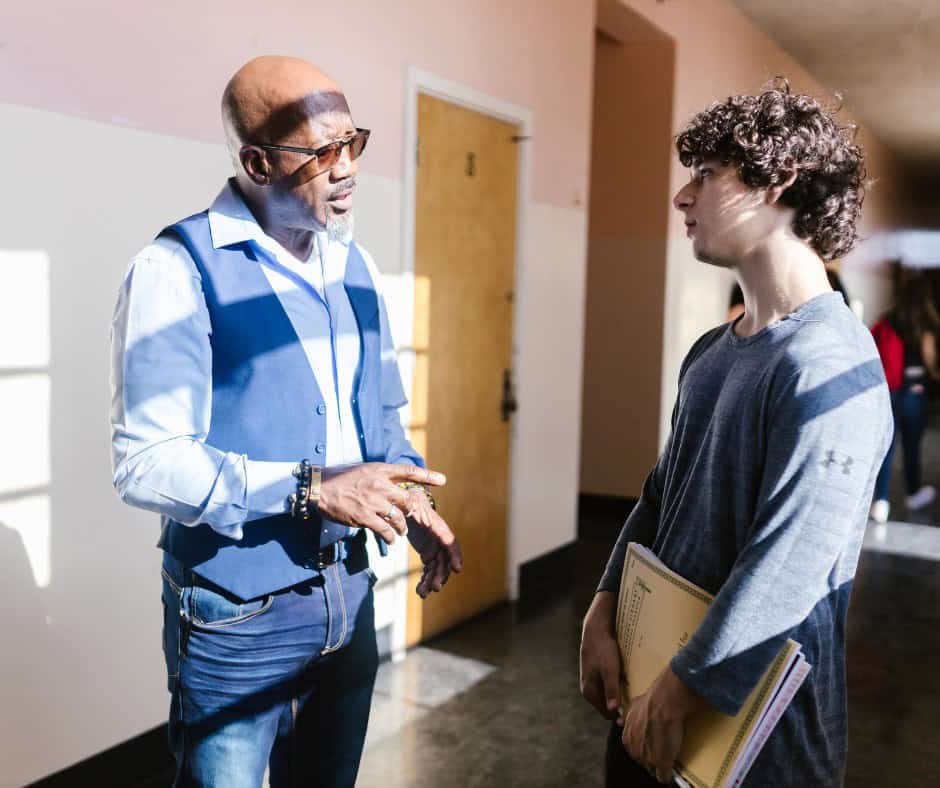
For many college students, approaching a professor can feel intimidating. College usually requires more independence than high school, and professors often expect students to manage their schedules, read the syllabus carefully, keep track of assignments, and ask for help when needed.
If your student is looking for scholarships to make their college education more affordable, we can help! Sign up for our free college scholarship webinar to learn more about the scholarship process! Take a quick trip over to http://thescholarshipsystem.com/webinar to reserve a spot today.
Some students also come from educational, cultural, or personal backgrounds where approaching instructors feels uncomfortable or unfamiliar. That hesitation is common, and communication skills usually become easier with practice and experience.
While the increased independence can feel challenging at first, it also gives students more control over their academic experience and opportunities to build stronger professional relationships.
Professors are not only people who grade papers or give lectures. A faculty member can help explain concepts, suggest resources, discuss research, offer career advice, and become a mentor. When students learn to communicate professionally, they gain an advantage that extends beyond a single class or semester.
How to Talk to Professors
Talking to a professor effectively means doing more than asking a quick question after class. It means building a professional academic relationship based on respect, preparation, and genuine interest in learning. When communicating with professors, students should approach them with respect and decency, as most professors respond positively to genuine curiosity and commitment to learning.
The student-professor relationship is professional, but it does not have to be distant. A professor is an expert, instructor, evaluator, and often a potential mentor. Students are responsible for their own learning, but professors can support that process through teaching, feedback, office hours, and advice. This relationship works best when students show up prepared, ask thoughtful questions, and follow through on the answer or support they receive.
This is one of the biggest differences between college and the high school environments many students are used to. High school teachers often remind students about missing work, closely monitor progress, and provide frequent structure. In college, the class syllabus may be the main source of information on due dates, grading rules, office hours, and course expectations. Not all instructors communicate in the same way, so students need to read carefully, decide what they need, and reach out professionally.
Professors appreciate students who take the initiative to introduce themselves and engage in conversation, as it shows genuine interest in the class and fosters a positive relationship. A simple introduction at the beginning of the semester can matter: “Hi Professor, I’m interested in this course because I’m considering a career in public health,” or “I wanted to introduce myself because I know this math class will be challenging, and I plan to use office hours.”
In many cases, professors are resources for academic and career guidance, but they are also busy people with teaching, research, service, and personal responsibilities. Respect their time, use the right communication method, and avoid treating a professor like a friend or customer service representative. Clear communication makes it easier for professors to provide useful help and guidance.
Benefits of communicating with professors
Communicating with professors can improve academic performance by helping students understand course material before confusion leads to poor grades. Professors generally respond well to students who arrive prepared, ask thoughtful questions, and make a genuine effort to learn.
Students who ask for clarification on lecture topics, writing expectations, exam formats, or assignment feedback often learn how to study more effectively. Students who regularly meet with professors often report a stronger understanding of course material, improved confidence, and better engagement with their classes.
The academic advantage is not limited to grades. Meeting with professors during office hours can help students better understand difficult material, improve study habits, and receive more personalized guidance.
A professor can explain why a concept matters, point out patterns in your mistakes, suggest a better study method, or recommend resources other students may not know about.
Professor relationships can also lead to research opportunities and academic projects. If you are interested in a lab, independent study, honors thesis, or fieldwork, a conversation with a faculty member is often the first step. Professors may know which projects need student help, which skills you should learn, and which academic opportunities fit your goals, and they can also be valuable connections as you begin networking in college with peers, faculty, and alumni.
Building a relationship with your professor can lead to mentorship opportunities, as they can become advocates for your career and personal growth. A professor who knows your effort, writing ability, curiosity, and reliability can offer advice that is far more specific than general career guidance.
Strong letters of recommendation are another major benefit. A professor who has only seen your name on a roster may be able to confirm that you took a course, but a professor who has talked with you, reviewed your work, and watched your growth can write a stronger letter for graduate school, scholarships, internships, or a job application, especially when you need a compelling scholarship letter of recommendation.
Professors can also offer industry insights from the academic world and professional networks. They may suggest conferences, internships, graduate programs, employers, or people to contact. Students are often surprised by how much practical career advice a professor can provide when the student asks a focused question.
Finally, talking to professors increases confidence and engagement. College can feel isolating when students assume they are the only person struggling. A conversation can help students realize that confusion is normal in difficult courses and that support is available before problems become overwhelming.
Types of Professor Conversations
Professor conversations usually fall into three broad categories: academic support, professional development, and personal challenges. Each type of conversation requires a slightly different tone, level of preparation, and communication method.
The key is to know what kind of help you need before you start the conversation. If you need help understanding concepts, bring notes and specific questions. If you want career advice, prepare goals and background information. If personal circumstances are affecting your academic performance, be honest enough to explain what is happening while respecting professional boundaries.
Academic support conversations to improve academic performance
Academic support conversations are the most common reason students talk to professors. These conversations include asking for clarification on course concepts, lecture material, readings, assignments, papers, exams, and challenging coursework.
A strong academic question is specific. Instead of saying, “I don’t understand anything,” say, “I understand the first part of the proof, but I get lost when you take the derivative in the second step. Could you explain that point?” This shows effort and gives the professor something concrete to answer.
Students can also request feedback before submitting assignments. For example, a student might bring an outline for a paper, a draft of a lab report, or a list of sources. The goal is not to ask the professor to do the work, but to discuss whether the approach is on track.
Academic support conversations are also useful for developing study strategies and preparing for exams. A professor can explain what types of thinking the exam will test, which course material deserves special attention, and how to review old assignments. In a difficult class, especially in math, science, writing, or theory-based courses, this guidance can make a difference.
Seeking help with specific problems is especially important. Bring the problem, your attempted solution, your notes, and the exact place where you got stuck. Professors prefer students to use office hours for clarifying concepts, asking for additional resources, or gaining a better grasp of the material, which helps prevent them from falling behind.
Professional development discussions
Professional development conversations focus on your future. These discussions may include career guidance, industry advice, research opportunities, graduate school planning, academic projects, and networking.
If you want career guidance, make the conversation focused. Instead of asking, “What should I do with my life?” try, “I’m interested in environmental policy and data analysis. Based on your experience, what kinds of internships or courses would help me decide between graduate school and an entry-level job?” A professor can give better advice when you provide direction.
Research conversations require preparation. Before asking about research opportunities, read about the professor’s work, review recent publications (if available), and understand the general area of study. You do not need to be an expert, but you should be able to explain why you are interested.
For graduate school planning, professors can help students understand application timelines, recommendation letters, writing samples, entrance exams, program fit, and research expectations. A faculty member can also discuss whether graduate school makes sense for your career goals.
Networking conversations should be handled professionally. A professor may be willing to introduce you to someone, suggest an organization, or recommend a conference, but only after you have shown seriousness and respect. Professors are more likely to help students who are prepared, reliable, and clear about what they are requesting, just as students should come prepared with questions to ask college recruiters during campus visits to make those conversations more productive.
Professional development discussions can start small. You might ask one question after class, then attend office hours, then schedule an appointment for a longer conversation. Over time, these conversations can grow into mentorship.
Personal challenge communications
Personal challenge communications happen when life circumstances affect academic performance. These conversations can involve mental health, family emergencies, financial difficulties, illness, housing instability, work conflicts, or unexpected events that make it hard to attend class or complete assignments.
Students should approach their professors early in the term if they anticipate struggles, as this can lead to more accommodating responses from the professor. Waiting until the final week of the semester, after several missed assignments, gives the professor fewer options and makes the request harder to evaluate.
You do not need to share every personal detail. A professional message can say, “I’m dealing with a family emergency that is affecting my ability to complete the assignment by the due date. Could we discuss whether an extension is possible?” This explains the situation without oversharing.
For mental health concerns, professors can be supportive, but they are not counselors. They may refer students to campus counseling, disability services, academic advising, financial aid, or student support resources. If accommodations are needed, the proper campus office may need to be involved.
Requests for extensions or accommodations should be clear and reasonable. Explain what is happening, what you are asking for, and what plan you will follow. For example, “I am requesting a three-day extension and can submit the paper by Friday at 5 p.m.” is stronger than “Can I turn it in later?”
These conversations can feel intimidating, but they are often better than silence. Professors cannot help with circumstances they are unaware of, and many are willing to discuss options when students reach out.
Top Communication Methods with Professors
There are several ways to communicate with professors, and choosing the right method matters. Office hours, email, in-class questions, and scheduled appointments each serve a different purpose.
A quick factual question may work best by email. A difficult concept may be easier to discuss in person or over video. A question that other students probably share may belong in class. A sensitive personal matter may require a private appointment.
Office hours visits
Office hours are scheduled times when professors are available to meet with students. These hours are usually listed on the class syllabus, posted on the course website, or announced during the first week of class. Despite the name, office hours commonly take place in the professor’s office, but they may also happen online, in a classroom, or by appointment.
Visiting office hours regularly can make difficult classes easier to manage and help students build stronger relationships with instructors. Students can use this time to discuss course material, ask specific questions, review feedback, talk about research, or seek advice. It can also support networking and professional development.
Best practices for office hours are simple: go early in the semester, prepare questions, and be respectful of time. Do not wait until you are failing or until the due date is hours away. If you are struggling, attending office hours at the beginning of the problem gives the professor more room to help.
During office hour meetings, expect a conversation rather than a mini-lecture. The professor may ask what you have tried, where you got stuck, what the class covered, or how you are studying. Bring your notes, textbook, assignment draft, graded work, or problem set so the discussion can be specific.
Email communication
Email is one of the most common ways to communicate with a professor. It works well for simple questions, appointment requests, clarification, and follow-up messages. Professional emails should be clear, polite, concise, and easy to answer.
Use a specific subject line. Instead of “Question,” write “Question about Essay 2 due date – HIST 101” or “Request for appointment to discuss research opportunities.” A strong subject line helps the professor quickly understand the message, especially if they teach multiple courses.
Start with a professional greeting. For example, “Dear Professor Smith” is appropriate unless the instructor has asked students to use a different title. Avoid overly casual openings such as “Hey” or text-style language.
Identify yourself in the first sentence. Include your name, class, section, and relevant context. A professor may teach hundreds of students, so do not assume they know which class you mean.
A strong message might look like this:
Dear Professor Smith,
My name is Maya Johnson, and I am in your Tuesday/Thursday Introduction to Psychology class. I have a question about the research summary assignment due next week. I read the instructions and reviewed the sample, but I am unsure whether the article must be peer-reviewed. Could you clarify that requirement?
Thank you,
Maya Johnson
The tone should be professional and respectful. Avoid demanding language such as “I need you to answer tonight” or “You have to reopen the quiz.” Instead, make a clear request and give the professor enough information to respond.
Professors often try to respond within 24-48 hours during the work week, but response times vary. Send messages during reasonable business hours when possible, and avoid sending repeated follow-ups too quickly. If the matter is urgent due to a deadline, explain that clearly and politely.
In-class interactions
In-class interactions include asking questions during lectures, participating in discussions, responding to prompts, contributing to group work, and speaking briefly with the professor before or after class.
Asking questions during class can benefit everyone. If you are confused about a concept, other students may have the same question. A clear question gives the professor a chance to explain the point again, offer an example, or connect the concept to earlier course material.
The best in-class questions are relevant to the lecture or classroom activity. Raise your hand, wait to be called on, and keep the question concise. If your question is highly personal, very detailed, or unrelated to what the class is doing, save it for office hours or email.
Class participation also helps professors get to know you. You do not need to dominate the conversation. Consistent, thoughtful contributions show that you are engaged and prepared.
Brief after-class conversations can be useful for quick clarifications. For example, you might ask, “Could you repeat which chapters are covered on the quiz?” or “Is the article you mentioned posted online?” However, remember that the professor may have another class, meeting, or appointment immediately afterward.
Scheduled appointments
Scheduled appointments are best for conversations that need more privacy, more time, or more planning than regular office hours allow. These may include research discussions, career planning, graduate school advice, requests for recommendation letters, academic difficulties, or personal circumstances affecting performance.
To request an appointment, send a professional email explaining who you are, why you want to meet, and when you are available. Offer several time options and request the meeting at least 3-5 days in advance when possible.
A good request might say:
Dear Professor Smith,
I am in your Biology 220 course and would like to discuss possible research opportunities in your lab. I have read about your work on cellular stress responses and would appreciate the chance to ask a few questions. Are you available for a 30-minute appointment next week? I am free Monday after 2 p.m., Wednesday between 10 a.m. and noon, or Friday after 1 p.m.
Thank you,
Jordan Lee
Prepare for the appointment by writing down your goals, questions, and relevant background. If you want feedback on writing, bring the draft. If you want advice about graduate school, bring your transcript, resume, or list of programs. If you want to discuss academic struggles, bring the syllabus and a realistic plan.
Use the appointment time effectively. Arrive on time, stay focused, take notes, and end by confirming next steps. Afterward, send a brief thank-you message if the professor invested significant time, offered advice, or provided support.
Communication Tips and Strategies for College Students
Good communication with professors is a skill students can learn. The goal is not to sound perfect; the goal is to be clear, respectful, and prepared enough that the professor can understand the issue and respond helpfully.
Before you send a message, visit office hours, or ask a question in class, decide what kind of conversation you need. Then prepare the materials and language that will make the conversation productive.
Identify the right communication method
Choose email for simple questions that can be answered quickly. Email works well for confirming a due date, asking where to find a reading, requesting an appointment, or following up on a previous conversation.
Select office hours for complex discussions requiring detailed explanations. If you are confused about course concepts, feedback, math problems, writing structure, research ideas, or study strategies, office hours usually work better than a long email chain.
Use in-class time for questions that benefit the entire class. If the professor explains an assignment and something is unclear, ask. If a lecture concept connects to a reading and you want clarification, ask. Other students may be relieved that someone raised the same question.
Request appointments for sensitive topics or lengthy conversations. If the matter involves mental health, family circumstances, financial difficulties, recommendation letters, graduate school plans, or career decisions, a scheduled appointment gives the professor more time and privacy.
The communication method should fit the situation. A professor may be able to answer a short message quickly, but a complex issue deserves a conversation. Choosing wisely shows respect for the professor’s schedule and increases the chance of a useful answer.
Determine your communication goals
Before reaching out, clarify what specific help or information you need. “I need help” is honest, but it is not very actionable. “I need help understanding the difference between correlation and causation before Friday’s quiz.” gives the professor a clear starting point.
Prepare talking points and questions in advance. Write them down if you are nervous. This is especially helpful when the conversation feels intimidating or when you are discussing personal circumstances.
Consider whether you need academic help, career advice, or personal support. The category matters because it affects the request. Academic help may require notes and assignments. Career advice may require a resume or goals. Personal support may require a realistic plan and awareness of campus resources.
Set realistic expectations for what professors can provide. A professor can explain course material, discuss academic performance, suggest resources, and offer advice. A professor may not be able to change institutional rules, provide counseling, or make exceptions that violate course policy.
Students who communicate regularly with professors often develop a stronger understanding of course material, better study habits, and greater confidence in class. That does not mean a meeting automatically fixes every problem, but it does show that consistent communication can support stronger outcomes.
Prepare for professional interactions
Research the professor’s background and areas of expertise when the conversation involves career advice, research, or graduate school. You do not need to read every publication, but knowing the professor’s field helps you ask better questions.
Review course materials and attempt to solve problems independently first. Professors generally respond better when students can say, “I read the chapter, reviewed my notes, and tried problems 1-5, but I am still confused about step 3.” This shows effort and helps the professor focus the explanation.
Organize your questions and supporting materials beforehand. Bring the class syllabus, assignment sheet, draft, graded rubric, problem set, textbook, or notes. If you are discussing a job, internship, or future plan, bring a resume or a list of goals.
Practice proper etiquette and professional language. Address the professor respectfully, listen carefully, avoid interrupting, and thank them for their time. When approaching professors, students should treat them with respect and decency, as most professors respond positively to genuine curiosity and commitment.
If you are nervous, keep the beginning simple. Introduce yourself, name the course, and explain the reason for the conversation. For example: “Hi professor, I’m in your 10 a.m. class. I wanted to ask about the last assignment because I’m struggling with the main concepts and want to improve before the next one.”
Preparation makes the conversation easier for both people. It shows that you value the professor’s time, care about learning, and are ready to take responsibility for the next step.
Common Mistakes When Talking to Professors
Even students with good intentions sometimes communicate in ways that make it harder for professors to help them. Avoiding a few common mistakes can make academic conversations more productive and professional.
- Waiting until the last minute to ask for help
- Asking questions already answered in the syllabus
- Sending vague emails without context
- Demanding exceptions instead of making respectful requests
- Missing appointments or office hours without notice
- Oversharing personal details unrelated to the academic issue
- Treating professors like customer service representatives
Conclusion
Summary of professor communication strategies
Building relationships with professors supports academic success by helping students become more active and engaged learners. A professor can explain difficult concepts, recommend resources, discuss assignments, and help students improve their academic performance.
The main communication methods are office hours, email, in-class interactions, and scheduled appointments. Each method has a purpose. Office hours are ideal for personalized support; email is best for concise communication; class questions help the broader classroom; and appointments work well for deeper conversations.
The long-term benefits of professional academic relationships are significant. Professors can become mentors, recommenders, research supervisors, and career advocates. They can help students understand the academic world, prepare for graduate school, explore future career paths, and connect classroom learning to real opportunities.
Students should not wait until a problem becomes a crisis. If you are struggling, reach out early. If you are interested in a topic, introduce yourself. If you need advice, ask a specific question. Professors are often more approachable than students expect, and many professors respect students who show effort and curiosity.
Effective communication with professors is also a professional skill. The ability to write a clear message, prepare for a meeting, discuss a difficult matter, and ask for guidance respectfully will help in college, work, and life.
The point is not to impress every instructor. The point is to learn how to talk with the people who can help you learn, grow, and prepare for the future.
Frequently Asked Questions (FAQs)
Do you call professors Dr. or Mr.?
In most college settings, “Professor” is the safest and most appropriate title. If the instructor has a doctoral degree, “Dr.” is also appropriate. Avoid using “Mr.” or “Mrs.” unless the instructor specifically uses those titles.
Do you call professors by their first name?
At many colleges, professors prefer to be addressed by their title and last name. However, some may invite students to use their first name, particularly in smaller classes or informal settings. When in doubt, start with the formal title and follow their lead.
How do I talk to a professor about a personal problem?
Approach the conversation respectfully and honestly. Request a private meeting or office hours appointment, briefly explain the situation, and focus on how it affects your academic performance. You do not need to share every detail—just enough to help the professor understand your needs and discuss possible accommodations or support.
Should I tell my professor about my mental health?
If mental health challenges are affecting your coursework, it can help to communicate early. Professors may be able to offer flexibility within course policies, but formal accommodations usually require documentation through campus disability or student support services.
What is the best way to contact your professor?
The best method depends on your purpose. Email is effective for simple questions or appointment requests. Office hours are ideal for detailed academic help or complex discussions. In-class questions work well for clarifications that benefit everyone. For sensitive or lengthy conversations, scheduling a private appointment is recommended.
