

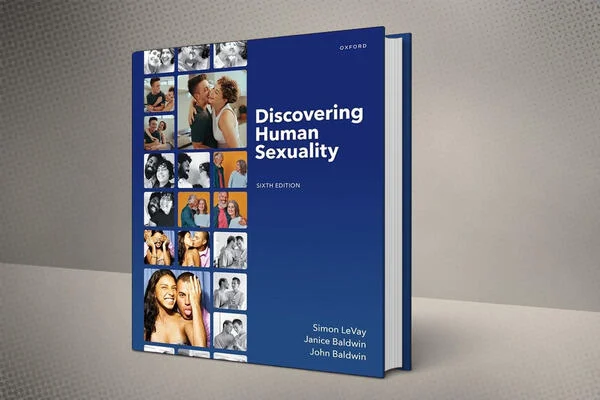
The University of Nebraska at Kearney will discontinue using a popular human sexuality textbook after a student complained the book exposed them to pornography.
An internal investigation determined the textbook contains “graphic images,” particularly in a chapter about atypical sexual behavior, according to a report from the chancellor’s office that summarizes its investigation. In addition to ditching the textbook this fall, the university will ensure that its replacement “aligns with course and accreditation standards and outcomes” and will include “enhanced notice” of course content in the human sexuality course description and syllabus.
UNK’s May investigation covered a swath of complaints made in late April—including from Nebraska Gov. Jim Pillen and a former staffer of his, conservative Substack writer John Gage. In addition to the textbook, university officials looked into a training module on empowering transgender students and allegations that UNK continues to prioritize diversity, equity and inclusion.
The textbook—Discovering Human Sexuality by Simon LeVay, Janice Baldwin and John Baldwin, now in its sixth edition—is used in a human sexuality course required only for students seeking a major or minor in family science, or for students looking to earn a certified family life educator credential. It is “designed to educate future health workers, counselors, therapists, and educators rather than for prurient interests and thus does not violate Nebraska law when used for educational purposes,” the report states. Under Nebraska revised statute 28-813, the state prohibits the creation and distribution of “obscene materials.”
Tami Moore, a family science professor who teaches the human sexuality course, said the university has used the textbook for 10 years.
“I stand by my assertion that the book is scientifically rigorous and has no pornographic content. It is one of the leading texts in the subject matter across the country,” she said. “I have not been made aware of who was actually challenging the use of textbook or exactly what was problematic, but the decision to discontinue use of that specific book and to adopt a different one was in the best interest of closing the conversation and allowing faculty scheduled to teach the multiple sections in the near future the opportunity to fully prepare for those offerings in a timely manner.”
LeVay, the lead author on the textbook, told Inside Higher Ed that he stands by its content.
“I doubt that UNK will be able to find an alternative text that doesn’t show sex acts. That would be like a trigonometry text without triangles,” LeVay said. He and his co-authors pulled images for the textbook from a variety of sources, including stock photos; their own sketches; their publisher, Oxford University Press; and previously published textbooks. LeVay acquired one photo of a man with diphallia—included in the chapter on men’s bodies and which some students thought was photoshopped—from the man himself.
“I can’t imagine how any student would sign up for a human sexuality course and not expect to be presented with the kind of material that’s in our textbook, because there’s nothing different between what’s in our textbook and what’s in all the other textbooks on human sexuality,” LeVay said. “These are adults who are opting to take certain classes, and professors, I would have thought, had the freedom to choose a textbook that they think is in the best interest of their students, but apparently not.”
A UNK spokesperson told Inside Higher Ed that a new textbook has not yet been selected, and that “UNK remains focused on ensuring course materials are academically sound, professionally relevant and clearly communicated to students.”
Pressure From Politicians
In late April, UNK emailed an unspecified Listserv an optional, 20-minute training module from Magna Publications that aims to teach faculty members how to move from “supporting” to “empowering” transgender students. It promises to show faculty “how making small, inclusive adjustments to communicating with students will help them feel more comfortable, perform better academically, and grow personally,” according to the Magna website. Later that same day, the influential right-wing X account Libs of TikTok posted a screenshot of the email, adding “So sick of this trash.”
Pillen reposted the screenshot just hours later.
“This nonsense is completely irrelevant and destructive to the University of Nebraska’s teaching mission, and out of touch with the values of the state it serves. University leaders must immediately root out this and all other similar programming across the entire system,” he wrote on X alongside the screenshot. “If the University cannot police its own ranks and rid itself of the woke disease that has degraded so many ‘elite’ higher education institutions, it risks investigations, cuts to its funding, and, most importantly, the loss of the confidence of the people it serves.”
The next morning, not even 12 hours after Pillen’s post, a UNK spokesperson said the module had been “removed.”
“As a reminder, our focus remains on rigorous academics and student success through effective teaching and creating a welcoming environment for all students,” Todd Gottula, chief communications and marketing officer at UNK, wrote in an email posted by Libs of TikTok. It’s unclear whom the email was originally addressed to. “The content was from an external professional development series and was not developed internally by UNK,” Gottula wrote. “We have addressed the issue and corrected our review process moving forward.”
In the recent report, university officials called the training module “out of tune with the current political environment” and noted that the dean will implement a “committee review of online faculty training modules, give explicit approval for faculty training modules, and ensure that faculty emails include contact information for the distributing individual or office.”
UNK is far from the first institution to change course under pressure from conservative politicians, often drummed up by Libs of TikTok and similar accounts. In September, a Texas state representative succeeded in his mission to oust an instructor, multiple administrators and, ultimately, the president of Texas A&M University over a children’s literature lesson that addressed transgender identity. North Carolina State University in February fired the assistant director of its LGBTQ Pride Center after the anti-DEI group Accuracy in Media secretly recorded him appearing to violate system policies.
The chancellor’s report also addressed several complaints about DEI at the university, brought up in a late April article in Gage’s newsletter that also discussed the training module about transgender students. Citing the conservative advocacy organization Defending Education as well as unnamed critics, Gage wrote that UNK was hiring two new positions considered to be “DEI hires.” In their report, university officials contested this characterization of the roles and explained the new titles.
“In 2025, the Senior Vice Chancellor for Academic Affairs created a position dedicated to improving student retention and graduation—benchmarks on which UNK outperforms most regional public universities,” the report states. “In addition, five faculty members were recruited to coordinate further improvement of student retention and graduation benchmarks at the unit level.”
The report also rebuts claims that the UNK campus is hostile to Christians and conservatives, something that multiple faculty members, who remained anonymous for fear of retaliation, reportedly told Gage.
“Each student, faculty member, and student organization [interviewed] was asked whether they experienced intimidation or academic or employment consequences because of their beliefs. No individuals described any occurrences nor offered any evidence. Two individuals described it as a ‘perception,’” the report states. “The faculty member who claimed that the campus culture was not welcoming, and that voicing conservative ideas could have negative impacts on a person’s career, said in an interview that no administrator had ever intimidated him or caused negative impacts on his career because of his political views, and added that campus leadership is accepting of his viewpoints. The negative reaction, he said, came from individual colleagues who he felt were not accepting of his views.”
Updated at 1 p.m. June 3 with comment from a University of Nebraska at Kearney professor.
