

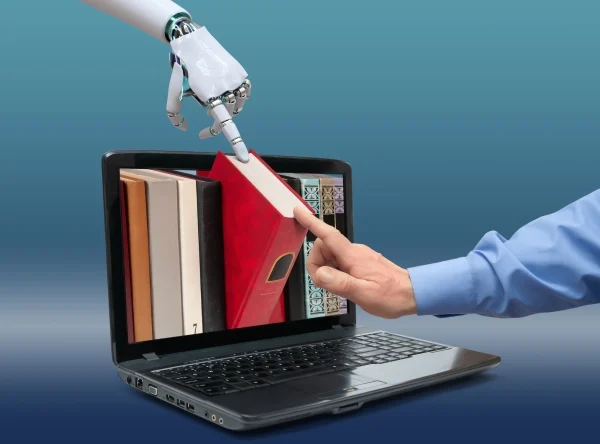
About a quarter of faculty don’t use any AI tools at all, and about a third don’t use them in teaching, according to the survey.
Oleh Stefaniak/iStock/Getty Images Plus
Faculty overwhelmingly agree that generative artificial intelligence will have an impact on teaching and learning in higher education, but whether that impact is positive or negative is still up for debate.
Nine in 10 faculty members say that generative AI will diminish students’ critical thinking skills, and 95 percent say its impact will increase students’ overreliance on AI tools over time, according to a report out today from the American Association of Colleges and Universities and Elon University.
In November, the groups surveyed 1,057 faculty members at U.S. institutions about their thoughts on generative AI’s impact. Eighty-three percent of faculty said the technology will decrease students’ attention spans, and 79 percent said they think the typical teaching model in their department will be affected by AI.
Most professors—86 percent—said that the impact of AI on teachers will be “significant and transformative or at least noticeable,” the report states. Only 4 percent said that AI’s effect on teaching will “not amount to much.” About half of faculty respondents said AI will have a negative effect on students’ careers over the next five years, while 20 percent said it will have a positive effect and another 20 percent said it will be equally negative and positive.
Faculty are largely unprepared for AI in the classroom, the report shows. About 68 percent of faculty said their institutions have not prepared faculty to use AI in teaching, student mentorship and scholarship. Most of their recent graduates are underprepared, too. Sixty-three percent of professors said that last spring’s graduates were not very or not at all prepared to use generative AI at work, and 71 percent said the graduates were not prepared to understand ethical issues related to AI use.
About a quarter of faculty don’t use any AI tools at all, and about a third don’t use them in teaching, according to the report. This faculty resistance is a challenge, survey respondents say. About 82 percent of faculty said that resistance to AI or unfamiliarity with AI are hurdles in adopting the tools in their departments.
“These findings explain why nearly half of surveyed faculty view the future impact of GenAI in their fields as more negative than positive, while only one in five see it as more positive than negative,” Lynn Pasquerella, president of the AAC&U, wrote in her introduction to the report. “Yet, this is not a story of simple resistance to change. It is, instead, a portrait of a profession grappling seriously with how to uphold educational values in a rapidly shifting technological landscape.”
While most professors—78 percent—said AI-driven cheating is on the rise, they are split about what exactly constitutes cheating. Just over half of faculty said it’s cheating for a student to follow a detailed AI-generated outline when writing a paper, while just under half said it is either a legitimate use of AI or they’re not sure. Another 45 percent of faculty said that using generative AI to edit a paper is a legitimate use of the tool, while the remaining 55 percent said it was illegitimate or they were unsure.
Despite their agreement on generative AI’s overall impact, faculty are split on whether AI literacy is important for students. About half of professors said AI literacy is “extremely or very important” to their students’ success, while 11 percent said it’s slightly important and 13 percent said it’s irrelevant.
Professors held a few hopeful predictions about generative AI. Sixty-one percent of respondents said it will improve and customize learning in the future. Four in 10 professors said it will increase the ability of students to write clearly, and 41 percent said it will improve students’ research skills.
