

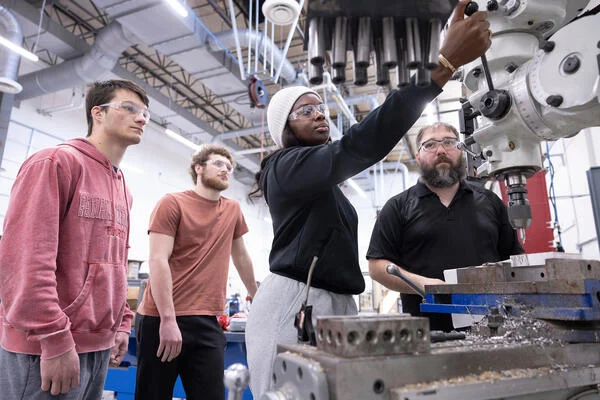
A new study finds that parents of middle and high school students are increasingly open to pathways beyond a traditional four-year degree.
Britebound, a national nonprofit dedicated to helping middle and high school students navigate postsecondary pathways, conducted the survey of more than 2,000 parents last year. It shows that while most parents still favor college, that preference has dropped from 74 percent in 2019 to 58 percent in 2025. Meanwhile, 35 percent of parents now see career and technical education as a strong fit for high-achieving students—up sharply from just 13 percent in 2019.
Julie Lammers, president and chief executive officer of Britebound, said young people are increasingly aware of the range of postsecondary options, and parents are now following suit.
Young people are “experiencing higher education differently, and that is shaping much of what parents are saying,” said Lammers. “[Parents] are reacting to the questions their children are asking and trying to find the best way to help them navigate the next steps.”
Lammers noted that the changing landscape of higher education has increased public recognition that nondegree pathways can lead to strong outcomes.
“That concern we originally saw from parents about ‘I don’t know what this is, I don’t know where this will lead my child’ is decreasing slightly,” Lammers said. “But I don’t think we’re there yet in getting parents comfortable with these decisions, and the data reflects that.”
The findings: The study found that parents feel equipped to guide their children on whatever pathway they choose. Specifically, 79 percent said they would be a good resource in helping their child navigate a nondegree pathway, including 41 percent who strongly agreed.
In addition, parents reported high levels of familiarity with some nondegree pathways. About 95 percent said they are at least somewhat familiar with trade schools, and 93 percent said the same about apprenticeships or internships.
Lammers said increased resources—from school counselors to educators—have helped drive this confidence.
“Educators, parents and young people are having these conversations in much greater detail than ever before, which boosts parents’ confidence in helping their children make decisions,” said Lammers.
Over all, parental support remains strong across all post–high school choices. About 88 percent of parents have talked about postsecondary plans with their kids, and most support whatever path their child chooses.
Parents recognize both the benefits and the trade-offs of nondegree routes. About 98 percent of parents saw at least one benefit, such as hands-on learning, but 89 percent still expressed concerns about career growth or income potential. This includes 32 percent who cited limited career growth, fewer opportunities and lower income potential.
Lammers said parents’ growing familiarity with nondegree pathways is giving them more confidence in discussing options with their children.
“As more young people participate in these options and we see the data, it becomes a much easier conversation for parents,” said Lammers.
She added that seeing concrete outcomes and success stories makes parents more comfortable supporting nondegree paths.
“Parents don’t necessarily want to encourage young people down a path they don’t see employers validating,” she added, noting that many employers are shifting to skills-based hiring and other ways of recognizing learning beyond just a traditional bachelor’s degree.
The implications: The study notes that clear outcomes data, side-by-side comparisons of costs and career trajectories, and localized directories of reputable work-based learning providers could serve as valuable tools for helping parents decide which pathway is right for their child.
“There’s no one-stop shop for this information anymore,” said Lammers. “That highly personalized information gives parents a resource that is desperately needed when they’re trying to decide among a variety of options and don’t necessarily know which way to go.”
Lammers said parents with lower familiarity may benefit from tailored outreach through schools, community organizations and trusted online channels.
“Leaning on those trusted entities that a parent might go to for advice and guidance really is an important aspect of this work,” said Lammers. “All of this information needs to come from multiple sources in a way that can be clearly deciphered and embraced by parents … so it is a constant drumbeat to make sure they have the information they need.”
Lammers said the ultimate goal is to help parents and students make more intentional, informed decisions about their futures.
“Historically a lot of kids have defaulted into a two- or four-year degree because they didn’t know what their options were,” Lammers said. “We want to give young people a much longer runway—starting no later than middle school—to think about what they want for themselves, so they can align their high school opportunities and then their postsecondary opportunities to really meet those goals.”
Get more content like this directly to your inbox. Subscribe here.
