

Join our zero2eight Substack community for more discussion about the latest news in early care and education. Sign up now.
This story was originally reported by Amanda Becker of The 19th. Meet Amanda and read more of their reporting on gender, politics and policy.
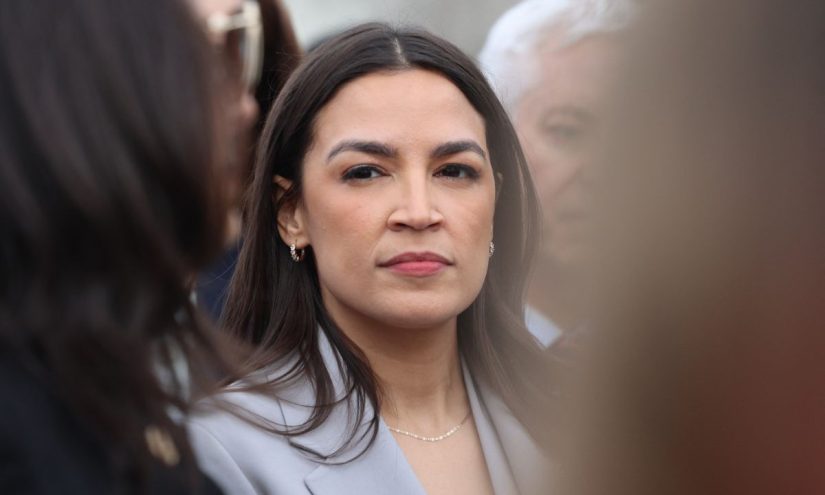
An effort by Democratic lawmakers to lower snowballing child care costs has a new high-profile front woman: Alexandria Ocasio-Cortez.
The New York representative is now the lead House sponsor of Sen. Elizabeth Warren’s Child Care for Every Community Act, The 19th has exclusively learned. Ocasio-Cortez replaces original House sponsor Mikie Sherrill, who is now the governor of New Jersey.
The progressive women’s effort comes as Republicans at the national level are calling for larger American families but have struggled to craft policies that make it easier for parents. Ocasio-Cortez’s backing also comes as Democrats head into a midterm elections cycle where they plan to highlight affordability issues, which polls show are a top concern for voters, including finding affordable child care. High-profile Democratic strategists are already suggesting that universal child care be added to the party’s official policy platform ahead of the 2028 presidential elections.
“We’ve turned childhood itself into a privilege, not a promise. It is time that we give all families the quality, affordable child care they deserve,” Ocasio-Cortez said in a statement to The 19th.
What if States Made Child Care a Constitutional Right?
James Carville, who advised President Bill Clinton, among others, wrote in a recent piece for The New York Times: “When 70 percent of Americans say raising children is too expensive, we should not fear making universal child care a public good.” David Plouffe, who managed President Barack Obama’s 2008 campaign and advised the 2024 campaign of Vice President Kamala Harris, recently said that universal child care should be in Democrats’ 2028 platform.
Warren is a senator from Massachusetts who made affordable child care the central pillar of her own 2020 presidential campaign, and she has introduced a series of bills in the Senate related to reducing its cost. If enacted, the most recent legislation would result in half of U.S. families paying no more than $10 a day for child care and cap costs for families in higher income brackets. It would use a sliding scale modeled on the U.S. military’s child care program. There is no funding mechanism attached to the legislation.
“In the wealthiest country on the planet, we can’t keep treating affordable, high-quality child care like a luxury reserved for only the richest Americans,” Warren wrote to The 19th.
Democrats at the state and city levels have already made moves to implement universal or reduced-fee child care. In New Mexico, where lawmakers have been working to lower child care costs since 2019, Gov. Michelle Lujan Grisham announced last year that the state would make child care free as of November. In New York, Mayor Zohran Mamdani campaigned on the issue, and one of his first moves after being sworn in was announcing a plan for universal child care for children under five. In San Francisco, which has some of the highest child care costs in the country, Mayor Daniel Lurie recently launched a “Family Opportunity Agenda” that would likewise ensure children under five can access child care.
Analysis of polling done by the First Five Years Fund, which aims to build bipartisan support for child care policies at the federal level, showed that voters of all political persuasions believe child care is unaffordable and lawmakers should do something about it. Seventy-two percent of Republican voters, for example, said increasing federal funding for child care was an important priority, along with 70 percent of political independents and 90 percent of Democrats.
While President Donald Trump has said Republicans want to reduce child care costs, and they have aimed to do so by restructuring tax incentives, he has also cut off federal funding for child care programs in states seen as political enemies. During his reelection campaign, Trump said in an economic address that child care is “relatively speaking, not very expensive.” Congressional Republicans have not prioritized legislation related to child care affordability.
“Universal child care is incredibly popular, being able to access affordable child care that works for your child and your family is not a ‘red’ or ‘blue’ issue, it’s something that people across parties experience every single day,” said Julie Kashen, director of women’s economic justice for the Century Foundation, a progressive think tank.
Did you use this article in your work?
We’d love to hear how The 74’s reporting is helping educators, researchers, and policymakers. Tell us how
