

SAN MATEO, Calif. — School had been in session at Lead Elementary for less than an hour, but already Andrea Quinn had paused teaching her first graders nearly 20 times.
First, there was the child who had zipped his entire face inside the hood of his green sweatshirt.
“Is that a good choice?” Quinn asked.
“Yeah?” responded a muffled voice.
Then, there was the girl in pink leggings who stood up from her seat, wandered over to Quinn as she was teaching and stood next to her at the front of the room.
“Can you go sit in your spot?” Quinn whispered. The girl stayed put.
A few minutes later, there was the boy spinning around uncontrollably from his corner of the carpet in the front of the room, kicking students near him with his black and white sneakers.
“Your feet are not safe,” Quinn told him. He stopped and sat on his knees, bouncing up and down as Quinn continued her lesson.
Teaching first grade has always involved dealing with wiggly and talkative kids. But it hasn’t always been quite like this. Over the past 10 years, Quinn has seen an increase in challenging behavior and more emotions among her 6- and 7-year-olds, with a particular ramp-up since the pandemic.
Elementary teachers nationwide say they’re seeing the same trend: worsening — and increasingly severe — behavior problems in young children. Students are more disruptive. They sometimes lash out physically at classmates and teachers. They’re more defiant. It’s pushing many teachers and schools to try new methods to bring classrooms under control, with districts and states sharply divided over the right approach.
Related: Young children have unique needs, and providing the right care can be a challenge. Our free early childhood education newsletter tracks the issues.
While policymakers have been focused on stalled academic progress and math and reading interventions, far less attention has been paid to understanding why students are displaying more challenging behavior and supporting and training teachers as they try to manage it. Federal data shows educators want help: The percentage of elementary schools where educators say they need more training on classroom management increased from 51 percent in May 2022 to 65 percent last year.
Even though these children were toddlers, infants or not even born when the pandemic began, experts say that the disruption has had long-lasting repercussions. In 2021, researchers at Brown University found that toddlers who were born during the pandemic had significantly lower verbal, motor and overall cognitive performance compared to toddlers born in the previous decade. Those “pandemic babies” would now be around 6 years old and in first grade.
In a 2025 survey, 76 percent of elementary school leaders said they “agree” or “strongly agree” that the pandemic has continued to negatively affect the behavioral development of students.
Many young children missed out on preschool and other social experiences during the pandemic that could have helped prepare them for school. A study published last year showed that children whose early childhood education was highly disrupted by the pandemic suffered from more emotional problems and lower reading skills compared to students who were in more stable programs.
These children are also entering into challenging environments. Over the past two decades, schools have started requiring even the youngest children to focus on more challenging academic tasks. At the same time, children are getting less time for recess even though recess is proven to improve behavior and learning. Children are also on screens now more than ever, which is believed to contribute to more anxiety, depression, aggression and hyperactivity.
“A lot of things have changed since the pandemic,” said Wendy Reinke, co-director of the Missouri Prevention Science Institute, a research group, and a professor of school psychology at the University of Missouri. Those years “really disrupted a lot of children’s social-emotional development and routines, and the profession of teaching is not as sought after as it used to be. There are a lot of staffing shortages and there’s a lot of mental health indicators going on,” she added. “I think teachers are seeing that and feel undertrained to deal with some of those things.”
Dealing with disruptive kids makes it harder to teach and harder for kids to learn, whether they are the ones with the behavioral challenges or the ones watching it all unfold in their classroom.
“There has been — in research for decades — very clear, established connections between kids’ academic skills and kids’ behavioral skills,” said Brandi Simonsen, a professor of special education at the University of Connecticut and co-director of the university’s Center for Behavioral Education and Research. A child may act up in class to avoid lessons that are too hard for them or get kicked out of class because of their behavior and then miss academic time.
“Then you get into this vicious cycle where both skills are struggling,” Simonsen added.
Related: Preventing suspensions: Tackle discipline problems with empathy first
Quinn, who has taught at the same Northern California school for 21 years, says child misbehavior was relatively minimal during the first decade of her career: kids who couldn’t sit still or who would blurt things out when she was speaking.
In the years leading up to 2020, she started to notice students weren’t as independent and struggled more to manage their emotions, get started on assignments and ask for help when they didn’t know what to do. Then the pandemic hit, and as kids navigated tough situations at home, isolation, more screen time and school closures, misbehavior got worse.
“They’re just so much more physical,” she said. “We’re struggling with kids being able to talk to each other and talk to adults in a respectful manner, and say, ‘I need a new pencil. That’s why I’m angry,’” she added. “It’s a lack of understanding how to interact with others.”
Educators are overhauling their classroom management approach to cut down on the chaos.
In New Jersey, kindergarten teacher Tahnaira Clark said she has seen more challenging behaviors with her current class of “Covid babies” than previous student cohorts. Her students have more trouble controlling their bodies and expressing their feelings. They also spend more time on phones and tablets outside of school, which she believes has contributed to noticeably shorter attention spans. “Getting them to sit on the carpet for a long book can be challenging,” she said.
Clark spent six weeks at the beginning of this school year setting up and practicing classroom routines and procedures with her students. She was as explicit as possible about her expectations. “I’m explaining everything from how you throw your trash in the trash can to how you hold your pencil,” Clark said. She rewards good behavior in her young students with a sticker.
Kindergarten teacher Cristina Lignore, who teaches in New York City, said, “There’s a lot of interruptions. And a lot of times when I have to pause and address behaviors over and over again, that can interfere with students who are 100 percent ready to learn.”
From 2022 until 2025, Lignore says she benefited from a behavior coach sent from the Child Mind Institute, a nonprofit focused on child mental health. Her coach observed her frequently and gave feedback on classroom management, something she felt she didn’t learn much about even after getting her master’s degree in education.
The coach also pulled small groups of challenging students out of Lignore’s class to teach them social and emotional skills and helped Lignore make and consistently use behavior charts with her students. She still uses many of the strategies she learned, though she tweaks them based on the needs of students in her class.
“It’s hard teaching a class, especially by yourself when you don’t have an aide or assistant, trying to balance behaviors and trying to teach,” Lignore said. “You have to find what works for you and make it your own.”
Related: Five tips to help manage behavior in young children
Across the country, schools are divided in how to handle these problems. Some are backing away from exclusionary discipline like suspensions and expulsions and have embraced schoolwide approaches that reward positive behavior and provide social skills practice through games and role-playing. Others are opting for restorative practices, which emphasize group conversations where students share feelings and perspectives to build community and resolve conflict.
In Texas, the International Leadership of Texas charter school network hired more behavior coaches and specialists to support teachers after seeing an increase in “pretty severe behavior issues” post-pandemic, said Laura Carrasco, assistant superintendent of the network. Each K-8 school in the network now has three counselors, each of whom focus on specific grade levels.
“They help remove some of the barriers that prohibit kids from learning, or in some cases, their peers,” Carrasco said. The team also offers more support for teachers: If they are struggling with a student, they can call their school’s administrative team and a counselor will be in their classroom within 90 seconds.
Research has found restorative practices can improve student behavior and academic performance. Still, these schoolwide systems are not always rolled out correctly or get all teachers to buy in, which can affect their success.
Some states are taking a different approach to student misbehavior, saying that the answer is to bring in more consequences and give teachers more power to punish disruptive students.
For example, a West Virginia law passed in early 2025 gives teachers more power to exclude disruptive students from their classrooms. The law also creates a discipline process for preschool and elementary students where there was none before. Young children who are violent must go through a behavioral intervention program and can be removed from the classroom if they don’t make adequate progress.
President Donald Trump has also called for a return to what he called “common sense discipline policies” in an April executive order. The directive repealed federal guidance that schools work to avoid racial disparities in school punishments.
Related: Teachers offer their wisdom on how to stay sane dealing with your kids’ crazy behavior
As behavior challenges persist, educators say teacher preparation programs could better prepare new teachers. Only 27 percent of teacher preparation programs surveyed by the National Council on Teacher Quality in 2020 mandate that aspiring teachers practice the effective management skill of reinforcing positive behavior before they graduate. Only 53 percent of programs require aspiring teachers to practice addressing serious misbehavior. Difficulty managing student behavior is frequently cited as one of the main reasons why teachers quit.
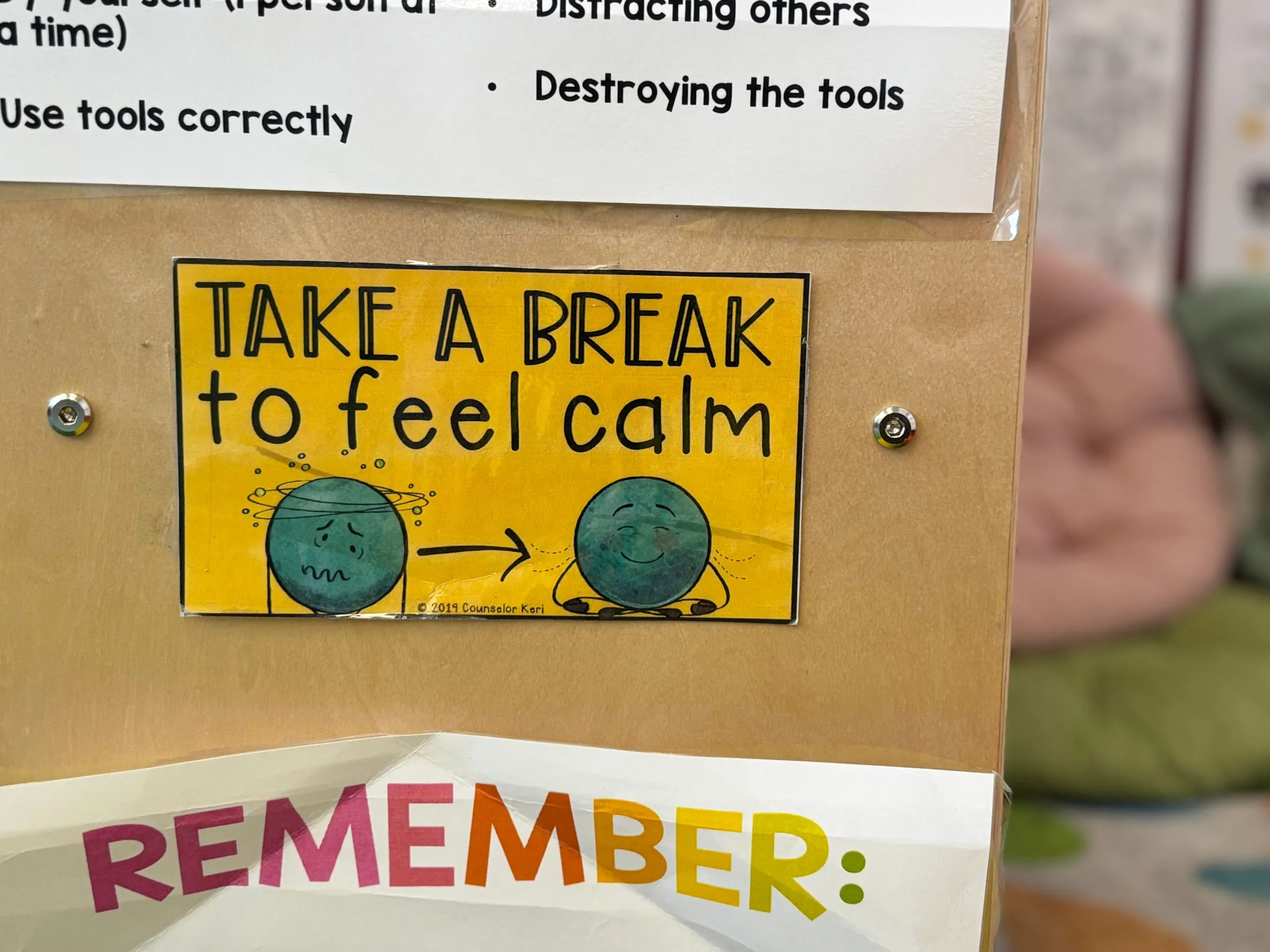
Some teacher preparation programs are trying to evolve to meet the need. At Relay Graduate School of Education, a nonprofit, independent institution of higher education that offers teacher and administrator preparation programs and professional development, Challa Flemming, the assistant dean of clinical experience, said the program has added a focus on trauma-informed teaching practices and restorative practices over the past few years. They now teach aspiring educators strategies like having a “calm down corner,” where students can go when they are having big emotions, and a system to check in with each student daily to see how they’re doing.
“Behavior has meaning,” said Flemming. “If we can reposition ourselves to be curious about why students are doing what they’re doing, and help them move through that, then we can end up in a much stronger place in terms of classroom culture.”
Quinn has cycled through various management techniques over the past two decades. She no longer relies on popular strategies like offering treasure chest prizes for good behavior or a “clip chart,” where clothespins with student names are moved up and down a chart based on how good or bad their behavior is. Not only were they ineffective, Quinn said, the public shaming made behavior worse.
Now, she focuses on affirming positive behavior, hoping students will want to then emulate it. She tries to assume there’s a reason behind students acting out. It’s an immensely challenging, exhausting job that on some days feels impossible to do alone. “I’m just one person,” Quinn said. “My real purpose is to teach them content. … I’m not trained in psychology. I’m not trained in social work,” she added.
Simonsen, from the University of Connecticut, said there’s a need to provide more education on research-backed strategies that can support teachers and improve behavior at school, like teaching social skills and improving school environments, so they’re not going it alone.
“We know a lot about the science of behavior,” she said. “It’s never talked about as much as it should be. To me, it all starts with this.”
Contact staff writer Jackie Mader at 212-678-3562or mader@hechingerreport.org.
This story about disruptive students was produced by The Hechinger Report, a nonprofit, independent news organization focused on inequality and innovation in education. Sign up for the Hechinger newsletter.
This <a target=”_blank” href=”https://hechingerreport.org/biting-kicking-teachers-classroom-misbehavior/”>article</a> first appeared on <a target=”_blank” href=”https://hechingerreport.org”>The Hechinger Report</a> and is republished here under a <a target=”_blank” href=”https://creativecommons.org/licenses/by-nc-nd/4.0/”>Creative Commons Attribution-NonCommercial-NoDerivatives 4.0 International License</a>.<img src=”https://i0.wp.com/hechingerreport.org/wp-content/uploads/2018/06/cropped-favicon.jpg?fit=150%2C150&ssl=1″ style=”width:1em;height:1em;margin-left:10px;”>
<img id=”republication-tracker-tool-source” src=”https://hechingerreport.org/?republication-pixel=true&post=114644&ga4=G-03KPHXDF3H” style=”width:1px;height:1px;”><script> PARSELY = { autotrack: false, onload: function() { PARSELY.beacon.trackPageView({ url: “https://hechingerreport.org/biting-kicking-teachers-classroom-misbehavior/”, urlref: window.location.href }); } } </script> <script id=”parsely-cfg” src=”//cdn.parsely.com/keys/hechingerreport.org/p.js”></script>
