

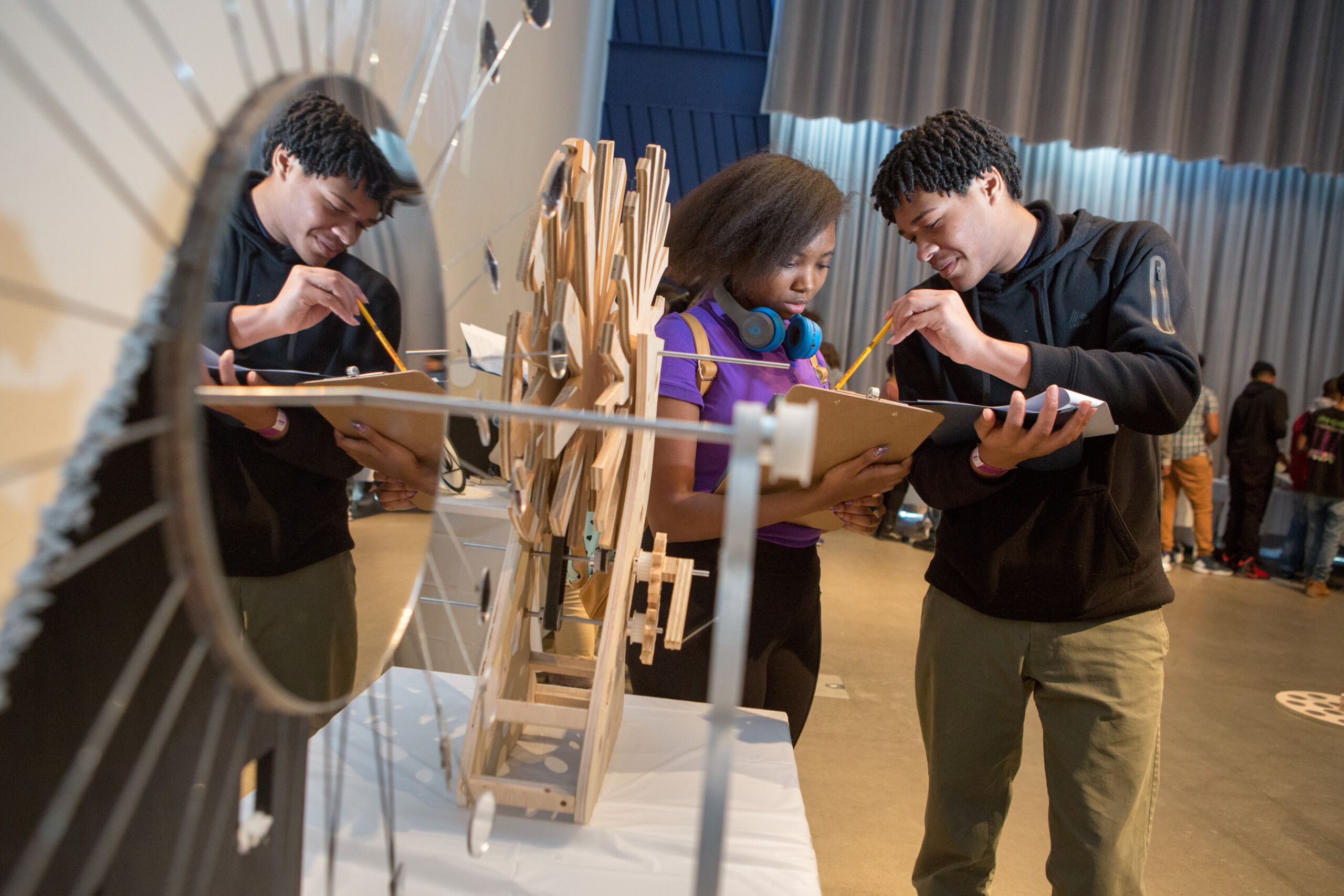
Three simple shifts that help students think like engineers and stay engaged during STEM challenges.
By: Dr. Christopher Feiler
Last summer, while teaching a STEM challenge in a gifted summer program at Hofstra University, I watched a group of students celebrate when their design failed.
The challenge was simple: design a wind-powered vehicle using only a limited set of materials. Within minutes, students began sketching ideas, building prototypes, and testing their designs across the classroom floor.
Many of the first attempts didn’t work. Cars tipped over. Wheels jammed. Some vehicles barely moved at all.
But instead of frustration, the room filled with excitement.
Students huddled together analyzing what went wrong. They debated ideas, redesigned their cars, and eagerly tested new versions. Each failure pushed them to think more deeply about how their designs could improve.
Watching this unfold reminded me of something that took years of teaching to fully understand: the most engaging STEM lessons often begin with struggle.
When We Help Too Much
Early in my teaching career, I worked hard to make STEM activities clear and structured. I carefully organized materials, modeled examples, and explained each step so students would succeed.
The results looked good on paper. Students completed the tasks and produced working designs.
Yet something was missing.
The lessons where students followed directions perfectly were rarely the lessons they talked about afterward. In contrast, the activities where designs failed, ideas were challenged, and students had to rethink their approach were the ones that generated the most energy and curiosity.
Over time, I realized that when teachers remove too many obstacles, we also remove opportunities for deeper thinking.
The Role of Productive Struggle
STEM learning is often described as hands-on, but true STEM learning goes beyond building something with materials.
It involves testing ideas, revising designs, and persisting through challenges.
Engineers rarely succeed on their first attempt. Scientists refine experiments repeatedly. Innovation is built on iteration.
When students experience productive struggle, they begin to see themselves as problem solvers rather than simply participants completing an activity.
Three Design Shifts That Increase Engagement
Through years of teaching STEM in elementary classrooms and enrichment programs, I’ve found that a few simple adjustments can dramatically increase engagement and deeper thinking.
1. Start With a Challenge Instead of Instructions
Traditional lessons often begin with step-by-step directions. STEM challenges should begin with a problem to solve.
Instead of explaining exactly how something should be built, present students with a question:
How can you design a vehicle powered only by wind that travels the farthest distance?
Immediately, students begin brainstorming possibilities. Designs become more creative, and no two solutions look the same.
2. Make Failure Part of the Process
In STEM classrooms, failure is not a setback, but rather valuable information.
When a design collapses or a prototype fails, students begin asking important questions:
- What caused the problem?
- What could we change?
- How can we improve the design?
When teachers normalize failure as part of the process, students become more willing to experiment and take intellectual risks.
3. Shift the Teacher Role from Instructor to Coach
One of the biggest changes in effective STEM teaching is redefining the teacher’s role.
Rather than providing answers, teachers can guide learning through thoughtful questioning:
- What do you notice about your design?
- What might happen if you change that part?
- How could you test your idea differently?
These questions encourage students to reflect on their thinking while maintaining ownership of the solution.
The Engagement Difference
When productive struggle becomes part of the learning environment, classrooms begin to look very different.
Students collaborate more naturally. They debate ideas, test multiple designs, and celebrate small improvements.
Instead of asking, “Are we done?” students begin asking, “Can we try it again?”
That shift from completing tasks to pursuing solutions is where authentic engagement begins.
Designing for Curiosity
As I watched those students at Hofstra University test their redesigned wind cars, the excitement in the room was impossible to miss. What began as a failed attempt quickly turned into curiosity, collaboration, and persistence.
That moment reinforced an important lesson for me as an educator: sometimes the most powerful STEM learning begins when students struggle first and discover solutions for themselves.
Key Takeaways for STEM Educators
- Start lessons with a challenge rather than step-by-step directions.
- Treat failed designs as opportunities for revision and deeper thinking.
- Ask guiding questions instead of providing solutions.
- Give students time to iterate and improve their ideas.
Author Bio
Dr. Christopher Feiler is a STEM educator with more than 25 years of experience in K–12 classrooms. He teaches STEM and coding to elementary students in Seaford, New York, and has worked with gifted learners through summer programs at Hofstra University. His research focuses on student engagement and motivation during STEM learning experiences.
