

Hello, I’m Tom Vander Ark. Lately, I’ve been thinking a lot about how hard it has become to talk across differences in America, especially when the issues are complex, emotional, and constantly amplified by social media. We ask young people to navigate that environment every day, yet we rarely give them the time, tools and permission to practice the skills that make real dialogue possible: building an argument on shared evidence, listening with curiosity, and staying in relationship even when disagreement is real. That’s why this conversation matters, not as a “nice to have,” but as a core part of preparing students for civic life and for the kind of community-building our schools are uniquely positioned to support.
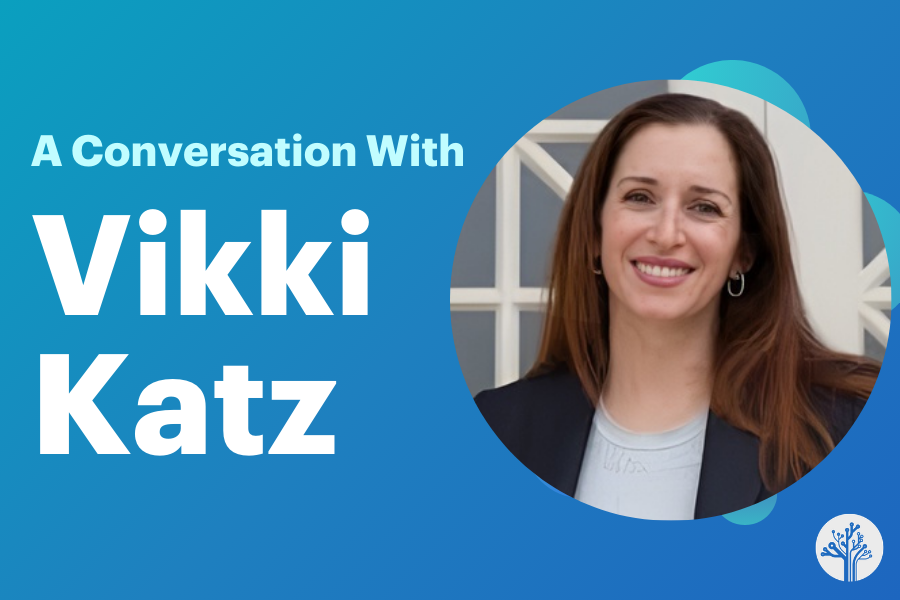
I sat down with Dr. Vikki Katz, a communications professor at Chapman University and the director of the new OR Initiative. We talked about the roots of her work, shaped by growing up in South Africa during the dismantling of apartheid, and how that experience informs her optimism about what’s possible when people commit to rebuilding trust. We also explored what civil discourse can look like in middle school and high school classrooms, how educators can be supported through system-wide leadership and professional learning communities, and why digital discernment and civil discourse have to be taught together in an AI-accelerated world.
Introduction & Origins
Tom Vander Ark: We’re talking about civil discourse today: what it is, why it’s important, and how to teach young people something that we’re not very good at as adults in America. We have the pleasure of speaking with Dr. Vikki Katz. She’s a communications pro at Chapman University.
Vikki, what a treat to have you join us.
Dr. Vikki Katz: Thank you for having me.
Tom Vander Ark: Where did your interest in civil discourse come from?
Dr. Vikki Katz: My interest in civil discourse goes all the way back. I grew up in South Africa through the 1980s and early 1990s and was old enough to understand what was happening as apartheid was dismantled, Mandela was released from prison, and South Africans came together to build and reimagine a country. The ways in which South Africa did that really left an imprint on me. I joke that it has made me pathologically optimistic about what is possible, even when it looks impossible.
And that really has always been one of the engineering lessons that underlies the work that I’ve done in these kinds of areas.
Tom Vander Ark: It’s a beautiful origin story. My last trip to South Africa reminded me that my Dutch Calvinist roots include a lot of culpability for setting up a system that prevented civil discourse.
And so that’s one thing I think about when I visit.
Tom Vander Ark: South Africa, Vikki, you launched an initiative called the OR Initiative to bring this set of skills—civil discourse skills—to middle school, high school and college students. Tell us about that.
Dr. Vikki Katz: So we officially launched in early February 2026, but we spent a year doing foundational work to really listen on the things that we were interested in so that we wouldn’t start building solutions without making sure that we were building things that people really needed.
We’ve launched the OR Initiative at Chapman University as a new program, and our mission is to help educators prepare our young people to become more digitally discerning and make it easier for them to build robust and shared evidence bases so that they can learn to engage in civil discourse on a shared base, and be able to get braver about talking about complex and contentious issues with their peers without disengaging—or losing their friendships over it.
Tom Vander Ark: Beautiful set of ideas. I love that you’re starting with eighth graders. I want you to talk about that entry point and where and how you show up. It did remind me of my granddaughter—she’s a middle grader—and she’s making a middle school choice based on the quality of the debate program. I love that she has that visibility to the importance of the idea of framing an argument.
But I think debate is a little different than civil discourse, isn’t it? What—
Dr. Vicki Katz: It should be if it’s done right. Sounds like your granddaughter might have been listening to her grandfather talking around the dinner table, which is nice to hear.
When we debate, we’re trying to poke holes in other people’s arguments. We’re trying to win. And when we engage in dialogue or active listening and share stories, we’re telling things from our own perspective.
Civil discourse is about learning to build an argument on an evidence base and then discuss with someone else why they might have arrived at a different conclusion from that process, from the one you did—get curious and empathetic about why they got to a different place, understanding that having empathy, trying to understand their position, doesn’t mean you have to have sympathy for it. It doesn’t mean that you lose your own position on that issue because you took the time to listen.
These skills have become rarer in American life than they should be. Our young people see less and less of it in the adults around them. They see less and less of it in their social media feeds.
What we heard from teachers that we interviewed this year was that they feel teaching kids how to do this is essential to the role they are supposed to play in a classroom, and that they are terrified of becoming the next viral controversy if they don’t have the time, the training and the—
Social Media & Youth Challenges
Dr. Vikki Katz: —tools to do it.
Tom Vander Ark: You mentioned social media, and, Vikki, it’s a sad reminder that 15 years ago, I was excited about the potential for social media to be a new place to host civil discourse. And I really believed that it would create this common truth and help municipal leaders, school system leaders, craft agreements to host conversations and craft agreements.
And as we all know, it’s done the opposite of that. And that makes this initiative all the more timely. I think you even talk about both creating civil discourse and building digital skills. Yes. Is that probably in part in response to social media?
Dr. Vikki Katz: It’s largely in response to social media, but also to the ways that what kids are learning about and seeing in their feeds online is divorced from the things they learn in school—becoming more and more so as more states create cell phone bans, and kids hear more and more of these conversations about how social media are bad for them.
The social media of today are not the social media 15 years ago. They’re not connecting people in their communities as much. Most of the platforms are video-based. Very little of the content that young people see is produced by people they know, and that’s not what social media was when it started. Our hopes then and the realities of what it does now are quite different.
The research shows quite clearly that the more time young people spend online, the less they know about political knowledge and current events, the more likely they are to know about conspiracy theories. But it’s complicated for them.
We interviewed young people—eighth and 11th graders—this year in independent, public and religious schools. We heard over and over from them that social media is fun and entertaining and frustrating and polarizing, and it’s complicated for them, but they don’t think the adults around them see it as complicated. They think they see it as all bad.
And one of the powerful findings is how much young people are sideswiped by political and graphic and upsetting information that’s interspersed among the content that they’re there for. And the eighth graders might go talk to their parents when they see things that are confusing or upsetting. By 11th grade, they’re just sitting with it themselves.
And at either grade level, they are worried that if they talk to the adults in their lives about things they’ve seen that are worrisome, that the adults around them will just freak out and take their tech. And so they’re muddling through it largely by themselves.
We want to break down that barrier a bit. Not that the classroom needs to fully open its door to everything kids are seeing online, but there needs to be some conversation between what kids see about the issues they cover in school—in the safety of a classroom with a well-trained and well-supported adult to guide them. There needs to be some way for kids to talk about that.
The things they’re taught in school about digital citizenship and civility is largely the opposite of what they’re seeing online, and as much as teachers are afraid of doing this without the supports they need and the proper resources, this all spills into school whether they wanted to or not.
When Charlie Kirk gets assassinated, that was one we heard about a lot. You end up having to deal with these civics shocks in class anyway. What we’d like to do is help teachers be better prepared because they have existing practices that make these conversations more routine, less extraordinary, and that they don’t start under stress.
Tom Vander Ark: I appreciate those—they’re sort of design principles.
Dr. Vikki Katz: Mm-hmm.
Tom Vander Ark: Much of this was in the report you released recently. It’s called Coming of Age in Polarized Times: Teaching Civil Discourse in a Digital Era. We will include links to that in the show notes, but I think that was an important summary of the points you just made.
Classroom Implementation
Tom Vander Ark: Vikki, I’d love to dive into the learner experience. What does it look like for the eighth and 11th graders? Where does it show up—in an English class, civics class? What happens? What does it look like?
Dr. Vikki Katz: What we’re trying to build is something that can be used in a variety of classes: in social studies, in a history or world history class, or a government class.
We started with thinking about how we can integrate some of the best material that already exists related to digital knowledge development, digital skill-building, and what needs development with regard to civil discourse skills, sandwiched around a particular contentious content issue.
And we are using the Middle East conflict as something that has been unusually enduring in young people’s lives and feeds. Because so much of living in this digital environment we’re in is that things happen and they seem seismic, and by the next day we’re onto something else. And the post-October 7 period has been unusually enduring. It’s been sustained in young people’s feeds. It’s been sustained in their lives.
For 11th graders who are starting to look at colleges, they’ve been seeing college protests and encampments, and it’s been framing what they think college is, how they think college students act as they’re looking toward their next part of their lives, and also how people a little older than them are handling complex and really upsetting world events in local space.
We wanted to use that as our first example because it’s one a lot of people don’t want to touch. Our goal in time is that we want to be able to sandwich those digital discernment and discourse skills around other contentious issues that have multiple perspectives and are enduring and require holding more than one thing to be true at a time, like climate change, immigration.
We’re starting with one case and then we’ll work on what’s universal about that and can be sandwiched around other issues. Climate change could be in a science class, for example, but as more and more states add digital literacy requirements at middle school and high school levels, we’re hoping to offer a more integrated way to teach those skills alongside contentious issues and current events, and bring in those civil discourse pieces of how to engage around it too.
Tom Vander Ark: So those cases, they would show up as a unit of study that might be a few days, a few weeks.
Dr. Vikki Katz: So what we’re doing is building around existing curriculum because we are not experts on the conflict in the Middle East, and one should only build things in their area of expertise. I’m a communication professor who studied kids in tech and development for a long time, and that’s my team’s area of expertise as well.
We’re working with curriculum developers who’ve got the most respected, multi-sided, evidence-based curriculum on the Middle East conflict for middle school and high school students, and that’s been around for 15, 20 years, and working with some of their teachers and seeing what it is that they need as a way to get ourselves started in doing this.
Tom Vander Ark: It’s a challenge for teachers to create—
Supporting Teachers & Parents
Tom Vander Ark: —this space for this dialogue. How are you thinking about supporting teachers and assisting them? How can school administrators support teachers to create space to have a shot at having a civil discourse?
Dr. Vikki Katz: Part of the report is that we reviewed 85 existing curricula that have to do with the three things that we were looking for overlap between: digital literacy, digital citizenship, digital knowledge development—however it was being defined—civil discourse, often referred to more as dialogue or active listening, and our contentious topic that we were focused on, which was the conflict in the Middle East and surrounding issues.
And what we found was there’s a lot of good content in each of those three circles. There’s very little integration; there’s very little overlap. And so teaching any of those things, they’re divorced from each other.
So for the most part, young people, when they’re learning about how to engage online, it’s using artificial examples and not things that they’re seeing in their feeds yesterday. We’d like to change that.
They’re not learning civil discourse; they’re learning active listening. And so we want to be able to integrate the kinds of relevant material that they’ve seen online and integrate it better into existing curriculum so that it doesn’t take many more days. It’s overlapping things that have generally been kept separate.
What we heard in terms of supporting teachers over and over again is that they are afraid of doing this individually. They worry about not having backing from administrators. One of the things that we want to work on is how we see this as a system issue: that this can be the kind of thing school leaders say, “We are going to adopt this as an approach that we do across our classes, and we’re going to explain that to parents,” so that they understand that this is part of what we’re in partnership with them to help their kids develop and learn how to do.
And those communication resources are something we will work with school leaders to develop so that they can message that well to their teachers and to their parent communities.
And the other is that we’re going to pilot-test a new version of a professional learning community. What does it mean to put teachers in community with each other on a regular basis so that they can troubleshoot, share with each other as they are trying to do these new things, and to develop a gold standard for what that looks like—so that that’s something that we can share with the broader field as a standard for how to support teachers.
Because one-day trainings in this, and then best of luck to you, is simply not going to be enough in an environment where this much courage is required for teachers to do this kind of work.
Tom Vander Ark: You preempted a number of questions with a beautiful answer. I’m glad you’re thinking about parent communication because these are such explosive topics that you’ve mentioned that it probably is important to let a broader community know that you’re going to attempt to—
Dr. Vikki Katz: Certainly.
Tom Vander Ark: —hold a discourse on a difficult issue.
I love the idea of professional learning communities for teachers as a second way to support this—the practice of creating a safe space. So that’s great.
Dr. Vikki Katz: One of the things we heard from teachers and from school leaders is what I call the specter of the parents with pitchforks, right? That if we start to do this, we’re going to have parents showing up at our door, and I don’t want to minimize the possibilities of that, but we also know that one of the few things that parents agree on across the political spectrum is that they’re worried about how technology is changing how their kids are developing.
They feel that their young people are less resilient than they were, struggle with face-to-face conversation. They struggle with adversity, and we want to build from an asset-based perspective—build on what kids are strong at, what they’re good at. But I also think there’s an opportunity to leverage that point of concern and to do it in ways that are constructive.
I’m a communication professor. I think there are ways to effectively and empathetically communicate to parents what their kids will gain from this as they develop, and what it’s going to mean in this digital age to prepare young people to be meaning-driven and engaged citizens as they inherit the most complex and connected version of the world we’ve ever had.
That’s not going to come as something we can outsource to higher ed. It’s too late to start in higher ed. We underestimate what our young people are capable of if we do that. But also, 40% of our young people don’t go to college. We can’t leave these skill-building opportunities to only being available in higher ed. We need this to be something that’s available to everybody.
Tom Vander Ark: You mentioned higher ed, and we’ve seen America’s best universities embroiled by the lack of civil discourse on campus. This is a topic we all need to get better at. I’m thinking about not only university heads, but system heads—the people that lead America’s school systems. I frequently talk about the need for them increasingly to be conversation hosts and agreement crafters.
Dr. Vikki Katz: Hmm.
Tom Vander Ark: I think this is something that administrators need to get better at, because as you’ve mentioned, there are so many issues that are so complicated and so contentious, without historical precedent—new issues that we don’t yet understand, but need responses relatively quickly.
And so I guess what I’m stumbling toward, Vikki, is I think school administrators need a dose of this as well. I would think they’d have to be fully supportive of this for it to be successful in multiple classrooms. Any of that make any sense?
Dr. Vikki Katz: It definitely does, and I think you’re right. It’s going to take leadership making clear statements about what their vision is for what schools are supposed to be for young people, and we are in a moment where we are asking schools to be too much and do too many things. This is probably the most important thing that schools can do.
What we heard over and over again from young people is that, especially coming out of the pandemic, they have so few places outside of school where they get to engage with each other—where they get to experiment and try things on and disagree with each other—and they are so hungry for places where they can operate from a shared evidence base because that’s very rare.
They know that their feeds don’t look like their peers’ feeds. They know that they have few shared experiences around issues that feel seismic to them. Things feel like they happen so quickly, and they need places to slow down—to build a shared understanding together—and a place for community where it feels like they can be generous enough with each other to say things to each other and look each other in the face and see if what they said landed badly.
“I think I messed that up. I’d like to try that again.” And to have a peer be generous enough to say, “You should try that again.”
They identify classrooms as maybe their last place where they get to do that, and that is a sacred thing—to our educators—to help them live up to the ideals of their profession. Our young people are hungry for classrooms to be that. They speak at length about times where their teachers have done this well.
They notice when their teachers are afraid to let them go there, and they notice when things get cut off before they can fully ripen because teachers are afraid. They’re very attuned to the emotional engagement of their teachers around this, and the only way the teachers are going to feel like they truly have permission to do this and do it well is going to be if school leaders take a really clear stance that this is not actually about politics, because we’re not trying to teach your young people what to think about these issues.
What we are trying to teach them is a process of how to think and how to stay in relationship with each other when they disagree. Because without that, I don’t know how we preserve this fragile experiment of American democracy, if that means something to all of us—and I believe that it does.
Then we have to try new things and we have to be brave enough to say the alternative is leaving young people to sort out the most difficult problems of the day in algorithmically driven environments that feed on outrage and are not supporting them. These companies are not going to regulate themselves, and our classrooms can be counterweights to that.
Tom Vander Ark: You reminded me of Ted Sizer and his urging that school will be a place where young people are challenged to learn how to use their minds well. Vikki, the Getting Smart team has a deep-seated belief in active civics. We think civics should be more than studying dates and timelines and memorizing state capitals—that it really ought to be about civil discourse.
I’m reiterating that this is a core skill set within civics education as well as communication. Is that—
Dr. Vikki Katz: We learn by doing. And if we practice something enough, it becomes a disposition. And I think my wildest metric of success would be that we graduate more young people from middle schools, high schools and college who wait to make up their minds when they’re faced with new topics and information about things they don’t know very much about; that are willing to seek out learning from other people in a variety of sources and sort out what is trustworthy and what isn’t; and that even when they arrive at a decision about a particular topic and how they feel about it, they’re still capable of staying in the room with people who might see it differently from themselves.
And all of that is going to require civic generosity with each other to trust that others are going to do that as well. But we cultivate that in classrooms and in schools and in communities. And if OR Initiative can offer anything, I hope it will be that it’s a place for bringing in new ideas and for convening the long-standing and excellent work that’s in the field so that the creators of curricular tools and content and professional development start seeing common ground with each other that runs beyond the obvious, or with organizations they hadn’t seen before, as we have convenings of those stakeholders at Chapman and in other places like we had last—
AI, Technology & Next Steps
Dr. Vikki Katz: —week.
Tom Vander Ark: I want to give you space to talk about the implications of AI. It strikes me that we are being called to reconsider what it means to be a human being, amplified by powerful technologies. These are fundamental questions.
Is that related to the OR Initiative?
Dr. Vikki Katz: It is, in a couple of really important ways. One is what we heard from students and teachers over and over again: that the traditional media literacy skills that they’ve learned, like differentiating between .edu and .org, and how you assess who’s an expert, are failing them in algorithmically driven environments where they can’t find something again because it disappears into a feed and you can’t compare side by side.
That’s not because teachers are teaching things that aren’t important. It’s because these environments are changing so rapidly. And so the ways that we teach young people digital discernment, digital literacy, has to be able to shift as quickly as the technologies are shifting so that we’re keeping up and not falling behind.
I think there are some orgs that are doing interesting work with how we harness these technologies in the interests of children. And one of the things that we are going to be working on is we’re launching a civil discourse accelerator to develop a fellows program because there are some digital tools that we’ve identified would make all of this much easier and quicker for teachers to do—easier to keep updated, easier to stay current—and we want to build those.
Emerging and mid-career ed tech specialists will work with us to develop those and learn how to develop in co-design with teachers and with students, and in a community of their own, so that we are also affirmatively helping to develop a cadre of young designers who are harnessing AI-generated technologies for K-12 and for higher ed that’s developmentally appropriate, that works with kids, not on kids, so that we can hopefully contribute to affirmative examples of how AI can work in schools that are counter to the revenue-maximizing models that we are otherwise going to see whether we want to or not.
And a hallmark of how we will build those tools is, first of all, to ask whether a digital tool is necessary, because it’s often not the answer. Is it going to sideline the kinds of struggles that kids need to be having to take various forms of information and develop authentic knowledge from them? We can’t shortcut.
The only reason anyone my age and older can tell when AI is hallucinating is because we know what it should be saying. If young people don’t develop knowledge before they start using AI, they will never recognize the hallucination, and we need them to.
But we also don’t need AI-generated tools that are going to sideline or distract young people from the intense work it takes to have a face-to-face conversation with someone about an issue that matters to you.
The worst thing we could do would be to add a chatbot that means kids start redirecting to staring at a chatbot instead of looking at each other and learning to figure out how you tell when you’ve heard somebody’s feelings from the nonverbal communication that they’re giving you.
Tom Vander Ark: I’m relatively optimistic about the role that AI can play in supporting civil discourse. I want to press you on a couple applications. Do you see these smart tools being a mediator, a facilitator, a feedback provider?
Dr. Vikki Katz: I think it’s possible. Depending on the individual student and the situation, it could be all of those things.
So, for example, one of the AI-driven tools that we had at our launch event last week is Sway, which is still in beta, and it is a text-based AI program for civil discourse that’s designed to be asynchronous. You give the students a statement and they indicate where they are on that spectrum, and it allows teachers, in a de-identified way, to pair kids with each other.
If they write something that’s not all that civil, it’ll suggest a way to rephrase what you’re saying so that you can better understand the other person’s position rather than shutting them down. It’s trying to help them modulate, but I see that as an example of something that might be a great first step.
Perhaps not quite yet—we’re not quite there yet. We’re going to start building these muscles slowly because the ability to do this in text form and asynchronously means you get to think about your response before you say something.
It’s not redirecting you from looking at each other to looking at a screen because you’re not at the point where you’re looking at each other yet.
I think there are ways to creatively think about the affordances of different levels and richness of communication technologies that would allow AI to support young people building muscle over time with each other in and out of school. You could have kids do this at home. This could be homework, so it’s not taking up class time.
I don’t think it should be where it ends. I don’t think we should end a text-based conversation, but maybe it’s the beginning of something.
I think there are a lot of things being developed and generated right now. Some of them will be really great ideas, and hopefully we’ll be able to separate them from the ones that are going to shortcut the things where kids need to have worthy struggles to get things right for themselves.
Tom Vander Ark: We’ve been talking to Dr. Vikki Katz. She’s a professor of communications at Chapman University, and she directs a new initiative called the OR Initiative. Closing questions, Vikki: advice for teacher-leaders and administrators on what they might do next if they want to learn more or dive into this civil discourse initiative.
Dr. Vikki Katz: Yeah—
Tom Vander Ark: I’ll give you space to give a shout-out to collaborators, contributors to this initiative—other folks that have been helpful bringing this to American schools.
Dr. Vikki Katz: Any school leaders or educators that are interested in learning more should go to ORinitiative.org.
You’ll find all the resources we’re going to develop there. You can join our mailing list, the report that we released last week, and the results of a year of research on these topics. And also videos—short videos—that we’ve developed of students and of educators: key quotes and findings from our research in kind of 2-minute videos that would be easy to share with your school community to start developing a sense of how and why this is work worth doing.
I’m grateful to our supporters and funders, the primary of which is the Samueli Foundation based in Orange County, which has been a champion of this work at Chapman University. That has been an extraordinary place to start building this.
And I work with an extraordinary team of people deeply experienced in policy, in ed tech, in young people, in development, and how we help people grow and thrive. You can learn more about our team at our website as well.
So I hope that some of your listeners will reach out to us about how we might be able to help support their very specific needs in their own districts and communities.
Tom Vander Ark: Beautiful. Katz leads the OR Initiative, an exciting new set of resources around civil discourse. Vikki, thanks for joining us.
Dr. Vikki Katz: Thanks for having me.
Tom Vander Ark: Thanks to our producer, Mason, Pasha, and the whole Getting Smart team for making this possible. Until next week, keep learning, keep leading, and keep innovating for equity. Thank you, Vikki
Guest Bio
Vikki Katz
Vikki Katz is a Professor in the School of Communication and the Fletcher Jones Endowed Chair in Free Speech at Chapman University. She is also the Founder and Executive Director of Or Initiative, a new program dedicated to generating alternatives to young people disengaging from each other over contentious issues in a digital age. A leading scholar on teen and young adult development, technology access, and equitable civic engagement, she has worked closely with young people, educators, policymakers, and content creators to ensure high-quality evidence drives meaningful social change over the course of her career. Her research has informed federal policy, including Federal Communications Commission efforts to expand national broadband access, and shaped PBS Kids’ redesign of digital content to better serve children without consistent high-speed internet. The author of four books and more than 50 journal articles, book chapters, and policy reports, Katz’s work has been supported by organizations including the Bill & Melinda Gates Foundation, Carnegie Corporation of New York, and the Spencer Foundation. She serves as an advisor to Sesame Workshop and on the Board of Directors for the National Center for Families Learning.
