

Get stories like this delivered straight to your inbox. Sign up for The 74 Newsletter
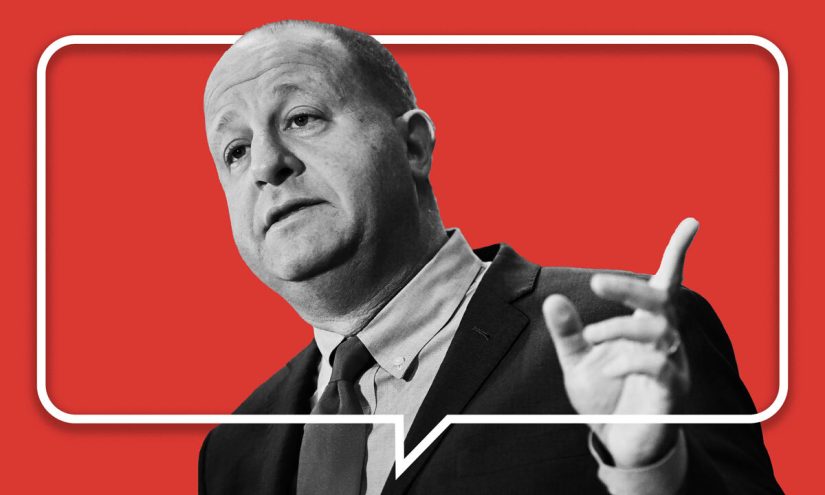
Colorado Gov. Jared Polis may be the Democratic Party’s single most prominent supporter of school choice.
In his life before politics, he co-founded two charter schools in his home state. During his time serving in the U.S. House of Representatives, he authored bipartisan legislation to expand high-performing charters, citing hundreds of thousands of families on waitlists nationwide. And now, in his last year as Colorado’s chief executive, he has even signed on to participate in the Trump administration’s biggest K–12 policy initiative to date: a tax credit designed to expand school choice across the country.
The benefit, which will come online next January, allows donors to save up to $1,700 on their federal taxes by contributing to organizations that defray students’ educational costs, including private school tuition. Taxpayers from anywhere in the U.S. can give freely and claim the credit, but individual states must opt in for their students to receive the scholarships. To this point, 26 Republican governors have said they will take steps to do so; only Polis and one other Democrat, North Carolina’s Josh Stein, have done the same.
Scholarship Tax Credit Leaves Democratic Governors with Difficult Choice
It’s a choice that can’t help but divide the party. Progressives have cast the scholarship credit as an attack on public schools, but those tied to the Democrats’ formerly dominant education reform wing (including former Education Secretary Arne Duncan) hail it as a possible solution to stubbornly low student achievement. Polis himself gave an interview to Fox News explaining his decision as one that would empower both scholarship donors and recipients.
In an interview with The 74’s Kevin Mahnken, Polis predicted that his fellow Democrats would eventually reach the same judgment. He also cited his own record as governor — including a huge expansion of free preschool — as an example to state and local leaders weighing how to govern schools as mixed signals emanate from the federal government over the direction of U.S. education policy. Considered a likely future presidential candidate over the last few election cycles, he called for his party to adopt a more assertive K–12 agenda.
“Not a lot of change was driven out of Washington over the last few years,” Polis said. “That should change, and Democrats should be the party of change.”
Colorado Gov. Jared Polis with Lt. Gov. Dianne Primavera read to students during a tour at Centennial Elementary school in 2019. (Getty Images)
The 74: So far, you’re one of just two Democratic governors who has indicated that his state will participate in the federal scholarship tax credit. Why do you think that is?
Polis: I think most, if not all, Democratic governors will get there as they learn about the chance to boost charitable contributions in their state. If there are states that don’t, for some reason, people in those states can still give to charities in states like Colorado.
In other words, taxpayers everywhere will be able to get the tax credit. But if a particular state doesn’t opt in, then the donors in that state would be giving out of state. I do believe states will opt in as they see the opportunity for additional donations to help at-risk kids and middle-class kids in their state.
The analogy that’s been used is to the Medicaid expansion included in Obamacare: A few red states still refuse to participate, but most have turned the page and accepted the federal funds. Do you see blue states following a similar path here?
Yeah, I think many of them will choose to do it because it’s free money.
With the Medicaid expansion, Colorado was totally for it, but that initiative did put some state money on the line as well. It was originally a 90-10 split. I’m proud that Colorado did that — along with all the blue states and most of the red states — but this was an even easier decision because there are zero state resources on the line. It’s all additional resources to nonprofits that help kids.
Colorado has had a similar thing on the books for a long time, the Colorado Child Care Contribution Credit. If you give to an organization that provides early childhood care, either a religious or secular organization, you get a 50 percent tax credit on your state taxes. So you get $500 off your state taxes if you donate $1,000. We’ve had that in place for decades, and it’s been very popular on both sides of the aisle. The scholarship tax credit is a more generous one because it’s 100 percent, but it’s federal, so we don’t have to pay for it. That’s great from the state’s perspective.
The credit will only become available next January, near the end of your term, but I’m curious what you think of potential issues with implementation. Some warn that money could be channeled to schools that discriminate against potential students, and more broadly, that it could create an unaccountable private school choice sector. Do you share any of those concerns?
This isn’t government money. It’s not the state investing in anything, it’s individual donors making their decisions. Sure, I’ll be donating my $1,700 to great programs for education and tutoring and after-school care for kids that need it, and others might donate to scholarships or summer programs. It’s really up to the donors, and you can’t expect that you or I would agree with how somebody else donates their money.
The important thing is that in the aggregate, it’ll do a lot for kids.
As School Choice Tax Credit Goes National, the Battle over Regulation Begins
Colorado is a really interesting case in that a huge number of families already take part in school choice through charters and open enrollment. But voters rejected voucher-type programs twice through referenda in the 1990s, and last year, they voted down a proposed constitutional right to school choice. How could the federal tax credit affect public attitudes?
It’ll help bring more educational services to more kids, and the form of that will be decided by what donors choose and what Coloradans want. For some it’ll be tutoring programs, for others it will be summer learning opportunities, and for others it could be scholarships for school. There are just so many ways for these resources to be used.
In Colorado, we trust the parents. We hope that some great nonprofits are going to be able to participate, and that many Coloradans step up and choose to make this $1,700 donation. Some donors will choose to give their money to organizations that don’t show value-adds for kids, so I do hope there’s transparency. And the more information for parents to take advantage of these programs that nonprofits offer, the better. We ultimately want this to show improvements to student achievement and success.
Does the national Democratic Party have a K–12 agenda right now? The Biden administration used a lot of its education bandwidth on things like student loan forgiveness, and I’m interested in whether you think your party needs to set clearer priorities on schools.
The party doesn’t have one voice, it has many. There are certainly many education leaders in Congress. It was a focus of my service there, when I was the ranking member on the early childhood and K–12 subcommittee. I worked with President Obama and Joe Lieberman and others on the All-STAR Act [legislation, never passed, that would have provided competitive grants for the expansion of high-performing charter schools].
Democrats stand for opportunity and for making sure — no matter where you live, even in the poorest areas in the inner city or of rural America — that you have every opportunity and advantage, a choice of high-quality options that work and that can help you get the skills you need to live a great life. For me, it’s about opportunity, and I know a lot of Democrats feel the same way.
But how do those values translate into policy? The period of No Child Left Behind-style education reform ended a while ago, and Republicans have responded with a big embrace of school choice at both the state and federal levels. If Democrats aren’t going along with them, and they’re not returning to the days of NCLB, how do they move forward?
Basically, we need to update the way we look at outcomes in education and make sure we have better transparency and accountability for providers at all levels. It’s not just about making sure kids can read and do math — although they do need to do that — it’s also about making sure they’re prepared with the skills that will help them get a good job. If they’re going to higher education, it’s about making sure they’re exposed to dual- and concurrent-enrollment in high school. How can they get a certificate that means something if they’re not going to a two- or four-year school?
These are the kinds of things we need to do a better job of measuring across all our schools and educational programs — public, private, and charter.
You have not ruled out running for president in 2028. What does the Democrats’ next leader have to do to recover some of the credibility that they’ve lost with voters, at least according to most polls, on education and other issues?
Democrats are the party of education, and we need to reclaim that with a bold agenda. When I ran for governor here in Colorado, we only had half-day kindergarten; parents had to pay for full-day, and they had to pay for preschool. One of the top items we got done is free, universal, full-day kindergarten and preschool for every child in our state. We’re already seeing the benefits of that as that first class of kids is now in the second and third grades. We also want to make sure that high school graduates enter the workforce with a skill or credential that allows them to earn a living, or to go on to one of the many kinds of institutions of higher education, or apprenticeships, or skills academies.
Colorado Releases Draft Plan for Voluntary Universal Preschool
And we want to make sure we embrace choice. I’m a parent of two kids, and every parent knows that what’s good for one kid isn’t necessarily good for the other. Some kids learn from outdoor, experiential learning, some kids thrive in a dual-language immersion setting, and some will want a STEM experience. In Colorado, we have agriculture-focused high schools. We have dual-language immersion in Chinese and French. We have vocational opportunities — and not just in the traditional fields like auto shops or aviation, but also the healthcare workforce. You can get certified, right out of high school, to be a phlebotomist or an EMT.
Your time as governor has played out over parts of two Trump presidential terms, plus the pandemic and learning loss in between. What has your tenure taught you about improving schools and education?
We definitely focused on progress at the state level. There’s some chaos going on now in terms of who administers certain programs, but not a lot of change was driven out of Washington over the last few years.
That should change, and Democrats should be the party of change. Better education and opportunity is the key to our prosperity as a nation, and for learners at the individual level.
So the lack of activity certainly hasn’t held states back, and there are lots of examples of what states and school districts have done to innovate. As I mentioned, we’ve had many in Colorado: universal preschool and kindergarten, providing high-quality schools in education deserts, and providing more choices to empower parents to make better choices for their kids.
So is the lesson for Democrats to be as entrepreneurial as possible at the level of state policy, and to be as bold as possible about improving outcomes in the schools around them?
Yeah, don’t just wait out the chaos at the national level. No matter what happens nationally, we need to fight for change at the district level and the state level, so we can better serve every American — no matter where they live or the economic circumstances of their parents.
Who are you rooting for in the Super Bowl, the Patriots or the Seahawks?
Oh, I’m still bemoaning our Broncos. Such a close game, and a tragic ending on a snowy day.
Did you use this article in your work?
We’d love to hear how The 74’s reporting is helping educators, researchers, and policymakers. Tell us how
