

Get stories like this delivered straight to your inbox. Sign up for The 74 Newsletter
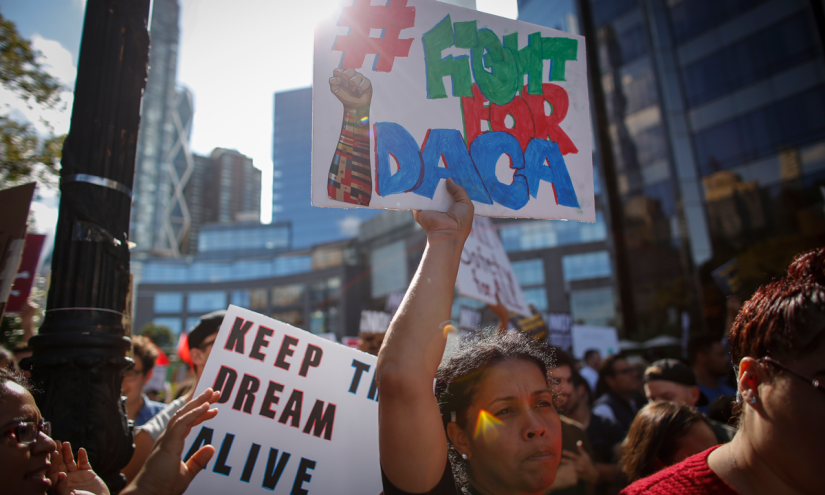
Federal agents have arrested 261 people covered by the Deferred Action for Childhood Arrivals program, or DACA, and deported 86 of them, according to the Department of Homeland Security.
The apprehensions and removals occurred in a 10-month period between Jan. 1 and Nov. 19, 2025, according to figures released by DHS in response to a query from Illinois Democratic Sen. Dick Durbin.
It reveals for the first time that this group, who were granted protected status during the Obama administration and whose fate has been the subject of ongoing litigation, have been swept up in significant numbers by President Donald Trump’s aggressive immigration enforcement.
It’s unclear whether more have been detained or deported since November, a period of time that saw immigration sweeps in Charlotte, North Carolina, New Orleans and Minneapolis.
Minneapolis Parents and Educators Describe Terror of ICE Raids, Call for Help
DACA recipients took a chance when they registered their biometric data with the government starting in 2012 as part of the application process. Immigrant advocates say they are sickened to see this information used against them in a campaign that has brought chaos, terror and, in some cases, death, to U.S. cities.
Wendy Cervantes (The Center for Law and Social Policy)
“As someone who worked in those early days of the DACA program to ease fears and encourage youth to apply, it breaks my heart to see the trust they put into the process betrayed more than a decade later,” said Wendy Cervantes, a director at The Center for Law and Social Policy. “It’s simply wrong, like setting a trap for young people who have grown up here and have done everything possible to be able to remain in the country they call home.”
DACA recipients are lawfully present in the United States during the period of deferred action and also receive work authorization, although this right is under attack in Texas. In multiple states, DACA recipients have lost access to health insurance under the Affordable Care Act — and in some places no longer qualify for in-state college tuition.
Nearly 134,000 DACA recipients had obtained lawful permanent resident status as of March 31, 2024, according to the Congressional Research Service. Some 15,000 educators have DACA status. There were 533,280 active DACA recipients as of December 31, 2024.
Immigrant Educators Helping Immigrant Students Through Coronavirus: Maria Rocha, One of 2,000 Texas Teachers Covered by DACA, Is Turning Her Anxiety Into Advocacy
Alejandra Vázquez Baur, a fellow at The Century Foundation, a progressive think tank, called the government’s targeting of DACA recipients shameful, saying it reflects a greater, solvable problem.
“It underscores the importance of providing a path to citizenship for DACA recipients as their protections were temporary and insufficient in the first place,” she said. “Immigrants — all immigrants — deserve dignity. Congress can and must restore that dignity to the system in the face of such abuses of power as we’ve seen in the last year under this administration.”
Most Americans support DACA, including Trump, who has spoken highly of the program. Yet a path to citizenship remains elusive for this group. Last summer, DHS urged DACA recipients to self-deport.
Juliana Macedo do Nascimento, a DACA recipient and deputy director of federal advocacy for United We Dream, said the government’s reversal is devastating.
“This is obviously unacceptable, unconscionable and a betrayal of the promises made by the U.S. government,” she said. “DACA is a lawful program that does provide legal protection from detention and deportation which has been reaffirmed time and time again by the courts, no matter what this current administration says.”
DHS, in its Feb. 11 letter to Durbin, said that of the 261 DACA recipients arrested, 241 had “criminal histories.” Trump has said he is targeting “the worst of the worst” for deportation, but records show less than 14% of those arrested by ICE in his first year back in office had violent criminal records, according to DHS data obtained by CBS.
DHS said, too, in its letter, that DACA does not offer protection from deportation.
“DACA, like all forms of deferred action, is a temporary forbearance from removal within the authority of the Secretary of Homeland Security,” the letter states. “It comes with no right or entitlement to remain in the United States indefinitely. Aliens with certain criminal histories will not be considered for DACA. Further, those who violate the terms are also subject to termination and removal.”
From Head Start to Adult Ed, Trump Narrows Pathway for Undocumented Students
But immigrant advocates say the government is not acting in good faith.
“There is a process to rescind DACA status but this government is not going through that,” said Macedo do Nascimento. “No matter what that number is, any detention and deportation of DACA recipients on valid status is unlawful.”
The crackdown comes as the government is failing to meet its promise of deporting millions quickly. Immigration agents are struggling to satisfy a stated goal of 3,000 daily arrests.
The United States was home to 334 million people in 2023, 14 million of whom were undocumented, according to Pew Research.
Records show 28% of active DACA recipients live in California, 17% in Texas, 5% in Illinois and 4% in both New York and Florida, with the remainder spread across the country. More than 80% are from Mexico, 4% are from El Salvador and 3% are from Guatemala.
Applicants had to be under 16 at the time of entry into the United States, younger than 31 on June 15, 2012 and either enrolled in school — or have graduated — to qualify, among a host of other requirements. They had to submit to background checks, reapply to the program every two years and pay hundreds of dollars in fees to participate.
The government stopped processing new DACA requests in late 2017. But Cervantes sees another way forward.
“DACA recipients represent the best of us: they are teachers, doctors, business owners, and leaders in their communities,” she said. “Many are parents who have built a life here, with more than a quarter of a million U.S. citizen children with at least one parent with DACA. The success of the DACA program has proven what is possible when policymakers choose humanity and opportunity over hate and cruelty.”
Did you use this article in your work?
We’d love to hear how The 74’s reporting is helping educators, researchers, and policymakers. Tell us how
