

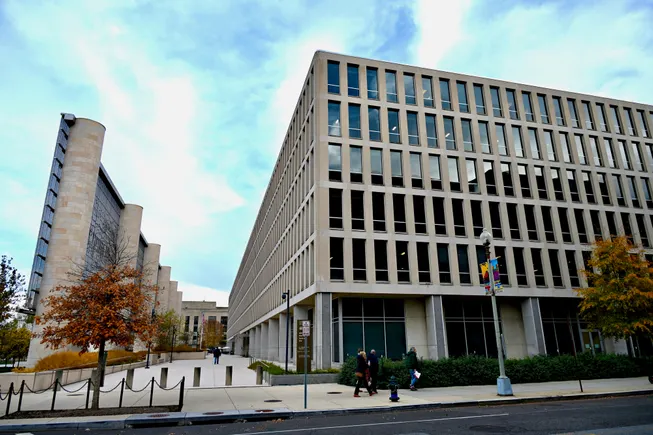
With Republicans’ massive spending and tax bill, known as the One Big Beautiful Bill Act, set to take effect this summer, the U.S. Department of Education is tasked with crafting regulations that will fill in some of the details of the law’s enforcement.
Those details could have big consequences for colleges and students. Among them is what graduate programs the department will consider “professional,” a designation that will qualify enrolled students for larger loans under new federal lending caps.
The issue has been contentious since the Education Department agreed on regulatory language that would limit “professional” programs to 11 fields, excluding certain graduate programs that often require licensure. The department acknowledged the controversy in the formal proposal, released in late January. Its summary stated that the designation “does not reflect a value judgment by the Department regarding whether a borrower graduating from the program is considered a ‘professional.’”
Rather, the department added, it “only” interprets the term for the purpose of applying the new loan limits.
But that’s a pretty big “only.” The difference for students deemed “professional” and those deemed “graduate” is the availability of an additional $100,000 in federal student loans for their education. That’s because the cap for professional students — $200,000 — is double that of graduate students under OBBBA’s lending limits.
The public comment period for the proposal ended Monday. The proposal and others tied to OBBBA’s implementation drew roughly 65,000 comments. The Education Department is required to review all comments before issuing final regulations.
Many commenters expressed concerns that the regulations’ narrow definition of “professional student” could limit entry into critical professions by dramatically reducing the aid available, which could in turn have workforce ramifications.
Boston University President Melissa Gilliam argued that a wide range of fields could be impacted.
“The Proposed Rule’s narrow definition of ‘professional degree’ will make graduate programs less accessible to students pursuing degrees in critical fields such as health care, education, and business, among others, by limiting the amount of federal loans available,” Gilliam wrote in a public comment.
Excluded professions
The Education Department and Republican backers of the new law say the loan caps will reduce excessive student borrowing and force colleges to reduce their costs.
At a recent higher education conference in Washington, D.C., Under Secretary Nicholas Kent, the top Education Department official overseeing higher education, said OBBBA’s policies would put “downward pressure on colleges to lower costs, increase efficiencies and prioritize high-quality programs.”
But many stakeholders worry the law’s lending limits will limit access to education.
In a memo to stakeholders about commenting on the rules, the American Council on Education called the Education Department’s proposal an “extremely narrow definition of professional degrees” that doesn’t align with the “much broader definition” included in the OBBBA and excludes “hundreds of thousands of students from additional loan eligibility.”
According to ACE, 28% of all student loan borrowers require amounts exceeding the new lending limits.
“Forcing students out of the many professional degree programs that exist outside of the 11 programs will have a detrimental impact on student loan borrowers,” ACE President Ted Mitchell said on behalf of over three dozen other higher education organizations in a comment to the Education Department filed Monday. “This problem is most acute for professional programs in fields such as health, education, architecture, and business administration.”
The organizations flagged 17 additional fields for the department that they believed should be deemed “professional” based on stakeholder feedback, including nursing, physician assistance, audiology, physical therapy, public health, social work, architecture, accounting and special education.
Panic in nursing and healthcare fields
Among the excluded fields, nursing is an area where workforce and educational shortages already exist. And many graduate nursing programs are costly.
Adam Kinsaul, president of the Nurse Practitioner Alliance of Alabama, wrote that the $20,500 annual federal lending caps on graduate students represent “amounts that fall well below the cost of many advanced nursing programs, which frequently exceed $30,000 annually.”
“Restricting access to federal loan support threatens the pipeline of clinicians needed to meet current and future healthcare demands,” Kinsaul added.
One of the other professional organizations raising alarms is the American Academy of Physician Associates, which has found that median costs for PA programs frequently outstrip the forthcoming loan limits.
In a recent AAPA survey of those in the field, a majority said capping federal borrowing would have forced them to delay or reconsider their path into the PA profession.
David Forstein, president of Rocky Vista University, a for-profit institution focused on medical-related programs, echoed similar concerns about nursing and physician assistant programs.
“By preventing these degrees from being classified as professional degrees, without basing it in Congress’s intent, the Department is preventing students from being able to finance their education through the Federal student loan program,” Forstein wrote in comments to the Education Department. “Instead, the Department is allowing financial means to dictate which individuals will be able to serve their communities, especially in areas that already lack sufficient medical providers,” he added.
Tim Collins, president of Walsh University, in Ohio, wrote that the exclusion of certain professional degrees would “discourage capable, service-minded individuals from pursuing vital healthcare professions precisely when demand for them continues to rise.”
‘A significant barrier to entry’
Other commenters raised alarms with the Education Department about their fields being excluded from the “professional” designation as well.
Michael Chang, managing principal of the architecture firm AC Martin, opposed the department’s proposal over concerns that it would limit the pipeline of experts in the architectural field.
“Our firm depends on a consistent pipeline of highly trained, licensed professionals to deliver complex construction projects that support public institutions, private investment, and the national economy,” Chang wrote. “Reclassifying accredited architectural degrees and capping federal student loans at $20,500 would create a significant barrier to entry into the profession, further constraining an already limited workforce.”
