

Get stories like this delivered straight to your inbox. Sign up for The 74 Newsletter
The U.S. Department of Education on Wednesday backed down from its legal fight with the American Federation of Teachers over the Trump administration’s efforts to eliminate diversity, equity and inclusion programs from the nation’s schools.
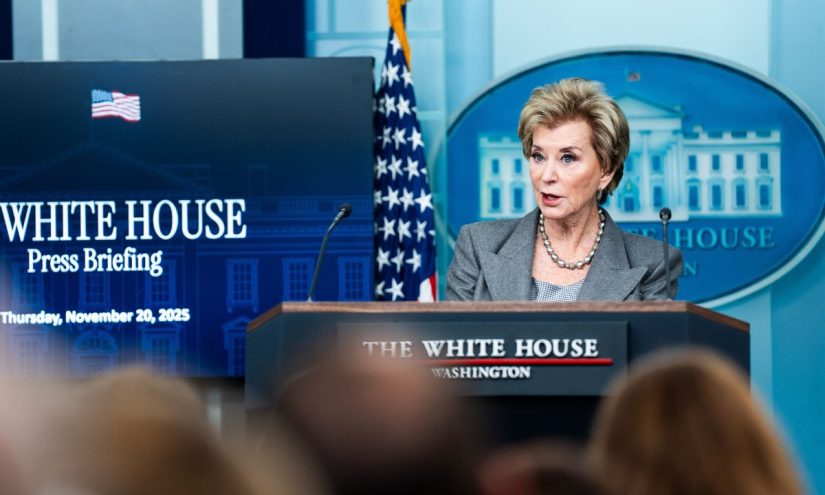
Education Secretary Linda McMahon withdrew the department’s appeal in a federal lawsuit that challenged a 2025 letter warning schools against efforts to “preference certain racial groups.”
In April, she asked states to sign a certification form agreeing to the administration’s view of non-discrimination laws or risk losing federal funds. In her ruling, Judge Stephanie A. Gallagher, a district judge for the District of Maryland, called both the letter and the certification requirement “substantively improper.”
“The administration is entitled to express its viewpoints and to promulgate policies aligned with those viewpoints,” she wrote. “But it must do so within the procedural bounds Congress has outlined. And it may not do so at the expense of constitutional rights.”
Teachers Unions, Sociologists Sue over Trump Ban on Racial Content in Schools
Other litigation over the letter and the certification is ongoing.
The department’s tough anti-DEI stance drew a broad mix of reactions. Some Republican state education chiefs welcomed the letter, with Ryan Walters, former Oklahoma superintendent, posting a video of himself signing the form. Blue states refused to sign, while at the district level, the actions largely sparked confusion over whether they could still hold events related to Black History Month or teach about racism. One Georgia school board withdrew an equity policy and then reinstated it when the court blocked the letter.
The lawsuit, led by American Federation of Teachers, is one of four related to the letter or the threat to withhold funds. The National Education Association, 19 Democratic-led states and the NAACP also challenged the department’s actions. But the department didn’t initially fare well in court. On the same day in late April, Gallagher suspended the letter while two other federal judges blocked enforcement of the certification form.
“With the stroke of a pen, the administration tried to take a hatchet to 60 years of civil rights laws that were meant to create educational opportunity for all kids,” AFT President Randi Weingarten said in a statement. “It took a union to stand in the stead of kids and educators who feared retribution from the government.”
The department did not respond to a request for comment, but its decision in the AFT case doesn’t put the issue to rest.
In the NEA case, the judge has not issued a final ruling, but an injunction remains in place. The department filed a motion to dismiss the NAACP case last summer, but the court has not yet ruled. The multi-state case, meanwhile, is set for trial in June.
While the department was unable to pressure schools through a “dear colleague” letter, it has continued to launch civil rights investigations into districts with diversity and equity initiatives, like Chicago’s Black Student Success Plan.
Chicago Public Schools’ Black Student Success Plan Under Investigation Over DEI
Even some conservatives criticized the agency’s use of non-binding guidance to implement policy.
“There are good reasons to be concerned about the capricious use of dear colleague letters. Many of us have been warning about the problems for 15 years now, dating back to Obama’s first term,” said Rick Hess, director of education policy studies at the American Enterprise Institute. “Seeing the administration instead rely on the machinery of the Office for Civil Rights is probably a good thing, as that should ensure that this is less about federal diktats than about investigations into specific complaints.”
Did you use this article in your work?
We’d love to hear how The 74’s reporting is helping educators, researchers, and policymakers. Tell us how
