

Guest submission from Lyida Locklear Canty
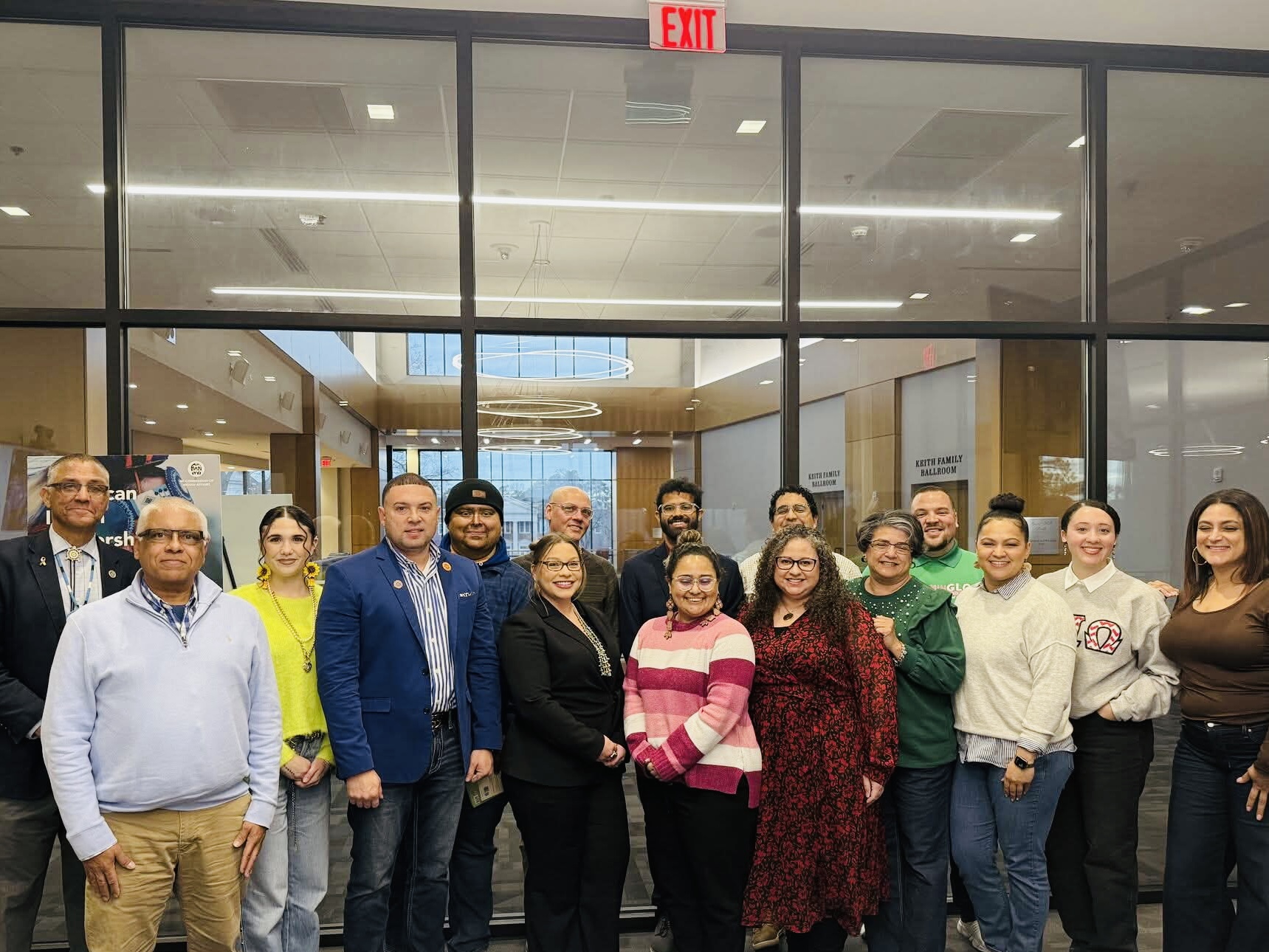
We recently had the opportunity to speak at Campbell University’s American Indian Leadership Development Program. The purpose of the Program is to develop up-and-coming leaders of North Carolina tribes to increase Native nation-building. North Carolina has the largest American Indian population east of the Mississippi River.
In partnership with the North Carolina Commission of Indian Affairs, Campbell University established the American Indian Leadership Development Program to offer leadership training for tribal citizens in North Carolina.
The Leadership Development Program brings together 20 members in each cohort for a 12-month experience. Throughout this period, participants study issues related to tribal government, policies, and funding, learn from Indigenous leaders active in Indian Country, collaborate on projects, and more. Mnaged by Dr. Al Bryant, who serves as the Dean of the School of Education and Human Sciences at Campbell University
At the Program’s January session, Amber Holland and I presented on Federal Indian Law, Federal recognition, and the services our Firm provides on these topics. We shared our education and experience with the cohort and highlighted our Indigenous roots to North Carolina that we share with cohort members.
We believe our deep roots and experience enable us to better understand our clients’ specific needs and develop innovative and culturally-framed solutions. Similarly, cohort members will thrive as they continue to embrace their Indigenous roots to better serve Indian Country with creative and culturally-appropriate outcomes.
Dr. Ronny Bell and Dr. Ryan Emanuel also presented in January’s session. Dr. Bell is a Lumbee citizen and serves as the Fred Eshelman Professor and Chair of the Division of Pharmaceutical Outcomes and Policy at the University of North Carolina. Dr. Emanuel is a Lumbee citizen and serves as a tenured Associate Professor at Duke University.
Dr. Emanuel is also the author of On the Swamp: Fighting for Indigenous Environmental Justice. Dr. Bell spoke to the cohort about the health disparities in North Carolina American Indian populations while Dr. Emanuel spoke about environmental justice in Indigenous communities.
After the presentations, cohort members were able to ask questions and engage in dialogue about the topics. Both presentations offered valuable insights, and our discussions with cohort members were equally insightful and broadened the conversation around these complex issues in Indian Country.
We both appreciate Campbell University and Dr. Bryant for inviting us to present and giving us the chance to connect with motivated Indigenous leaders who are making a positive impact in North Carolina. These cohort members are already achieving great things within their respective tribal communities.
