

Listen to the article
This audio is auto-generated. Please let us know if you have feedback.
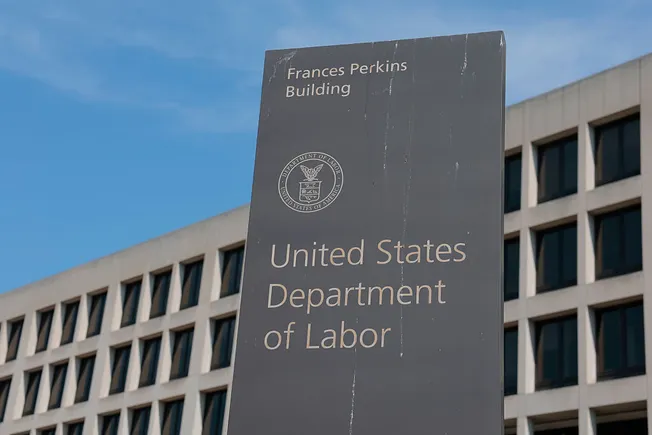
The U.S. Department of Education on Wednesday announced some of the first elementary and secondary grant competitions under its new partnership with the Department of Labor. The partnership announced in November offloaded certain Elementary and Secondary Education Act education programs, including programming for low-income school districts, homeless youth, migrant students, academic supports, afterschool programs, districts receiving Impact Aid and other activities.
The two grant competitions announced Wednesday include one meant to advance literacy in high-need districts and schools, and a second to incentivize teacher and school leaders through a performance-based compensation system.
In deciding the award recipients, the agencies plan to prioritize, among others, those that include support for families providing at-home learning, emphasize merit, meet industries’ needs, and return education to the states. The final awards will be distributed through the Department of Labor’s grant management platform rather than the Education Department’s.
The grants “represent the next step in the Trump Administration’s efforts to align workforce and education programs, expand education freedom, and bolster educator effectiveness,” according to the Education Department’s announcement.
Assistant Secretary for the Office of Elementary and Secondary Education Kirsten Baesler called the grant competitions under the new partnership “an important milestone in our efforts to support our nation’s teachers and empower families with education choice.”
The Education Department has entered into the interagency agreements, including with the Department of Labor, as part of President Donald Trump’s stated goal to wind down the Education Department to the maximum extent possible allowed under law.
The new partnership offloading many elementary and secondary programs to the Labor Department was meant “to provide a coordinated federal education and workforce system,” and “enhance opportunities to invest in the education and upskilling of American students to meet rapidly evolving skill demands of industries,” according to the original partnership announcement.
“Education reaches its fullest potential when learning is fused with vocation and industry,” said Henry Mack, assistant secretary for Employment and Training at the Labor Department, in a Wednesday statement.
However, opponents and critics of the move worry that moving education grants under the Labor Department’s wing would weaken oversight in education programs.
A bicameral and bipartisan statement from congressional lawmakers in February raised concerns that “fragmenting responsibilities for education programs across multiple agencies will create inefficiencies, result in additional costs to the American taxpayer, and cause delays and administrative challenges in Federal funding reaching States, school districts; and schools.”
It added that there are concerns the interagency agreements will “weaken Federal support to protect the rights of students, children, youth, and families under Federal education laws.”
