

Join our zero2eight Substack community for more discussion about the latest news in early care and education. Sign up now.
Relationships and experiences in early childhood leave a lasting imprint on the developing brain. The infant and toddler years shape how young children learn, regulate their emotions and interact with the world around them.
Decades of research in developmental psychology and neuroscience reveal that early stress, particularly in the first few years of life, can influence brain development, behavior and well-being.
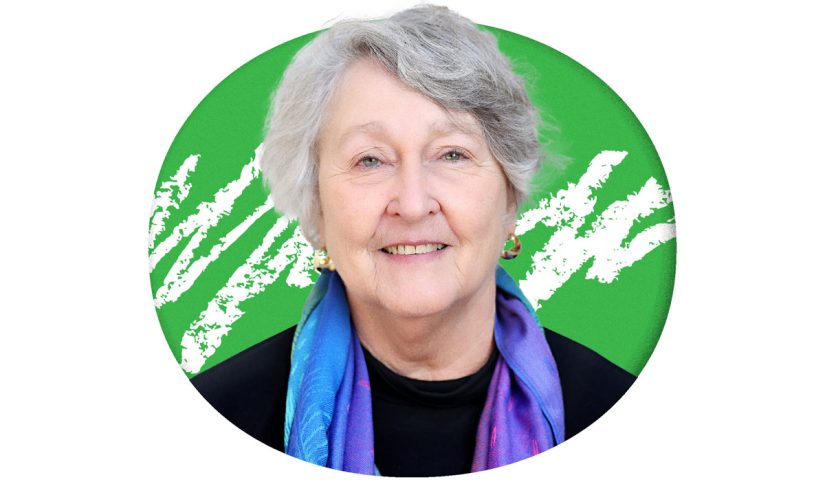
Megan Gunnar has dedicated her career to understanding the relationship between stress biology and neurobehavioral development in children. As a professor at the University of Minnesota’s Institute of Child Development and director of the Gunnar Lab for Developmental Psychobiology Research — which studies how children and adolescents regulate stress and emotions — she has influenced and mentored generations of researchers.
After earning her doctorate in developmental psychology from Stanford University in 1978, Gunnar completed postdoctoral training in psychoneuroendocrinology at Stanford Medical School before joining the faculty at the University of Minnesota in 1979. Over the years, she’s authored studies, including research on the intersection of neurobiology, stress and development in children, and has been a leader in translating research into meaningful insights for parents and caregivers.
“Megan Gunnar is a force of nature,” says Ellen Galinsky, president and co-founder of Families and Work Institute and author of The Breakthrough Years and Mind in the Making. “With a rare background in psychology and developmental psychoneuroendocrinology, she has broken new ground in research on the effects of stress on infants, children and adolescents. She is a gifted communicator, known for phrases that make her findings unforgettable, and a true field-builder.”
As Gunnar prepares to retire at the end of this academic year, she reflects on what decades of research suggest about how early stress shapes the developing brain. In the conversation below, she discusses how her field has advanced, the challenges of modern stressors on children and families, and what parents and caregivers can draw from her field to support infants and young children today.
This interview has been edited for length and clarity.
Why are the earlier years so important for brain development?
The brain is in the process of getting itself organized during those years. When you add to the development of the brain, it’s on top of the brain that’s already been developed. There are such things as sensitive periods when things get established and then get solidified. … Nature decided to have these sensitive periods.
What can change during these periods?
Things like executive functions, being able to learn to have inhibitory control. These begin to be established early, but we can work on them. You can work on self-regulation throughout your life. It’s harder later than it is earlier, but it never completely closes off.
How can adults recognize stress in children?
Parents are not going to run around taking measures of cortisol. Signs that a child needs help are often that they start misbehaving. The canary in the coal mine is misbehavior.
Any parent knows this. A kid is going along fine. They start acting [out] all of a sudden. What’s going on? Bad kids? No, they’re probably hungry. Or maybe something else is going on that’s troubling them, especially if it lasts longer. It might be that they’ve had problems with friends at school. They might be worried about something. When they get more clingy or more crabby than usual, that’s a sort of sign that they’re a little stressed and they need some support of some kind.
What’s the best way to respond?
One of the things that we do so frequently with kids is say, “Don’t do this,” but then we don’t tell them what we want them to do. Any good preschool teacher will tell them what they’re supposed to do. They don’t say, “Stop making loud noise.” They say, “Use your indoor voice.” One of the misconceptions that we have is that kids know how they’re supposed to behave. And if we want to change the behavior, it’s often easier and better to tell them how we want them to behave.
When a child is feeling stressed and upset, asking what’s wrong can be sort of tough because sometimes they don’t really know what’s wrong. But [saying] “Come, let’s sit together and let’s breathe together,” and modeling the behavior of calming down and getting them calmer before you try to probe to figure out what’s going on is a wise thing.
There’s a lot of parenting advice on the internet, especially on Instagram. Where can parents and educators of young children turn for quality information?
Zero to Three’s website is wonderful. If you’re an educator or a parent who likes to read complicated things, then the National Scientific Council for the Developing Child puts out working papers that go in more depth. [Gunnar is a founding member.]
I wouldn’t look at any influencer. I just would go to Zero to Three or the National Institute of Child Health and Human Development if it’s more of a health question, and the National Institute of Mental Health if it’s more of a mental health question, absolutely not to the influencers. They’re just there to catch your attention.
You were a pioneer in treating child psychology as a science related to other sciences. Can you unpack the term “biobehavioral”? Do you think of it as an approach or as a field of study?
Psychology used to be about behavior and how we think — how we conceptualize and talk about thinking, right? But not about the body that all that was happening in. We’re not a disembodied brain. That’s been the biggest change since I got in the field 50 years ago.
Now you hear the term “psychological science,” and that is the shift — to move from just looking at behavior to looking at the processes and the mechanisms underlying behavior, including how the brain acts and so on. It’s also other endocrine systems, immune functioning, how all of that plays together to influence the way people behave.
So it’s everywhere. And you either talk about it as “psychobiology” or “biobehavioral,” putting words together, but it’s a whole system.
Breakthrough Research Shows the Complexity and Brilliance of Babies’ Brains
Given your work as an educator, professor and mentor, are there promising avenues or researchers on the horizon?
I think many of us feel now that we’ve filled in enough of the pieces of the mechanisms for how things happen, not that we see the association, but we understand the mechanisms … and we can continue to do that, but it’s really time to stop admiring the problem and to move upstream and try to change the conditions that are leading to the problem. … I think around the globe, that is the movement — to understand how to link the work we do to the policy, and show that certain policies are providing for better health outcomes through mechanisms that we now understand.
I think there are some really amazing people out there that are doing some really phenomenal work. Many of them are actually my former students, but there are others as well. … The work is getting more interdisciplinary. The lines between disciplines are just fading, which is really lovely. And I tell students: You don’t want to be a dilettante. You don’t want to know a little bit about a lot of things and not much about anything. You need to be somebody who is an expert in X so that you can be at the table, but you really do need to broaden your scope and be able to work with people from different disciplines.
If what we’re going to do is not only understand what the problem is, but what are the mechanisms for it, and how do we link that to policy, you’re going to need to be able to talk to economists who want to know the return on investment.
Can you say more about the consequences of not investing enough in early education and early educators?
I really feel for those educators. They’re not paid enough. And we expect so much of them. And the ones who are laying down the fundamentals are paid the least, and they are often the least trained and the least supported. We just have to get to the point where we recognize that the best investment — as we’ve been saying for years, as the economists have helped us say — is in high-quality education available to all children from birth.
How has the science in your field advanced?
The science has advanced in that we understand more and more about what’s happening inside a kid, biologically and in the brain. But the basic understanding of what children need in order to feel safe and secure, we’ve known for a long time. Now we understand a lot more about the how and the why of it.
The capacity to look at the physiology and how the brain responds has been just unbelievably exciting and illuminating. It has certainly helped us understand the importance of the earliest years in terms of the programming of the biology of stress.
What do you recommend for parents in this moment?
Are we talking about normal life stress, or are we talking about buffering the children who are living in the areas where ICE (Immigration and Customs Enforcement) is swarming and whistles are blowing and people are being dragged from their cars? Those are two related but somewhat distinct issues.
Given that you’re living and working in Minnesota, I’m curious what your thoughts are on the latter.
I am envisioning what it would be like for a child 10 and under, or maybe 7 and under, living in those houses in the Longfellow neighborhood, where periodically, there are people blowing whistles. There are men terrifyingly dressed, marching with guns in your street.
I think the best thing [a parent can] do right now is to spend their evening watching old [episodes of] Mister Rogers’ Neighborhood because he was amazing at listening to children talk about their fears without adding to them. If you remember, one of the things he said, about when terrible things happen, is to look for the helpers. If I were a parent with a small child living in those neighborhoods, I would help my child reframe the whistleblowers as helpers coming, rather than emphasizing the scary guys.
The other thing that I think is really important for parents to remember is that when a child asks a question, and we hear that question with our adult mind, like, “What are those bad people doing?” — the next step always with a young child is, “Well, what are you thinking might be happening?” So that you come in with your answer where they’re at, rather than this big thing that may be way beyond what they were thinking.
Disclosure: Ellen Galinsky was Chief Science Officer of the Bezos Family Foundation from 2016-2022. The Bezos Family Foundation provided financial support to Early Learning Nation.
Did you use this article in your work?
We’d love to hear how The 74’s reporting is helping educators, researchers, and policymakers. Tell us how
