

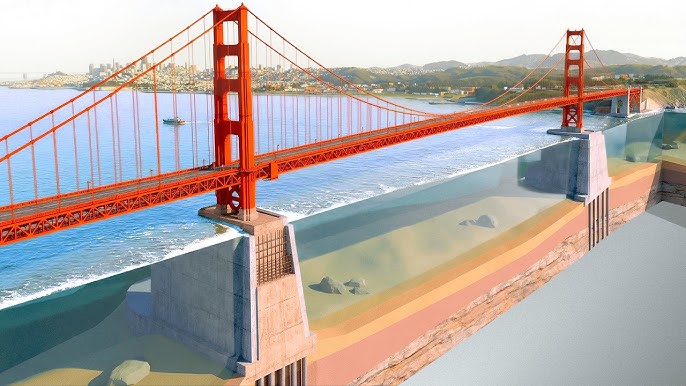
Built during the depths of the Great Depression (from 1933 to 1937), the Golden Gate Bridge became the longest and tallest suspension bridge in the world. During its construction, workers battled harsh conditions — strong winds, thick fog, and the risk of plunging into the San Francisco Bay. 11 souls perished. Likewise, the engineer Joseph Strauss had to work through complicated design challenges to anchor the structure in the deep waters, then spin massive cables and tension them across the 4,000-foot span. Created by the YouTube channel Animagraffs, the 3D animated video above takes viewers on a technical tour of the Golden Gate Bridge’s construction, deconstructing the engineering that makes the bridge both beautiful and enduring.
If you would like to sign up for Open Culture’s free email newsletter, please find it here. It’s a great way to see our new posts, all bundled in one email, each day.
If you would like to support the mission of Open Culture, consider making a donation to our site. It’s hard to rely 100% on ads, and your contributions will help us continue providing the best free cultural and educational materials to learners everywhere. You can contribute through PayPal, Patreon, and Venmo (@openculture). Thanks!
Related Content
How the Brooklyn Bridge Was Built: The Story of One of the Greatest Engineering Feats in History
Built to Last: How Ancient Roman Bridges Can Still Withstand the Weight of Modern Cars & Trucks
Building the Golden Gate Bridge: A Retro Film Featuring Original Archival Footage
