

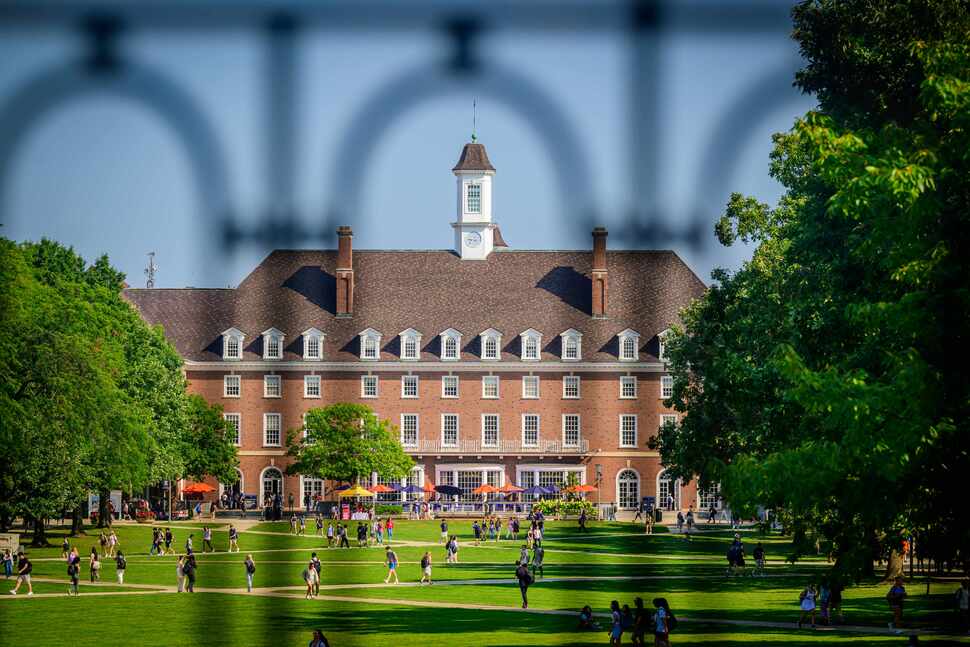
Tim Killeen is the president of the University of Illinois System.
U.S. News: How can prospective students decide if the University of Illinois is right for them?
Killeen: Choosing a university is about finding a place where a student can thrive and grow academically, personally and professionally. I often encourage prospective students to ask not simply, “Where will I go to college?” but, “Where will I develop the skills, experiences and networks that will positively shape the rest of my life and prepare me to be a lifelong contributor to my family, my community and the world?”
- Across our three universities that educate more than 100,000 students – in Chicago, Springfield and Urbana-Champaign – we combine world-class education, scholarship and research, strong professional preparation, welcoming learning communities and a deep commitment to public service.
- U of I Urbana-Champaign is internationally recognized as a research-intensive university with excellence in engineering, computer science, agriculture, humanities and more.
- U of I Chicago is one of the nation’s most impactful urban research universities, deeply connected to the economic and civic life in one of the world’s great cities and home to one of the largest and most diverse medical and clinical systems in the country.
- U of I Springfield, sitting in our capital city, is known for its intimate classes and student-centered approach to learning, as well as strong preparation of graduates for careers in public service, government and journalism.
Students have opportunities to participate directly in the work of the nation’s leading scholars advancing discoveries in areas ranging from artificial intelligence and quantum science to public health and sustainability – often as undergraduates – while gaining real-world experience through internships, entrepreneurship programs and partnerships with industry.
Get the admissions edge with ‘Getting In’!
Have the parent playbook for applying to college delivered to your inbox each Thursday.
By clicking “Sign Up”, you will receive the latest updates, including emails, from U.S. News & World Report and our trusted partners and sponsors, and you agree to our Terms and Conditions & Privacy Policy.
U.S. News: In the past decade, enrollment has jumped more than 25%. Can you describe what sorts of challenges that soaring population poses?
Killeen: This growth reflects a great deal of confidence in the University of Illinois System.
- One of the most important factors is affordability. We froze tuition for Illinois residents for the majority of the last 12 years. That has sent a powerful signal that we take seriously our responsibility as a public university system to remain accessible to the people of this state.
- Another key factor is rebuilding and strengthening public trust. Public universities exist because the public believes in their value. Over the past decade, we have focused on demonstrating how the University of Illinois contributes to the prosperity and well-being of Illinois.
- That trust has translated into greater interest from students and families, particularly within Illinois itself. A large portion of the enrollment growth has come from students in our own state.
- As enrollment increases, we continue investing in faculty, advising, student services, housing and learning infrastructure to ensure that the quality of the student experience remains exceptional.
- We also must ensure that growth strengthens, rather than dilutes, the sense of community that is central to student success. It is even more important for larger institutions to build pathways for connection through research experiences, living-learning communities, mentoring programs, study abroad and student organizations.
U.S. News: How have student expectations about academic support changed since the pandemic?
Killeen: The pandemic certainly drove changes in how students think about academic support, but I think the shift we are seeing today goes beyond the pandemic. Increasingly, we are seeing a generation of young people who are navigating a world that often feels uncertain and unsettled.
- Students are deeply aware of the challenges facing society – including climate change, geopolitical conflict, growing political divisions and rapid technological transformation.
- As a result, universities must think more broadly about what it means to support students. It is not only about tutoring or advising. It is also about helping students develop a sense of purpose and the resilience needed to lead in the future.
I feel this personally as well. My wife and I recently became grandparents, which naturally makes one think about the world the next generations will inherit. It reinforces my belief that universities have a responsibility not only to educate students but also to inspire them and to help them see that they can shape a better future.
