

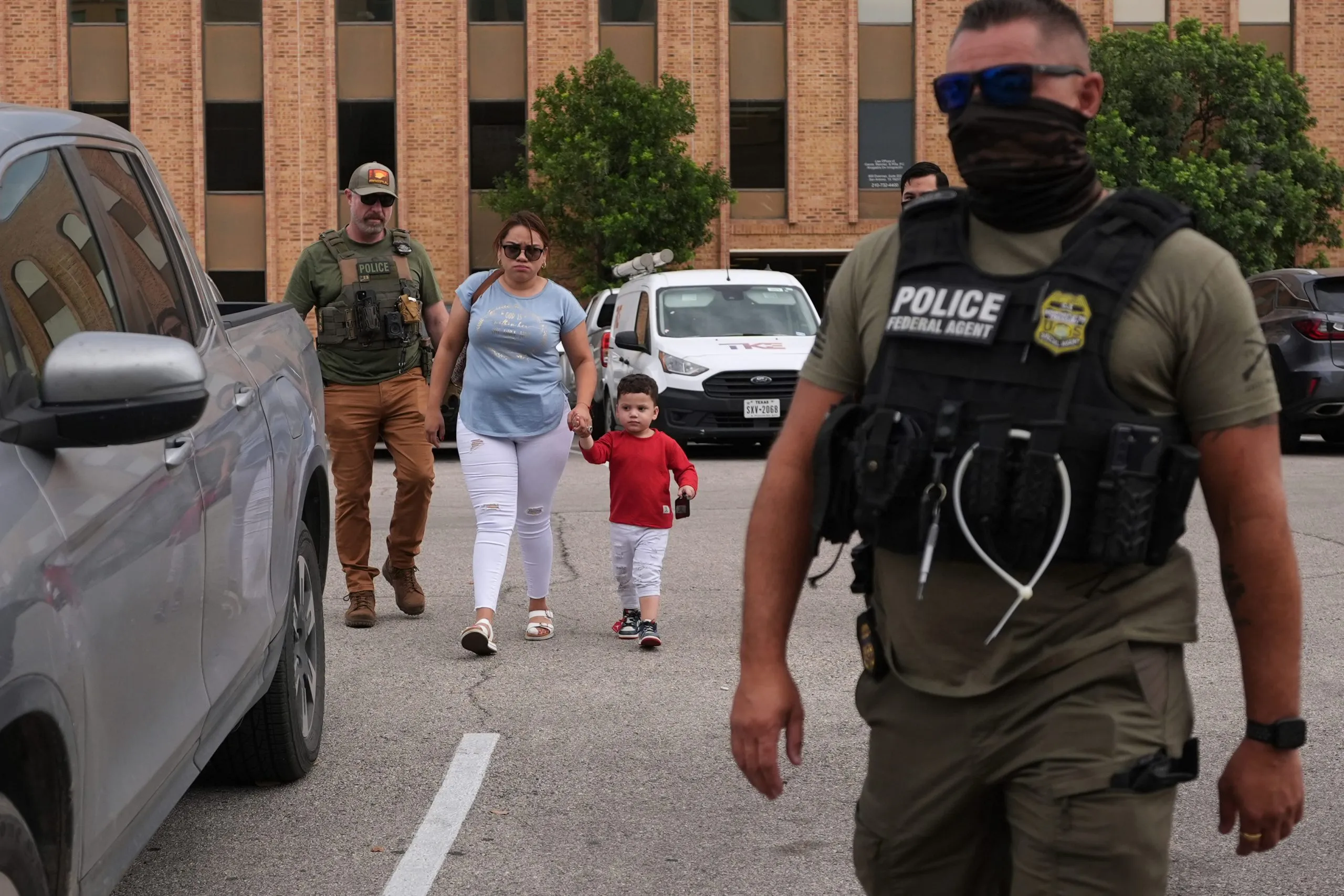
Last year, Susana Beltrán-Grimm was visiting Hispanic families for a research project about parents and math, when she started to notice a trend. Parents didn’t want to talk about math with the Portland State University professor. Instead, they wanted to talk about their fears as immigration enforcement ramped up across the country.
“The concern was, ‘This is happening, and I’m scared to go to work, I’m scared to take my child to the park. I don’t feel comfortable taking them to school,’” Beltrán-Grimm said. Many parents told her, “I’m trying to figure out how I’m not as stressed so I don’t stress my child,” she recalled.
These comments led Beltrán-Grimm to launch a small pilot study looking at how parental stress and fear around immigration enforcement was affecting children, and specifically, their opportunities to play. Her initial findings painted a clear picture: Parents were so fearful of immigration enforcement, they were avoiding taking their kids to playgrounds and parks.
“They’re living in survival mode,” said Beltrán-Grimm. That has consequences for young children, she added, who are now losing out on chances to play and can easily pick up on their parents’ anxiety. “That’s not a good way for a child to develop,” she added.
Beltrán-Grimm’s initial findings from the pilot study, which is expanding this year to nearly 500 additional families, add to a growing body of research tracking the effects of aggressive immigration enforcement on the mental health of young children. Experts say such policies, like those that have been playing out across the country since President Donald Trump took office last year, are felt not only by immigrant children, but also by children whose families are not at risk of deportation.
“Kids know about people being taken, and they worry. That diffused fear just spreads,” said Joanna Dreby, a professor of sociology at the University of Albany. Dreby said she expects this anxiety to affect more children as they see and hear about violent events involving Immigration and Customs Enforcement, like accounts of U.S. citizens getting detained or shot. “As more and more children are being exposed to those severe episodes, then more and more children are going to carry those fears,” Dreby said.
Related: Immigration enforcement is driving away early childhood educators
Research shows children can display troubling behaviors when their communities are targeted by immigration enforcement, including increased aggression, separation anxiety and withdrawal.
Parents and early educators have long reported increased aggression, separation anxiety and withdrawal among children when administrations ramp up immigration enforcement, with worse effects for those who fear enforcement.
If that anxiety is left unaddressed, there can be long-term consequences. Exposure to immigration enforcement in childhood has been found to lead to long-term anxiety, PTSD and depression in adolescence and young adulthood. Young children are especially vulnerable to trauma because their brains are rapidly developing during the first five years of life, and that development can be highly influenced by stress hormones.
Dreby, who has spent years interviewing and studying children who have experienced immigration enforcement to some degree, said the longer enforcement goes on, the more children can be affected. It’s even more damaging if they witness arrests. “Unfortunately, some of the things we found most harmful for children are exactly the tactics currently being used by federal immigration enforcement agents,” she said.
“There is absolutely no reason that immigration regulation has to unfold in this way that’s very public, that’s in front of children,” Dreby added. “That needs to stop immediately.”
Although parents can often serve as buffers for trauma, they may struggle to do so when they are also overly stressed and anxious. A 2021 study of pre-K students in New York City, for example, found when parents felt higher levels of immigration enforcement threat, children showed lower levels of self-regulation skills, especially around their ability to pay attention. Children in those families also experienced greater separation anxiety and overanxious behaviors.
“The stress of parents is certainly trickling down to children,” said Suma Setty, a senior policy analyst for immigration and immigrant families at the Center for Law and Social Policy. In her previous research, Setty has heard accounts of children as young as 3 saying they were scared of losing their parents to deportation. “It’s very apparent in their behavior that stress is impacting them, and that has long-term implications,” she added.
While interviewing parents, child care providers and professionals who interact with children over the past six months, Setty has heard widespread reports of children having trouble sleeping, showing fear of police, regressing in skills like potty training and being more emotionally reactive. One respondent shared a story about a child who asked her mom to teach her how to cook, so the girl would be able to feed herself if her mom was deported. A child care provider told Setty that children in her program used to be curious about visitors, but now hide behind their teacher when someone new enters the building.
In Minnesota, where ICE has engaged in violent clashes over the last month, Sonia Mayren, a Minneapolis-based clinical trainee who specializes in child trauma and works largely with the Latino population, has seen a sharp uptick in anxiety among her patients. Many of the children she serves have regressed behaviorally. In recent months, all of her clients have moved their sessions online. Several have stopped therapy altogether.
Like Dreby, Mayren is also hearing about children fearing immigration agents even if their family is not at risk of enforcement. “It’s not just, ‘I’m afraid of ICE detaining my friends or family,’ it’s, ‘I’m afraid of ICE in general, because they can come hurt us,’” she said.
Mayren is telling parents to be patient with children, try to protect them from the news and maintain routines, especially if kids have been pulled out of school. She also encourages parents to find mental health assistance to try to keep kids stable, with the caveat that they may not see much improvement in their kids’ mental health while immigration enforcement remains so aggressive and visible.
“We’re just keeping children’s heads above water now because they’re in a state of emergency,” she said. “It’s just survival.”
This story about immigration raids was produced by The Hechinger Report, a nonprofit, independent news organization focused on inequality and innovation in education. Sign up for the Hechinger newsletter.
This <a target=”_blank” href=”https://hechingerreport.org/parents-children-immigration-raids-trauma/”>article</a> first appeared on <a target=”_blank” href=”https://hechingerreport.org”>The Hechinger Report</a> and is republished here under a <a target=”_blank” href=”https://creativecommons.org/licenses/by-nc-nd/4.0/”>Creative Commons Attribution-NonCommercial-NoDerivatives 4.0 International License</a>.<img src=”https://i0.wp.com/hechingerreport.org/wp-content/uploads/2018/06/cropped-favicon.jpg?fit=150%2C150&ssl=1″ style=”width:1em;height:1em;margin-left:10px;”>
<img id=”republication-tracker-tool-source” src=”https://hechingerreport.org/?republication-pixel=true&post=114659&ga4=G-03KPHXDF3H” style=”width:1px;height:1px;”><script> PARSELY = { autotrack: false, onload: function() { PARSELY.beacon.trackPageView({ url: “https://hechingerreport.org/parents-children-immigration-raids-trauma/”, urlref: window.location.href }); } } </script> <script id=”parsely-cfg” src=”//cdn.parsely.com/keys/hechingerreport.org/p.js”></script>
