

Get stories like this delivered straight to your inbox. Sign up for The 74 Newsletter
As soon as Amanda Pacheco stepped onto the streets of Babcock Ranch — a fast-growing, master-planned community near Fort Myers, Florida — she knew it was where she and her family belonged. “It was like a Hallmark movie,” she said of that Friday night visit, dotted with groups of families, food trucks and live music. “People always ask me why I picked Babcock, but it kind of chooses you,” she said, recalling how she and her husband decided that night to sell their home a few towns over and settle there.
Pacheco is one of approximately 15,000 residents in what is known as America’s first solar-powered town, defined by its environmental vision, hurricane resilience and strong sense of community. Since welcoming its first residents in January 2018, Babcock Ranch’s population has soared, with plans to reach 50,000 in the years ahead.
As this future-focused community grows, its K-12 education landscape is expanding alongside it, shaped by the same spirit of innovation. With a rising assortment of public schooling, homeschooling and micro-schooling options, Babcock Ranch offers a distinct snapshot of today’s evolving education offerings and the families who choose them.
“It’s kind of like choose your own education adventure,” said Laura Felker, who moved to Babcock Ranch from Colorado last spring. She enrolled her son in kindergarten at the Babcock Neighborhood School, a public charter school that opened in 2017, just a few months ahead of the community’s first residents. Babcock High School, also a public charter school, launched in 2022.
Felker was attracted to the school’s commitment to project-based learning, which is embedded into the curriculum. Her son has excelled at Babcock Neighborhood School, but when she heard about a new school opening in Babcock Ranch this fall, she was intrigued. Her son is academically advanced and in need of a more challenging learning environment, while also thriving with project-based learning. “I wanted some kind of meet-in-the-middle microschool,” said Felker, explaining that she was looking for a school that would blend the flexibility of homeschooling with the structure of traditional schooling, while prioritizing hands-on, project-based learning.
“Primer is able to do that,” said Felker, referring to the venture-backed K-8 private school network that is opening a Babcock Ranch location this fall. Founded in 2019 by Ryan Delk, Primer expects to have 19 teacher-led campuses across Alabama, Arizona, Florida and Texas in the upcoming school year — including Babcock Ranch. The company did not disclose its network-wide enrollment numbers or current registration figures for Babcock Ranch, but Felker says that many of her neighbors are excited about this new model.
“Hands-on learning is going to become incrementally more and more important,” said Felker, who leads data and AI strategy for a Silicon Valley-based company. She sees first-hand how emerging technologies are impacting the workplace and shaping the jobs of the future, and she wants a schooling environment for her son, and his two younger siblings, that mixes core academics with ample time for creative, community-based projects. “I want that to be part of his schooling, so when Primer came, I think I was one of the first people to reach out because this is the exact thing that I’m looking for,” she said.
Microschools Are Seeing an Enrollment Surge This Year
Emerging schooling models like Primer are taking root in communities across the country, as families look for more personalized education options. In states such as Florida, expanding school choice policies make these models financially accessible to more families. Felker expects most of Primer’s tuition to be covered by the state’s education savings account programs.
While some parents like Felker use ESA funding toward private school tuition, today’s programs often enable much greater customization of learning. In Florida, for example, families are eligible for funding through the state’s Personalized Education Program, an ESA enabling them to tailor their children’s education in myriad ways, including covering homeschooling expenses, tutoring services, curriculum resources, online learning and part-time school fees.
This flexible funding, averaging about $8,000 per student per year, is what Pacheco uses to educate her 13-year-old daughter, Bella. When the family moved to Babcock Ranch in the summer of 2024 following that enchanting Friday night visit, Pacheco began homeschooling Bella, who had previously attended a public elementary school from kindergarten through fifth grade.
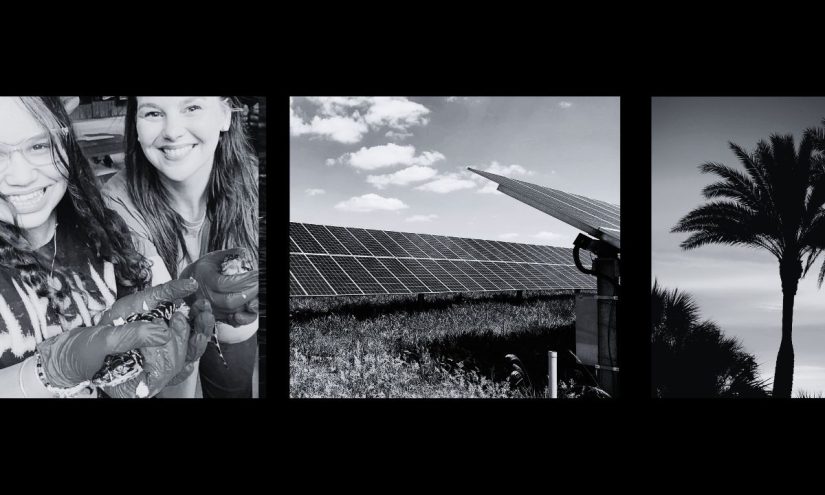
Bella (left) and Amanda Pacheco hold baby alligators as part of a homeschool lesson in Babcock Ranch, Florida. (Amanda Pacheco)
Pacheco liked the school, but she wanted something more for Bella as she entered her middle school years. “I always felt like the public school wasn’t the best fit,” said Pacheco, a nurse practitioner who helped to co-found a family medicine practice with three Florida locations, including a new one opening soon in Babcock Ranch. “It’s like a one size fits all, but that’s not how people are,” said Pacheco, who was particularly concerned about the frequent focus on standardized testing in the public schools and the anxiety it created for her daughter.
When she moved into Babcock Ranch, Pacheco discovered a large and vibrant homeschooling community. “There are so many homeschooling groups,” she said, often gathering for park meet-ups, enrichment activities and field trips to the aquarium and similar spots. Parents also take turns hosting lessons at their homes, which supplements the online curriculum that Bella uses for her core academics. “It’s like a little homeschool village here. I love it,” said Pacheco, adding that Bella is much happier than she was in a conventional classroom.
Babcock Ranch was designed to be a modern-day village, where community life is intentionally built. That same intentionality is shaping how Babcock Ranch families choose to educate their children. From project-based charter schools to homeschooling to emerging models like Primer, families have a growing array of learning options to consider.
In Babcock Ranch, this variety isn’t only reserved for K-12 education. Preschool options are sprouting, and the community recently announced a partnership with Florida Gulf Coast University to create a new sustainability-focused campus center at Babcock Ranch.
“There is a lot of educational opportunity here, and it just keeps evolving for every layer of education,” said Felker. “It’s cool to see that type of vibrancy.”
Did you use this article in your work?
We’d love to hear how The 74’s reporting is helping educators, researchers, and policymakers. Tell us how
