

Get stories like this delivered straight to your inbox. Sign up for The 74 Newsletter
Not so long ago, Americans were fond of talking about our politics as a modest set of disagreements: “We agree on the ends,” we’d say, “we just argue about the means.” Since the early 2010s, it’s gotten harder to believe.
We’ve suffered through the creep of a dynamic known as “epistemic closure,” where conspiracy theories, falsehoods and wildly distorted views of reality become easier for some Americans to embrace than the demonstrable facts of our present moment.
Recently, a House subcommittee hearing offered a new flavor of the problem, as Republicans and their conservative witnesses tried to win political turf by substituting facts about one group of students — English learners — with beliefs about children in undocumented families, a very different group of students.
The House Judiciary Subcommittee on the Constitution and Limited Government’s March 11 hearing was titled, “Immigration Policy by Court Order: The Adverse Effects of Plyler v. Doe.” That 1982 Supreme Court decision struck down a Texas law that would have blocked districts from using state education funding to teach undocumented children. In a 5-4 decision, the court held that children are covered by the 14th Amendment’s Equal Protection Clause, and could not be denied a public education based on their families’ legal status.
Writing for the majority, Justice William J. Brennan said, “The Equal Protection Clause was intended to work nothing less than the abolition of all caste-based and invidious class-based legislation. That objective is fundamentally at odds with the power (Texas) asserts here to classify persons subject to its laws as nonetheless excepted from its protection.”
Supreme Court Justices Cast Doubt on Trump’s Birthright Citizenship Order
The congressional hearing was a culmination of years of work by organizations like The Heritage Foundation, who seek to overturn that decision. After nearly 44 years, they’re getting closer. This spring, Republicans in the Tennessee legislature passed a pair of bills to erode the Plyler ruling.
The Tennessee House of Representatives adopted a bill that would require schools to gather data on students’ citizenship and immigration status, while the state Senate approved a measure that would allow public school districts to charge tuition to students who lack legal documentation. It’s unclear whether either will become law, as time is running out in the state’s legislative calendar, and lawmakers are jockeying over how to reconcile the two bills.
This was Tennessee’s second push to restrict immigrant children’s access to public schools — it’s unlikely that it will be its last. Other states, like Texas and Indiana, have made similar efforts. It seems inevitable that conservative state legislators will eventually succeed in enacting a bill along these lines, which will then face a legal challenge from advocates for immigrant families, civil liberties, and/or children’s data privacy. Ultimately, this may open the door for the court’s current conservative 6-3 majority to erode or remove Plyler’s civil rights protections.
Why would anyone want to keep kids out of school? What could possibly be gained by punishing children for their families’ decisions to migrate?
From Head Start to Adult Ed, Trump Narrows Pathway for Undocumented Students
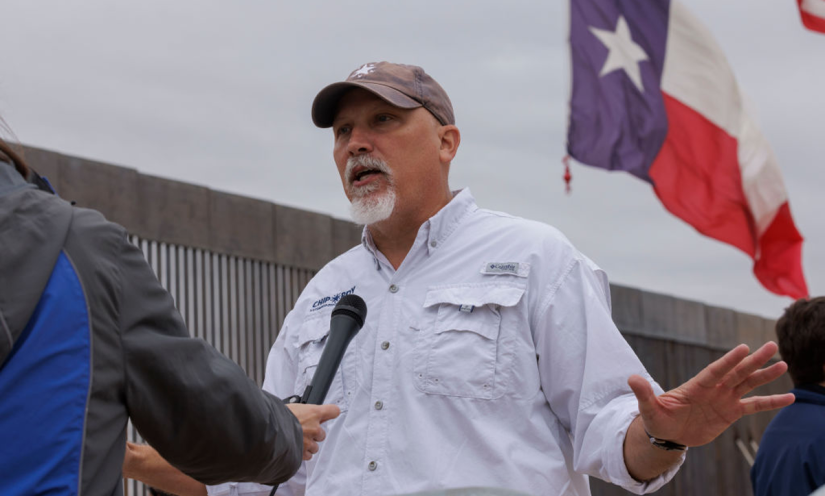
In the congressional hearing, conservatives’ main answer to these questions was financial. Republican Subcommittee chair Rep. Chip Roy of Texas and his fellow conservatives claimed that undocumented children represent a large drain on public education budgets. Critically, the evidence they provided for this relied heavily on confusing undocumented immigrant children with all immigrant children and/or with English learners.
As a prelude to his questions, Roy claimed, the national debt is “now cracking $39 trillion, and I would note that there are a lot of reasons why, and this is one of them … we continue to have this fanciful notion that we can just say, ‘Anybody can come into the United States and it doesn’t have an impact on our overall budget.’”
Roy then cited estimates that Texas schools enroll roughly 100,000 children without legal documentation, adding, “for every English learner, Texas schools receive $616 or $950 for those enrolled in a dual language program.” He then asked the Texas Public Policy Foundation’s Mandy Drogin, one of the witnesses called by Roy and his Republican colleagues, “How much does that cost?” Drogin estimated that this cost Texas around $830 million per year.
As I noted during the hearing, this is wildly irresponsible data use. That $830 million isn’t being spent on the estimated 100,000 undocumented children in Texas. It’s being spent on the state’s 1.3 million English learners.
Meanwhile, those 100,000 undocumented children are a diverse group, with some who are likely currently classified as English learners, others who have already become proficient in English and have moved out of that group and some who spoke English well enough upon their arrival in U.S. schools that they were never classified as English learners in the first place.
Data on English learners routinely show that the overwhelming majority are U.S.-born children or grandchildren. In other words, conflating spending on English learners with spending on undocumented children is a bit like claiming that a public library is wasting money on foreigners just because international tourists sometimes come in to use the public WiFi network.
What’s more, because the overwhelming majority of English learners are U.S. citizens, if Plyler were reversed and undocumented children were blocked from school, it wouldn’t produce major budget savings. Texas schools would still enroll well over a million English learners with citizenship and/or legal residency documentation. The state would still — hopefully — want to maintain its nation-leading system of supporting these U.S.-born students’ linguistic and academic success.
Texas Outshines California in its Approach to Teaching English Learners
That last bit is key. Texas schools are successful with linguistically diverse kids — regardless of their citizenship status or their families’ immigration statuses. In the Lone Star State — and across the country — data routinely show that these students do exceedingly well. That academic success produces better prepared graduates who go on to contribute more to the economy than they would have if blocked from school — earning more, paying more taxes and spending more in their local communities.
This is why analyses of the economic impacts of immigration nearly always find that newcomer families — and their children and grandchildren — grow the economy and contribute more to public revenues than they cost to public service programs.
These recent assaults on kids’ access to public schools exacerbate a concerning conservative trend — policy research organization KFF studied misinformation about immigrants and immigration during the 2024 election and found widespread public confusion. Their researchers polled the public and found that Republicans were significantly more likely than Democrats or independents to agree with false, negative claims about immigrants.
When presented with the false statement that “Immigrants are causing an increase in violent crime in the U.S.,” fully 45% of Republicans responded that this was definitely true and 36% said it was probably true. By contrast, 39% of Democrats believed that the statement was definitely false — and another 39% believed that it was probably true.
Look: Research is not ambiguous on this question — immigrants are less likely to commit violent crimes than U.S.-born adults. As a National Policing Institute summary of the evidence put it, “political scapegoating and hyperbole are no substitute for scientific evidence.”
For leaders serious about improving schools for all kids, that’s obviously true. But the subcommittee’s attacks on Plyler show that a perverse inversion of that line may also be true: When it comes to ambitious demagogues, evidence is no match for the allure of xenophobic, hyperbolic scapegoating.
The views expressed here are Conor P. Williams’s alone, and do not reflect those of his employer or any other affiliated organizations.
Did you use this article in your work?
We’d love to hear how The 74’s reporting is helping educators, researchers, and policymakers. Tell us how
