

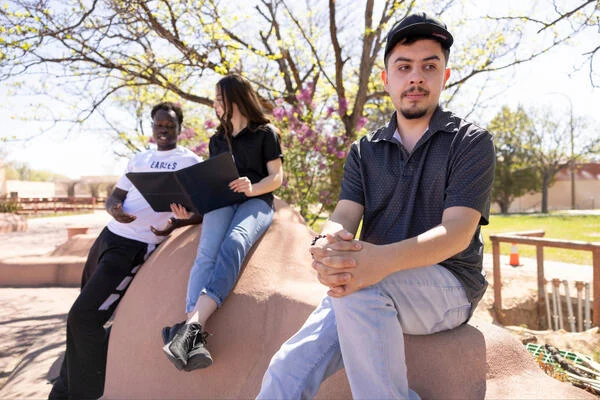
Loneliness is quietly reshaping campus life, with more than half of college students saying they feel lonely, according to a new report from Trellis Strategies, a nonprofit research organization focused on student success and higher education policy.
The report, based on data from Trellis’s 2024 Student Financial Wellness Survey of nearly 44,000 college students, found that 57 percent of students said they felt lonely (45 percent sometimes and 12 percent always); just 15 percent of respondents said they never felt lonely.
Carson Domey, a fourth-year student at the University of Texas at Austin and executive director of the Coalition for Student Wellbeing—an advocacy organization bridging the gap between students and decision-makers on student well-being on college campuses—said the findings highlight how loneliness can affect students’ mental health, sense of belonging and overall campus experience.
“Loneliness is an issue on college campuses that affects more students than you would think at first glance,” Domey said. “It presents very differently for each person, which makes the challenge all the more complex.”
The report found that students who frequently experience loneliness are far more likely to self-report symptoms of anxiety and depression—and to say they feel less supported by their institution—than their peers who reported rarely or never feeling lonely.
Allyson Cornett, director of research at Trellis Strategies, said the findings show that loneliness is not a fringe issue but a widespread challenge across higher education.
“We decided to add questions on loneliness in our [student financial wellness survey] to see how students are feeling and also be able to do a deeper dive into how basic needs, financial security and sense of belonging can all interplay with loneliness,” Cornett said. “Across the board, we’re seeing more negative interactions and experiences, and it’s really striking.”
Student loneliness snapshot: The report found that more than 60 percent of students who are under 25, former foster youth or facing basic needs insecurity reported feeling lonely sometimes or always. Among LGBTQ+ students, that figure rose to more than 70 percent.
Cornett said it’s important for institutions to invest in community-building efforts, such as residence life activities, and gear them particularly toward high-risk groups to ensure all students feel that they belong on campus.
Lonely students were also significantly less likely to recommend their institution to others, the report found. Just under 11 percent of students who reported frequent loneliness said they would recommend their school, compared to nearly 30 percent of their nonlonely peers.
The report notes that “a strong sense of belonging is often tied to students’ overall satisfaction with their institution,” and that loneliness may erode that connection.
“That lack of social connection was pervasive for those lonely students,” Cornett said. “If they see themselves on campus and they find those social networks, they are going to indicate higher feelings of support.”
Domey said his own experience moving from Massachusetts to Texas for college made him keenly aware of how new environments can amplify loneliness.
“It puts stressors on students to sometimes focus a little bit too much on the transition and dealing with the change,” Domey said. “It can draw people away from the community and foster those feelings of isolation.”
He added that the COVID-19 pandemic still plays a lingering role, with many students now having a “higher quantity of connections but a lower quality in the depth of those relationships.”
“I’m pinching myself saying this in 2026, because 2020 feels so long ago,” Domey said, noting that many students in his generation were in middle and high school during the pandemic, when social media use and online pressures surged. “Those are pivotal years where you learn how to forge those relationships, so I think the impact the pandemic had during that time … can be contributing to this.”
Cornett agreed, noting that students now spend about 70 percent less time with their peers in person than they did two decades ago. She said this makes it even more important to offer “in-person socialization that feels natural to students and is built off of what students want.”
Improving student connection: Institutions can help alleviate student loneliness by “fostering community and identity from the time a student steps on campus,” Domey said.
They should also facilitate “peer-to-peer mentorship” for first-year students, he added, pointing to the University of Texas at Austin’s First-Year Interest Groups program as a strong example. The program has first-year students take two to four classes together during their first fall semester, with each group attending a weekly seminar led by a peer mentor and a staff facilitator.
“Every student is required to be part of some first-year interest group,” Domey said. “I was in one called the Foundation Scholars Program, and, to be honest with you, the whole role of it is to be an on-ramp for your transition to college in your first year.”
He added that meeting with third- and fourth-year students in small groups gave him “a little bit of … perspective to the classroom content” that he still appreciates today.
“I find a lot of value in that experience to help students transition to college,” Domey said. “It’s certainly a program that gets to the heart of reducing loneliness.”
Cornett said it’s important for higher education leaders to frame loneliness not only as a systemic issue but also as a public health risk.
“College is meant to be challenging—it’s meant to push you and help you grow and learn as a person—but you shouldn’t be suffering mentally,” Cornett said. “Really thinking through this as a societal issue versus an individual issue is so important, both for our students and for Americans in general.”
Get more content like this directly to your inbox. Subscribe here.
