

Listen to the article
This audio is auto-generated. Please let us know if you have feedback.
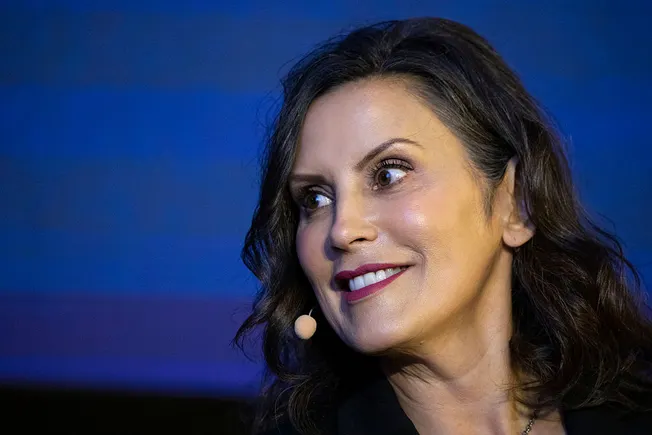
When Gov. Gretchen Whitmer launched Michigan Reconnect — a program designed to help adults either begin or finish their college education — in 2021, she described it as a way for Michiganders to get a tuition-free associate degree and land a good-paying job.
While it’s too early to know whether the program actually led to those good jobs, a recent study found the program boosted adult enrollment at community colleges by 38% in the Wolverine State — or about 623 more students per campus, on average. The paper considers adult students to be those ages 25 and older.
Taylor Odle, an educational policy professor at the University of Wisconsin-Madison and co-author of the study, said the findings are particularly relevant for policymakers, campus leaders and others concerned with boosting enrollment. It also comes at a time when many Americans are increasingly saying that they don’t believe a college degree is worth the cost.
Michigan Reconnect is currently only open to state residents ages 25 and older. It is a last-dollar program, meaning that it covers students’ remaining tuition and fees after all other grant aid has been applied.
The program “really moved the needle on enrollment,” Odle said in a recent interview. “And that plays really well with conservatives and more liberal folks thinking about workforce preparedness.”
The 38% boost “seems to be pretty positive and pretty telling to me,” Odle added.
But a few caveats come with the findings, according to the study. One is that part-time enrollment drove the headcount gains spurred by Michigan Reconnect.
That’s significant, Odle said, because it suggests that adults often are not situated to enroll in college full-time. Being flexible with enrollment requirements is key to the success of any program that seeks for adults to enter or return to college, according to Odle.
“Adults, particularly adults who are reenrolling in college, shouldn’t be forced to fit a mold of what we think of as a traditional college student,” Odle said. “If you want folks to come back to college, you have to be flexible in allowing them to come back to college.”
The study also found that enrollment gains were larger among women and adults ages 25 to 34.
For women, the larger percentage is likely explained by their greater inclination to borrow for college and to borrow more than men, potentially making the promise of free tuition “more powerful,” according to the study.
As for why more younger students enrolled, it is likely because the economic returns of enrolling in college diminish as people get older, the study stated, “such that older adults have less financial incentive to complete a college degree.”
Program participants can renew their Reconnect scholarship for up to four years as long as they file the Free Application for Federal Student Aid, maintain state residency, earn at least 12 credits per year, and keep a 2.0 GPA or higher.
As of 2024, more than 150,000 people applied for Reconnect, and nearly 32,000 enrolled, the study found. More than 4,000 had earned a credential.
The average award for program participants is $713. Total tuition reimbursements through the program came to over $45.3 million in the 2023-24 academic year.
Michigan expanded the Reconnect program even before there was research into its impact, the study noted.
For instance, in 2023, Whitmer announced advisers called “navigators” to facilitate enrollment, $1,500 for participants who seek short-term certificates, and a temporary lowering of the eligibility age to include those ages 21 to 24.
The expansion to younger students expired in December 2024, but state lawmakers are considering legislation that would again lower the age requirement through Sept. 30, 2032 — as long as funds are available to serve those age 25 and older first.
Odle said it’s “way too early” to look at employment outcomes for program completers, because even participants who attended college full-time would just now be graduating. But he added that more education generally leads to higher salaries.
He said “we need a couple more years” to find out the extent to which program participants are graduating and getting good jobs or promotions at their existing jobs.
