

Get stories like this delivered straight to your inbox. Sign up for The 74 Newsletter
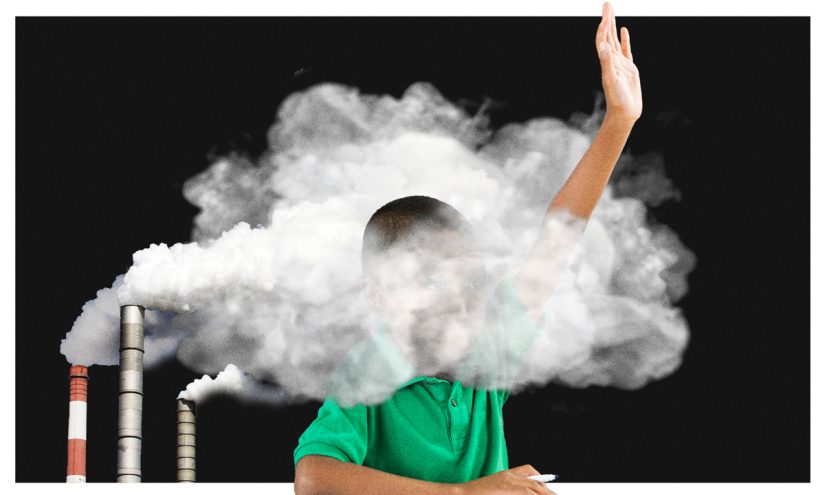
Millions of U.S. students attend a school close to a contaminated environmental site associated with an increased risk of cancer, birth defects and other negative health outcomes – with students of color disproportionately enrolled in these schools.
Native American, Black and Latino children are 124%, 86% and 43% respectively more likely than their white peers to be educated in classrooms near hazardous sites, according to a newly-released Brown University report.
Through an analysis of over 75,000 pollution sites aggregated with recent enrollment data from public and private schools, researchers said they were able to paint a nationwide picture of the “scale and scope of students’ potential exposure to pollution and toxins from hazardous sites in the United States.”
The report found over 10,000 pre-K through 12 schools are located within a quarter mile, or what’s equivalent to the distance of one lap around a high school track, from a superfund site, brownfield or a Toxic Release Inventory facility.
(Giles Clarke/Getty)
About 8% of American schools, with over 3.3 million students and half million educators, are in school buildings within a quarter mile of an inactive or active chemical site, the report found. Expanded to a mile-radius, the number skyrocketed to 44% of schools near hazardous sites that are linked with higher rates of health issues such as childhood brain cancer, chronic illness, asthma and immune system disruption.
“It’s important to remember that students are in school for over 1,230 hours on average [annually], but that just counts the time that they’re in class and eating lunch,” said Matthew Kraft, professor of education and economics at Brown and one of the lead authors of the report. “We know that kids often go to school early or stay late for before school and after care programs.”
Schools, Kraft continued, are “a critical but often overlooked source of potential exposure to these environmental toxins, which really [raises] a question of educational opportunity and educational equity.”
Definition of Hazardous Sites
Superfund Sites
- Historical contamination often in soil and groundwater; usually with heavy metals including lead, arsenic and mercury.
- Areas near superfunds have higher cancer risks and lower life expectancy levels
Brownfields
- Former industrial or commercial sites with contaminants such as lead, asbestos, petroleum and arsenic. Known to affect immune systems, cause lower birth weights, increase birth defects.
- School districts containing brownfields with high toxicity scores have higher rates of students receiving special education services.
Toxic Release Inventory Facilities
- Actively handle and release lead, mercury, and other synthetic chemicals that accumulate in body tissue.
- Associated with higher infant mortality, chronic illness and increased cardiovascular conditions and rates of childhood brain cancer.
Source: U.S. Schools’ Proximity To Environmental Hazard Sites: A National Analysis
Across the United States, the report found 12.7% of urban schools are located within a quarter mile of a hazardous site, compared to 6% of suburban and 5% of rural schools.
Data showed private schools were equally as likely to be located near hazardous sites as public schools, which “speaks to the universal nature of this challenge and the way that it will affect all students and families,” Kraft said.
How Urgent Push for Climate Education Can Help Mental Health, Engagement
But the disproportionality among children of color exposed to and attending schools within a quarter mile of contaminated sites compared to white children was largest within public school systems, increasing to 135% for Native American children, 92% for Black children and 49% for Latino children.
Most high-need student groups were also more likely to attend schools within a quarter mile of a hazard site, increasing the likelihood by 40% for low-income children and 21% for English language learners. The study said it did not find a “sizable difference for students with disabilities.”
Students of color, English language learners and low-income children were also more likely to attend schools closer to multiple hazardous sites, which “points to another dimension of inequity that affects students’ health and their academic success,” Kraft said, adding the health risks associated with these areas often “spills over into more frequent school absences that ultimately harm students academic performance.”
The Northeast and Midwest had the highest percentages of schools located within a quarter mile of an environmental hazard site, 11.6% and 10.2% respectively, but it varied by state significantly. For example, researchers reported 3.1% of schools in Texas are a few minutes walking distance from a hazard site compared to 26.3% in Rhode Island.
“The level of risk is going to vary dramatically based on the characteristics of each environmental hazard site, but at least this shines the light on the enormous scale of potential harm students experience while they’re on school grounds,” Kraft said. “At a minimum, we should elevate the question about students’ exposure to these hazards as a major topic of education policy.”
Sources: National Center for Education Statistics; U.S. Environmental Protection Agency
The authors of the report called their findings “conservative,” explaining the analysis only accounted for 40,000 brownfields, about 10% of the estimated number of sites nationwide. They also said the report did not encompass other “major pollution sources,” including vehicle emissions, lead plumbing in school buildings or natural disasters and the impact those can have on students.
“Mounting evidence suggests that these are having outsized impacts on schools operations, budgets and ultimately, whether or not schools can keep their doors open and students can benefit from in person learning,” Kraft said.
A Secret Weapon for Improving Student Outcomes: Better Air Quality
A focus on industrial pollution gives a “starting point,” Kraft added, that allows policy makers and advocates to better make decisions on how to respond to growing environmental needs affecting the classroom.
There are no federal or consistent state guidelines that regulate safe distances for school building planning from environmental hazards, according to a study published by the federal Environmental Protection Agency in 2023.
Did you use this article in your work?
We’d love to hear how The 74’s reporting is helping educators, researchers, and policymakers. Tell us how
