

Get stories like this delivered straight to your inbox. Sign up for The 74 Newsletter
For far too long, education leaders, teachers and families have wasted precious energy arguing over the reasons behind their students’ struggles. Rather than collaborate on ways to dismantle the barriers that hold kids back, they are pulled into divisive debates that pit schools against one other — charter versus traditional, public versus private, old models versus new ones.
These ideological battles replace meaningful progress and distract from the work that matters most: building schools where kids feel they belong, are pushed to grow and are understood as individuals.
Unfortunately, the longer adults argue, the longer kids wait.
At Eastern Hancock Schools in Indiana, this ongoing discourse prompted a growing number of families to leave the district and homeschool their kids. Rather than debate these parents about the merits of traditional public education, district leaders chose to learn from and collaborate with them to create the supportive, student-tailored learning environments they were looking for.
Eastern Hancock administrators and educators began working with families, state leaders and community partners after two parallel realizations emerged. First, conversations with parents who chose homeschooling made clear that they were not dissatisfied with the school system, but were seeking alternatives that offered more flexibility, individuality and personalized learning.
More Than a Third of Homeschool Families Also Use Public Schools, New Data Shows
At the same time, district leaders had spent years rethinking how learning could be organized through personal pathways, competency-based progress, real-world learning experiences and closer collaboration with community partners. That work pointed to the value of starting fresh, without being locked into rigid bell schedules, one-size-fits-all lessons and a system where students move forward based on age and time spent in class instead of what they actually know and can do.
Together, these insights sparked the idea for a new learning model. And in 2025, Eastern Hancock formed a board, started a 501(c)(3) nonprofit organization and secured approval for a new school from the Indiana Charter School Board.
The result was the Indiana Microschool Collaborative. On paper, Eastern Hancock and the collaborative are independent organizations. They operate under different statutes, use different funding models and are governed by different boards. But in practice, they are two sides of the same coin, each based on the shared belief that students deserve schools that feel like they were designed just for them.
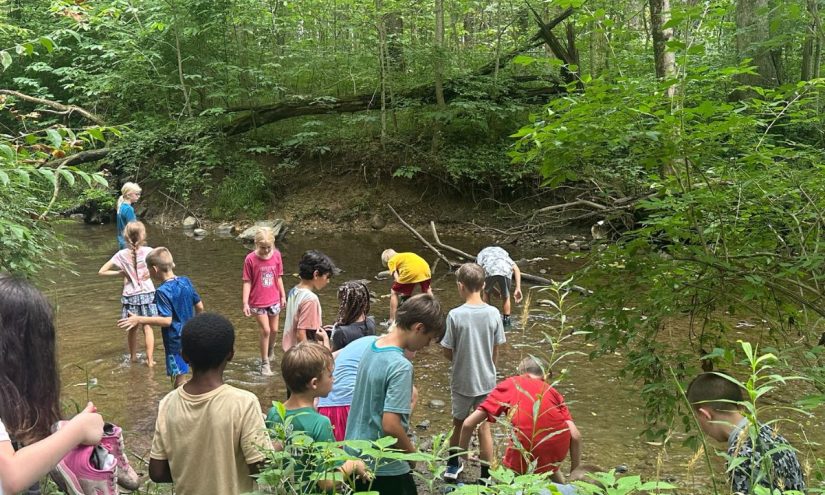
This fall, the collaborative and the district opened Nature’s Gift Indiana’s first publicly funded rural microschool. Serving 60 students, Nature’s Gift offers an education at each child’s individual pace, without lowering expectations. Students learn through hands-on activities and real-world projects designed by Project Lead The Way, building skills step by step until they’re ready to move on, rather than advancing simply because the calendar says it’s time. In addition, educators work closely with families to set goals, track growth and create a tailored path for their child.
The district provides operational support to the microschool — taking on responsibilities such as payroll, compliance and infrastructure — so Nature’s Gift teachers can focus on relationships and learning. In return, the collaborative serves as a testing ground for new ideas that Eastern Hancock can learn from, including more personalized, clearer goal-setting with students and ways to measure progress beyond seat time. Several of these practices are already shaping conversations and decisions across the district.
These Schools Are Seeing a January Enrollment Surge
The flow of innovation moves in both directions because the focus is on outcomes, not ownership. The question isn’t, “Whose idea is it?” The question is, “Does it help kids succeed?”
Families are recognizing that it does. Nearly 40% of Eastern Hancock students now enroll from outside the district under Indiana’s public school choice option, embracing either the expanded hands-on instruction and work-based programs offered by our traditional schools or the flexibility and individualized pacing of our microschool.
And, in the near future, the draw could be an entirely new, student-centered learning environment, designed in conjunction with families and community partners.
Because at the end of the day, students care about whether they feel successful. Whether they’re growing. Whether they love coming to class each day. Whether they are surrounded by adults who believe in them. Whether they are on a path toward something meaningful. Whether learning feels relevant. Whether the school experience feels as though it was created just for them.
The work ahead is not about fighting one another. It’s about fighting for kids. That should be a cause everyone can stand behind.
Did you use this article in your work?
We’d love to hear how The 74’s reporting is helping educators, researchers, and policymakers. Tell us how
