

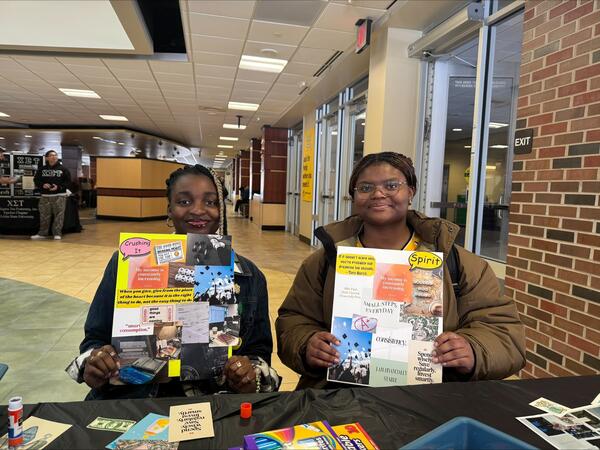
Finances are often a stressor for students—whether they’re navigating unexpected expenses or worrying that loan debt will hinder their future goals. To address this, Wichita State University started a vision board workshop to help make financial wellness more engaging and approachable for students.
The college piloted the event in late January, inviting students to drop in to visualize and set financial goals. More than 30 students participated. The workshop is part of a new series designed to address questions that go far beyond deadlines and paperwork, according to staff at Shocker Financial Wellness, a free program within the financial aid office that helps students build financial literacy.
Janet Hartley, a financial aid and peer adviser at Wichita State, said students need guidance, reassurance and a way to talk about money that doesn’t feel overwhelming.
“We’ve always had a workshop about eating on a budget, but we thought [creating vision boards] would be a good addition for setting goals at the beginning of the year—and an approachable way to talk about money,” Hartley said. “Sometimes when you start talking about financial goals, it can feel difficult, so this was a fun way to get that idea out there.”
According to Inside Higher Ed’s latest Student Voice survey, college students often live in precarious financial circumstances. Of more than 5,000 students surveyed across 260 two- and four-year institutions, 36 percent said an unexpected expense of $1,000 or less could impact their ability to stay enrolled. In addition, nearly two in three respondents said they don’t know whether their institution offers emergency aid—underscoring the disconnect between student need and campus support.
The same survey also found that some students are more stressed about finances than they are about academics. About 50 percent of respondents said balancing academics with personal, family or financial responsibilities—including work—remains a top source of stress, while about 38 percent named paying for college as a top stressor.
Hartley said Wichita State students are no different, and financial challenges can compound quickly.
“It just takes one speed bump to get a student derailed and causes more stress and, in turn, makes school more difficult,” Hartley said. “By visualizing what their goals are, it makes things easier.”
Visions of affordability: Hartley said the workshop was held in the college’s student center, with cutout pictures, markers and glue available for students to use for their vision boards.
“We had all of the supplies ready, so all they needed was 10 or 15 minutes to get started,” Hartley said. “We removed a lot of the barriers, and it was a no-pressure atmosphere.”
She added that because the institution has a large number of first-generation students, many of the boards focused on the accessibility and affordability of a college degree.
“Their family is very important, and a lot of students are navigating money with their families,” Hartley said. “That’s a real concern for them while trying to complete their degree.”
Hartley said students’ goals increasingly reflect financial security rather than aspirational or leisure-based dreams.
“In past years, we often heard students say, ‘Traveling is one of my dreams,’” Hartley said. “That really isn’t as high as it used to be.”
More than 30 Wichita State students participated in the vision board workshop in January.
Why this approach matters: Hartley said the appeal of the workshop is that it gives students a natural setting to have open conversations with their peers about money. She added that it also helps connect students with campus resources.
Ultimately, Hartley believes that any approach that gets students comfortable talking about their finances can build confidence as they navigate higher education.
“Students want financial information and want to make good decisions,” Hartley said. “Slowly build those conversations and trust with students, and they’ll come to your events.”
Get more content like this directly to your inbox. Subscribe here.
