

Listen to the article
This audio is auto-generated. Please let us know if you have feedback.
Dive Brief:
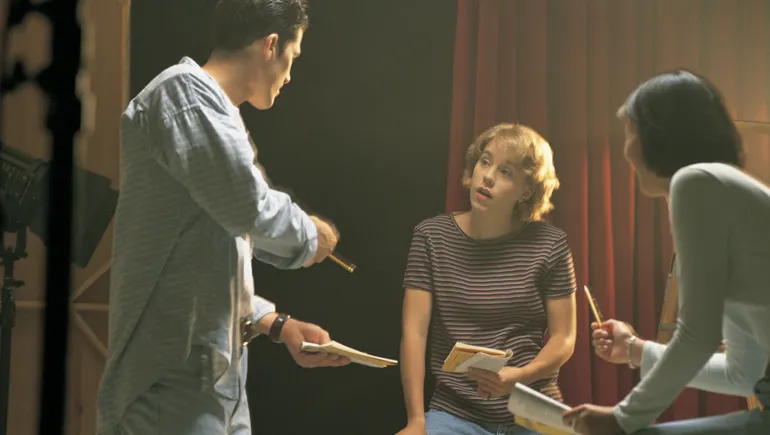
- Student theater can provide key opportunities for mentor-mentee relationships that support cross-grade collaborations and build confidence, social-emotional learning and creative thinking in older and younger students alike.
- These dynamics are inherent in the culture around student theater, which often combines grade levels out of necessity, said Jennifer Katona, executive director of the Educational Theatre Association. For instance, 8th graders might lead 5th and 6th graders in putting on productions, or high school juniors and seniors might mentor 9th graders.
- “Theater skills and leadership skills go hand-in-hand,” Katona said. “It’s also very effective, because then you have a lot of extra helpers. By the nature of a rehearsal process, you’re getting a great cross-pollination of ages.”
Dive Insight:
In smaller schools and districts, this mentoring dynamic can be less formal, taking the form of theater teachers bringing middle schoolers to see high school students perform, for example, Katona said.
“This is what you can look forward to,” she said. “Here’s what it means to be in the high school programs. They go to each other’s schools.”
In larger schools and districts, some theater teachers have more robust mentoring programs that lay out touch points that can be “just as intricate as their rehearsal schedule,” Katona said.
Older students who act as mentors build their own knowledge as anyone does when teaching other people, Katona said.
“Anytime your own knowledge increases, you get a confidence boost,” she added. “That’s wonderful for SEL — you can feel like an expert in something, and wear that mantle.”
For younger students, it’s a different dynamic to be given pointers by an older peer rather than a teacher, and they receive the information perhaps more openly, Katona said.
“It’s student-to-student,” she said. They’re more comfortable asking other students questions — “more comfortable to be vulnerable. When we are able to open ourselves up that way, it’s a really healthy space to be in, and it’s a creative space to be in. It’s also fun, which we can’t leave out of the SEL question. Laughter and joy are necessary.”
Theater creates plenty of both, and it can be a gold mine for social-emotional learning of the sort that doesn’t happen as readily in a rushed, screen-oriented culture where people are “so quick to leave a comment,” Katona said.
“We’ve lost the ability to engage, to look each other in the eye, to think about something meaningfully,” she said. “Theater forces us to slow down and think for a beat. All of that is very healthy for all of us. People are buying apps to remind themselves to breathe in the middle of the day. That’s what theater already does for us.”
