

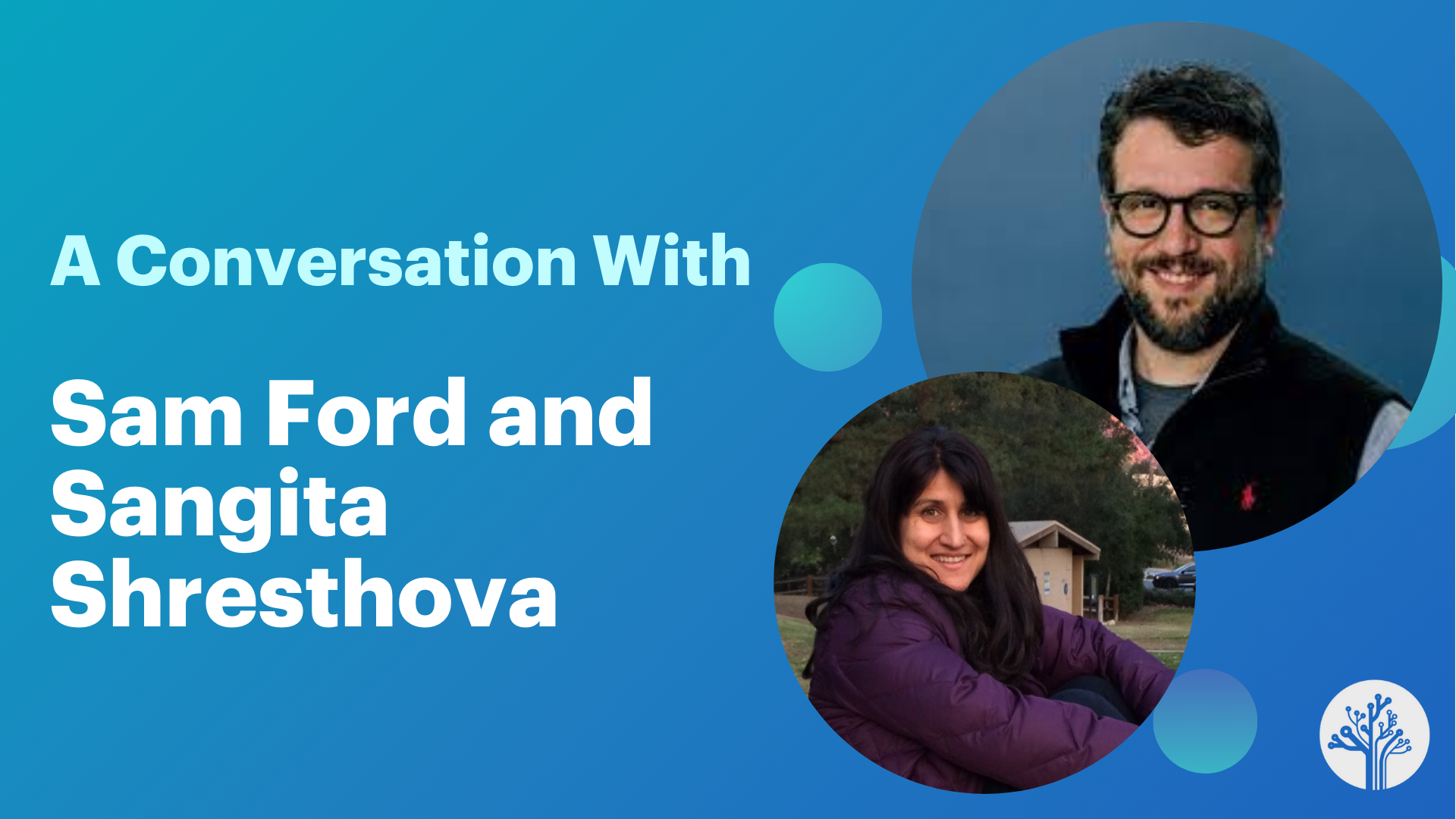
In an ever-evolving world, the ability to imagine and build a shared future is more important than ever. Over the past few years, I’ve been captivated by the power of consensus-building and tools that prioritize unity over division. This curiosity led me to Bowling Green, Kentucky, where a groundbreaking initiative—Bowling Green 2050—is inspiring communities to reimagine their future. By leveraging storytelling, civic imagination, and inclusive engagement, this project is reshaping how a city can come together to envision what lies ahead.
Today, I’m thrilled to speak with two incredible leaders driving this work forward: Sangita Shresthova, co-founder of the Civic Imagination Project at USC, and Sam Ford, founder of Inno Engine and a key contributor to the Bowling Green initiative. Together, they’re pioneering innovative approaches to civic engagement, using storytelling and collaboration to bridge divides and create actionable pathways for the future. In our conversation, we’ll explore how they’re fostering imagination, engaging stakeholders, and building consensus to craft a vision of what could be—a conversation that has lessons for all communities seeking to make a difference.
Outline
Mason Pashia: Welcome! Tell me about your own individual relationship to the future, and can you tell me specifically about a time when you were given the space to really imagine and envision further into the future?
This can be really early in your life. This can be later in your life. Thank you. Sangita, I might start with you if that’s all right.
Sangita Shresthova: I’m gonna go really far back into the past. When I was a child—so I was not an adult. I wasn’t a child when the Berlin Wall fell, you know, a pretty small child actually. But I remember it really vividly, and I remember that moment of thinking, wow, there’s a pivot here.
I could feel it. I was living abroad. I was living in Nepal, but my mom is Czechoslovakian, and so we were traveling to Czechoslovakia to experience the post-revolution moment. And so I just remember it being palpable, this notion of, like, the future holds promise.
The future holds hope, and I think it’s propelled me ever since—that feeling of knowing that it’s possible to have hope like that about the future.
Mason Pashia: That’s wonderful.
Sam Ford: Yeah, I think for me, when I started, I was a first-generation college student. So when I started my college experience, I was going to journalism school and working for newspapers. And this was a time when the newspaper business was being hit hard by the rise of online publication. And so, for me, this moment of being able to imagine the future was caused by a challenge.
I had this career trajectory that I thought was laid out, and then no sooner was I taking the first step into it, the whole road became unclear, and the industry veterans around me were like, we don’t know what’s going on. I think looking back on it, that was a freeing moment because when uncertainty and chaos come up, you realize it can be a meritocracy because nobody knows what’s gonna happen next.
The further you go through life, the more you realize that’s true always. Nobody knows what’s going to happen next, so you have the ability to imagine what might be and build work toward it. But for me, it came from a place of what was scary.
Mason Pashia: No, you’ve touched on a lot of stuff that we talk about all the time with respect to exposing young people to this idea of uncertainty. Too often, school is a practice of cementing certainty. What do you wanna be when you grow up? What are you gonna study in college? What job are you gonna have? And so much of the skill set of holding uncertainty and existing with it, we tend to drill out of the education system when really that is kind of the life of everybody that’s alive, especially right now. ‘Cause the journalism industry has been hit for a set of new reasons now, Sam. So I think it’s a good thing you got out when you did or pivoted that vision when you did. So I found both of you sort of in relationship to this thing called the Civic Imagination Project and some of the work that’s come out of that.
The Civic Imagination Project
Mason Pashia: Sangita, would you mind giving us a little overview of what the Civic Imagination Project is, how you’ve found your way to it, and some of that for our listeners?
Sangita Shresthova: Well, I found my way to it by co-founding it, so—
Mason Pashia: There you go.
Sangita Shresthova: We actually imagined it into being.
Mason Pashia: Love that.
Sangita Shresthova: It was our first act of civic imagination.
The project is currently based at USC in Los Angeles. We’re a hybrid project. We do academic thinking, but we’re also practice-based, and we translate everything we do back into practice. A lot of our work is not based at the university; it’s based outside in the communities. In terms of the theme, civic imagination, we bring imagination into the ways in which we approach our civic life—our everyday interactions, the way we exist in the world around us, the way we connect with other people—with the premise that really you cannot…
We believe that you cannot think about the future and you cannot act toward it without having a vision of what it might be. And that is not to say that we are trying to come up with a homogeneous vision of what that future is. Rather, we’re interested in pluralistic ways to think about the future.
So constantly negotiating that, constantly knowing that people are gonna have different visions and that they’re bringing themselves. That means their lived experiences, the generations before, the memories that they have, the legacies that they carry with them. So when we talk about the future of the Civic Imagination Project, we’re talking about both the past and the future at the same time.
So we’re pivoting to the future, but we recognize what’s come before really matters. In practice, we’ve done research around this space, looking at where civic imagination is activated by folks in various walks of life. They could be entrepreneurs, people involved in social impact projects, or on the governance side of things.
And then we have developed a bespoke approach. We have workshops that we take into the community, and one of our biggest sites is Bowling Green in Kentucky, where we have been doing sustained work for a long time. Hence, the relationship with Sam, which started before the Civic Imagination Project started.
So we’ve known each other for a very long time. Not only workshop the early work around the civic imagination, but now, really, I feel, bring it to its full application and thinking about what it means when a whole town takes on the civic imagination as an approach to thinking about where they’ve come from and where they might wanna go.
Sam Ford: I think in my case, thinking about civic imagination started as a child. I didn’t know it, though. I did my undergraduate thesis at Western Kentucky University on the world of professional wrestling.
Mason Pashia: Okay.
Sam Ford: And how in pro wrestling, this ensemble cast of characters alongside a fan base who shows up at the shows performs the role of sports fans at a show that they know is fictional. So you have this co-created, ongoing, serialized story being told between the audience and the writers and performers. And in graduate school, I ended up doing my master’s thesis work on daytime soap operas.
Mason Pashia: Nice.
Sam Ford: I had grown up—my MeMo was an avid daytime soap opera reviewer. And in these fictional towns, you had a large ensemble cast of characters. The shows had sometimes been on the air for decades. So when I started watching As the World Turns, it had been on the air for 30 years, but my grandmother and my mother could tell me, this character’s connected to that character, and there’s all this history to the town, but it’s always moving forward. And so that imaginative space where the audience has a chance to understand these characters, think about how they would write the story, in both those fandoms, you find people saying, why didn’t they ever pair this character and that character together? Why didn’t they do this? And then you realize that those immersive story worlds from fictional world-building have a lot in common with real-world communities.
They’re messy, they’re large, they’re never-ending. This is low-culture pop culture, so it’s not the grandiose HBO-style storytelling or arthouse film. It is messy and constant. And that’s our real world. So I’ve been very invigorated by these methodologies that can take approaches that you see in those creative industries and apply them to give people permission to imagine in these real-world scenarios where your town, your institutions in town become core IP of a fictional story world. And you’re imagining what the future story arcs and plot lines would be.
Sangita Shresthova: I guess I would add to that—the civic imagination is rooted in tapping pop culture and the cultures around us. And I think that’s what kind of sets us apart from maybe more conventional approaches to forecasting. To activate the imagination about the future, we have to tap what actually animates our imaginations in the first place, right?
We can’t come in cold and start to imagine, especially if we’re imagining together and having that negotiation that Sam described in terms of, like, what if we did this? But my imagination is a little different. And we found that moving this into a space where we’re tapping the stories that actually inspire our imaginations makes it much more productive, and it helps us connect with each other in ways that we wouldn’t necessarily if we walked into a room and said, we have this public square, and we would like to redesign it. How might we redesign it? And you’re starting with—you’ve already framed and limited your imagination, rather than coming in and saying—
Mason Pashia: What are some places that inspire you that exist in stories that you love? And let’s start from there and then work our way back to thinking about that public square that you might want to change for the future. We see this all the time, just asking school leaders or people to rethink what school is. And it’s just like, once you frame it like that, it’s really hard to get outside of seven periods, and there’s a bell schedule, and there’s lunch, and there’s recess. Like, it’s really tough. And I talk all the time about how Hollywood has done such a lackluster job at reimagining what school can be like. I tried to think through a list of times where Hollywood depicted what is possible with school rather than just showing you what school is, and I found like three examples that were even close, and most of them ended up forming an after-school program, not replacing the school day.
So it is a passion of mine to get these stories more lived in and—
Sangita Shresthova: One of the early sessions that inspired us to keep working on this was with educators, and we did, what could learning look like in 2070? And I remember we pushed them and pushed them, and then finally the school building went out the window, right? And it was just like all of it was gone. And then we were finally able to think about what it is about the current system or about your lived experiences of learning that you would like to take into the future with you? And we were able to start building from that.
Yeah. With the school building and the seven periods.
Mason Pashia: Yeah. No, that really resonates. So let’s connect this into—you started to go there already, but let’s connect this into Bowling Green a little bit. So you have this project.
Bowling Green 2050 Initiative
Mason Pashia: Tell me about how the “What Could BG Be” kind of initiative came to be? How did you do some of the stuff you were just talking about—like really ask people to bring in the things that they love and the things that inspired them to get them to iterate further? And then, yeah, we’ll keep going from there.
Sam Ford: Sangita and her colleagues had been building workshop approaches. I had worked with them on some projects with newsrooms when I was at Univision.
Mason Pashia: Hmm.
Sam Ford: And then in 2017, when they had built out their workshop methodology, we decided to add a new twist to it, which we first tested here in Bowling Green. We held a workshop about the work of the future.
What do jobs look like in the future in Kentucky? We brought people from all around the state together. Everybody brought up an object that represented their own history of work. And then they told the story of that object and their relationship to work and their identity with work. And then we grounded the discussion and imagination we had about the future in those stories. So that has always stuck with us. Fast forward a few years, and we were approached by the county judge executive here in Warren County, where Bowling Green is. For context for your listeners, it’s the third-largest city in Kentucky, just north of Nashville, Tennessee, and growing really fast. So this new county executive comes into office, has been looking at the data, and says, hey, do you all realize we’re going to be growing by at least another city of Bowling Green in 25 years or less if these numbers hold true? And he came to formulate that into a problem statement, which is, we’re growing like crazy.
Will that happen to us or for us? I think those moments of pressure or crisis can unlock imagination where you say, no conventional solution or anything we’ve done in the past is going to work for that type of challenge.
Let’s throw all the conventions away, as Sangita said. Knock down the walls, forget the building, and think about what the future could look like. He wasn’t familiar with civic imagination methodology, but others here had participated in prior programs. We started telling Judge Gorman about it. And he said, let’s use this methodology to solve the problem. So it started with a workshop and turned into an ongoing initiative called the BG 2050 project. We held a workshop in the summer of 2022. By the next spring, we had produced a recommendation document for the county coming out of that workshop.
But the main recommendation was: a one-day workshop is just step zero.
Mason Pashia: Yeah.
Sam Ford: This act of imagining together has to become a sustained practice where a community of people, massively multi-stakeholder, are coming together on a regular basis and continuing to imagine the future together, getting to know each other in the process, coming up with actionable projects and pilots.
So what we launched in March of 2024 was this BG 2050 initiative with different pillar groups, so different areas. What’s the future of housing in Bowling Green? What’s the future of economic development in Bowling Green? For us, we called the education component “Talent Development,” and so it encompasses everything from pre-K to continuing education, lifelong learning. How are people continuing to develop themselves at all stages of life? And that has been giving people permission, giving them a very defined challenge, and then permission and space to work together on imagining what the future could look like, bringing their own expertise and lived experiences into it has really animated that work.
Mason Pashia: How are you inviting the community into this work? Educators have stakeholder meetings, community meetings, and town halls, and it’s hard to get people aside from the usual suspects to show up or engage. What approaches did you take or technologies did you use to make sure that you could access a critical mass of voices in your community?
Sam Ford: Let me just say before we dive into that, the amount of work it takes to get 100 leaders, visionaries, and storytellers in the community to build a culture, a space, and an infrastructure to imagine together is a significant effort.
Mason Pashia: Hmm.
Sam Ford: So at first, we were not focused on how to bring this question to the greater public. The first question was, how do we get these? It’s everybody from the school superintendents, universities, the CTC, public sector leadership, and private sector leadership. But at some point along the way, we had talked about how this could be informed by what we learned from others.
And we had some experiences in the past using a front-end platform called Polis.
Mason Pashia: Yep.
Sam Ford: It’s a product of the Center for Computational Democracy. And we were contacted by a team at Google’s Jigsaw division who said, we really think these are the types of questions that AI can solve. In particular, how can you get public input but actually turn it into something actionable and understandable for decision-makers? So in brainstorming, we told them about the BG 2050 project that we were doing, and they said that’s a really compelling case study or pilot project for us to build these tools through. Because we’ve got over 100 organizations and individuals already involved.
So to answer your question directly, in February and March of 2025, we held what’s now been called the largest public town hall in U.S. history. I have not seen anything that disproves it.
Sangita Shresthova: Contested.
Sam Ford: About 8,000 area residents contributed about 4,000 unique ideas and voted on one another’s ideas using Polis as an agree, disagree, or pass.
Mason Pashia: Hmm.
Sam Ford: More than a million votes were cast in that one-month period on each other’s ideas while answering the question, “What could BG be?” That was our way of translating—working with local creatives, running a grassroots campaign that translated that BG 2050 project’s mandate to an approachable way that the general public could start thinking about that same question.
Sangita Shresthova: I will say that’s very live and active, and we’re working through that right now. But really, because we had those pillar groups and have those ongoing, we had a mechanism by which to then use AI tools from Jigsaw and SenseMaker to bring those back, to bring the learnings back to those pillar groups. And they were in a position to act on them. There are other people who also signed up, and organizations were using those findings. But really, the primary audience, in a way, receiving these insights is the people that are part of this—the “what” of BG 2050.
Mason Pashia: That’s super helpful. I want to know, Sangita, from you, zooming out further in all this work you’ve been doing on civic imagination for years, what has it taught you about bringing people together? I love the idea of consensus-making that’s so core to so many of these projects and these technologies. So I guess both bringing people together in the sense of gathering and facilitating, and also bringing people together in the sense of bridging difference. Just would love a couple of reflections on what you’ve learned.
Sangita Shresthova: To bring people together, you have to meet them where they’re at. For us, the answer has been through storytelling, tapping pop culture, and recognizing the importance of place—the relationship that people have to place.
Leaning into what matters to people as the starting point, as opposed to starting with the issue or the contentious thing that we’re gonna be debating. Spending a significant amount of time building a shared understanding of who we are.
Not necessarily to say we agree on anything, but to get to a place where I see Sam as a human being, and I recognize that he has certain preferences, and we’ve maybe imagined together. It’s great when you can play with the imagination because it lowers the stakes of the conversation. When we’re in an imaginary space, we are more pliable around thinking about negotiating things. So a lot of our workshops involve remixing stories because we want people to play with that and to recognize that nobody has the whole answer and that nobody has the full narrative. So that would be part one of the answer.
I’m trying to think. Sam, do you have something to say while I think of how I want to frame the second part of it?
Sam Ford: One of the things that helps bring people together is shared problem-solving. You find something people care about in common, and they begin working on solutions. The different approaches they take, the different lived experiences they’ve had, might bring different solutions to the table.
That range of experiences is a value add to finding more ways of solving the problem. That’s one of the reasons bringing these memory objects and these different lived experiences to the table at the beginning works. Let’s go with Bowling Green 2050. There were people at the table who were born here.
There were people at our first workshop who had moved here from more rural places. There were people who had started to move here from major metro areas and other parts of the country. And Bowling Green—the stat I’ve seen is it has more refugees per capita than any other U.S. city.
So you had multiple people in the room who came here from around the world. All those experiences came out in the stories they told about their relationship and love of the town they now call home. Here’s why I came here. Here’s a little bit about my journey in history. Here’s why I care about the future of this city for my kids, my grandkids—
Neighbor’s kids, somebody who’s just like me, coming through the school system now. And so suddenly, you know, you’re not framing the whole discussion based on what we disagree on.
Mason Pashia: Right.
Sam Ford: You’re not hiding what we disagree on either. It’s not a, you’re not allowed to talk about it, but it becomes a, we share a passion for this. We want to solve this problem. We want to realize this opportunity. Let’s work on that together. And then when stuff comes up that we disagree on, it’s now among colleagues working on a project together, which is different than the hyperpolarized situation we too often find ourselves in.
Mason Pashia: Yeah.
Sangita Shresthova: I was trying to say before—we complete each other’s sentences sometimes—but really starting from something we care about together. We may not agree about the specifics of how we get there. But we may have many differences, but we care about the same thing. And the future is a great premise because generally, people do care about what happens in the future.
Which is why the future framing really helps. If people are not willing to even engage in that conversation—this is something I’ve been trying to crack now as we kind of look to what’s next for us. If people are not willing to come to the table, to listen to each other, and to engage with each other, it is very hard to do that.
If they’re willing to be there, then really starting with all those things that Sam mentioned really works to break down barriers in terms of not necessarily convincing each other and trying to think about this as a debate, but really engaging with each other in creative ways.
That’s something we’ve been looking at a lot. Monica Guzman talks about bridging divides. She said this once, and it’s really stuck with me: when you’re talking about bridging divides, it’s not about convincing people to come to the other side of the bridge, but it’s about having that bridge. And I think our methodology has proven to work in that way.
Mason Pashia: I love that. When we were talking about the BG project more specifically, how did you engage local high schools and youth in this project? I think that there were some intentional ways that you went about including their voice or at least involving them in this civic imagination project.
Sam Ford: We have a lot of different ways that we’ve worked with local students directly. I mentioned both our public school systems as well as we have a school here called the Gatton Academy, which is at WKU but is a public high school STEM-focused. And we’ve engaged all of those folks as we designed this program.
With one high school, we went in and talked to kids about the problem statement. So we held assemblies with the whole freshman, sophomore, junior, and senior class, put that question out there, and asked, hey, as you all become the leaders in 25 years, you’re going to be the people who would be in a BG 2050 community.
If you choose to stay here, what do you want that to look like? At another high school, we went into the business classes where students were trying to come up with small business ideas for the future, and we took the results of “What Could BG Be” and had that be helpful inspiration points or proof points for these folks who are trying to come up with the business ideas that they could establish and grow when they graduate high school. Probably most compellingly, though, we partnered with Bowling Green High School, which has a student newspaper called the Purple Gem. And the Purple Gem partnered with our daily newspaper, the Bowling Green Daily News.
On the weekend, we launched the “What Could BG Be” public initiative, and the Daily News came out with a 12-page newspaper from 25 years in the future. On that day, instead of getting your regular copy on the doorstep, there was a series of speculative fiction stories locally rooted, from the funny to the fantastical, some having a little bit of a sci-fi orientation to them.
Six of those pieces were written by high school student journalists right alongside mid-career newspaper writers who were trying to write speculative fiction for the first time, right alongside fiction authors who live in the region, who freelanced and who wrote some of the pieces. And they got to know one another and gave notes on each other’s stories and had some brainstorming sessions so that these student journalists, career journalists, and fiction writers were acting as a shared writer’s room.
Mason Pashia: So cool. When you shared that detail with me over email, I was like, this is painfully up my alley.
Sam Ford: One of the things we did, because we had the BG 2050 communities, we had people, including the mayor of Bowling Green and several business leaders, we didn’t distribute this through the mail. They took 15,000 or so copies of the newspaper, went out at between four and five in the morning, and started throwing them porch to porch, diners, all those sorts of things.
So it was very grassroots and generated a lot of word of mouth.
Mason Pashia: That’s so cool. Okay. Sangita, if you think it’s possible in like a six-minute time, I would love to demonstrate for our audience a section of one of these workshops, like the story remix idea, even if it’s just a super quick brainstorm run-through.
Sangita Shresthova: If you’re willing to participate, I’ll include both of you.
Mason Pashia: Certainly am.
Sam Ford: This makes me nervous. Yeah, let’s do it.
Mason Pashia: Let’s ground it and show them what this is like. So yeah, you pick one that you think would work well in this small time period, but it’d be super fun.
Sangita Shresthova: All right, we’re gonna go with the remix. So I want you each—I’m gonna give you like 10 seconds as I’m talking—to come up with a fictional story that means a lot to you that you may know from your childhood. It could be a fairy tale, it could be a fictional pop culture story, it could be a movie, but just a story that you think—since we have so little time, you don’t have time to explain—that is well known, right? So we don’t have to explain everything here.
Normally, we would give space for us to explain the story, but come up with that story and then pick a character that you’d like to bring to the conversation. So just be really quickly thinking. I’m thinking as well as we’re doing this, ‘cause I wasn’t thinking as I was talking. And then we’re gonna each share, and so I’ll maybe turn it over to Sam first. Can you share what your story is and who’s your character?
Sam Ford: I was thinking of a song called Paradise by John Prine. It evokes a literal town called Paradise in Kentucky. It’s telling the story of a town that has been strip-mined away. It became a rallying cry. I grew up in the western Kentucky coal fields imagining this past.
In the song, you’ve got a father telling his son about the town they grew up in. It’s no longer there. You can’t go back to it. I think about that story that people carried with them through song, that long tradition of narrators in a song that evoke the challenges that people are facing in their communities.
Sangita Shresthova: So would you think of the father or the son?
Sam Ford: Yeah, I think for me it would be the son because the son’s moving forward into the future and trying to think about what to do when he can’t return to the past, which is about—you can’t return to your childhood. You’ve gotta be an adult now. You can’t go back to childhood.
Sangita Shresthova: Okay. Was that inspired by the guitars behind you?
Mason Pashia: Maybe the John Prine just kind of like coming off of them.
Sangita Shresthova: All right, Mason, what’s your story? Who are you? What’s your character?
Mason Pashia: I’m gonna pick Peter Pan. I’ve always really loved that story. And specifically, the idea of choosing never to grow up or having to choose to grow up. I’ve always thought that that was like a really resonant and decisive challenge. And I think my character I’m gonna pick would be Smee, the right-hand pirate to Captain Hook, because I think that Smee is the comic character. But there’s also something very tragic about being a comic adult in a world of kids. And you can never un-age, you’re just sort of like stuck at this weird age among all these people who are having fun and trying to ruin your day. So I’m gonna pick Smee from Peter Pan.
Sangita Shresthova: I’m gonna keep it straightforward. My first thought was Harry Potter, because my son is 10 and he’s reading it right now. He’s on book seven. He took the summer to read the whole series, and he’s completely swept up with the imaginary world around Harry Potter.
And I’ll go with Hermione because I don’t want to go with Harry himself. So Hermione. Do we all know her? So I’m not going to explain. Normally, what we would do then in an actual workshop is take these characters, build them up more, and now they would go on a shared adventure together.
Sangita Shresthova: So we’d have the son from Paradise by John Prine, Smee from Peter Pan, and Hermione from Harry Potter who have met and are going to be engaged in an adventure thematically related to us thinking about the future. We’d work through what our ideal world would be. We’re jumping into the middle of a workshop, so we’d be like, imagine what they might do together. Where might they want to go? Maybe it’s set in that town of Paradise. I live in Altadena, so this town being gone feels resonant to me.
So maybe they’re looking at Altadena and trying to think through what could this place be in 25 years or in 50 years? And imagining tapping into their magical powers—like Hermione might be able to cast some spells, right? And so you start to build out a story. But what’s crucial about that is that none of our characters is crucial to the story, which is what we’re trying to demonstrate.
No one owns the full story. We want to push past what’s possible. So that’s why we have the fictional kind of almost wizard, maybe wizard-y or definitely imaginative pieces to it. And thank you, Sam, for bringing in the Paradise example, because it allows me to say that the past also matters, right? We’re not just pivoting to this. We’re not dropping everything and moving into the future. We recognize that we bring our past with us. So we’ll be kind of haunted or maybe blessed by the past, right, that we want to carry with us. So that would be kind of how that workshop would take place. And then when that story is built, which we would do together, we would then start to work back and say, well, what are some of the actions that actually come out of that?
And what are some of the values that we’ve noticed because we’re now building common ground? Like, what do our characters have in common? How are they different? What does their meeting each other give them, and how does it help them maybe take action toward the future and imagine something?
Mason Pashia: I love that. It mirrors the values work being done in the room when you were creating the story. It’s like the values the characters have within the world, but because the room is consensus-designed, the value system of this story—they’re doing that work at the same time within themselves, without having to make any jumps.
Sangita Shresthova: Exactly. Because if you’re having to approach values conversations directly, they’re very difficult. But when they surface through the stories, it’s much easier to articulate them.
Sam Ford: One aspect of the BG 2050 project is the intense focus on shared values. From the memory objects, from the world-building and imagination exercises, you hone in on and eventually laser focus on: here are the things that matter to our place or to this problem we’re trying to solve.
Our community shares a concern for these things. Now how do we design with those values in mind? And certainly, character story arcs—trying to get those characters to a resolution—people understand those core tenets of a good story from their own pop culture experiences, and then suddenly that drives them.
Potentially to look at one another and the shared activity in a very different way than they would normally do. So if you were framing it as civic engagement or futures-oriented strategic planning type activities.
Sam Ford: To just get started. I think a lot of people get stuck by saying, I’m trying to eventually accomplish this. It’s about these little iterations that then become bigger and bigger. And so for us, it’s how do you imbue imagination and—
Sangita Shresthova: A first test. That’s something that’s very doable that can then start to grow and see where it takes you.
Mason Pashia: Like we just did today over in five minutes, right? Maybe that’s something that we would—I know Sam, but I hadn’t heard about that story, that song before. Like, I feel like, oh, now I know something about you that I didn’t know, right?
Sangita Shresthova: So already that like five minutes or four, however quickly we did it, has shifted the mood in this virtual room.
Mason Pashia: I am curious about a beer-bellied striped pirate. That is what you know about me now. Thank you so much, and we’ll be sure to share all the links in the show notes so folks can dig deeper into these cool initiatives.
Sam Ford: Thanks a lot.
Sangita Shresthova: Thank you.
Guest Bio
Sam Ford
Sam Ford is a Founding Partner of Innovation Engine. He has worked on innovation approaches, engagement and storytelling strategies, and cultural intelligence initiatives with a wide range of organizations across multiple industry sectors, including consulting clients that have ranged from Lowe’s Hardware, WD-40, and the U.S. Department of State to Microsoft, University of Southern California, and WNYC.
As Director of Cultural Intelligence, Ford co-created an organic growth initiative for Paramount at the book publisher it then owned, Simon & Schuster. As VP of Innovation & Engagement, he oversaw innovation projects and partnerships across subsidiary companies owned by Univision. And, as a director for NYC strategic communications firm Peppercomm, he helped lead innovative communications strategies for clients ranging from Whirlpool, TJMaxx, Food Network, and MINI to EY, Siemens, Steelcase, and Lincoln Financial and was named Digital Communicator of the Year and a Social Media MVP by PR News in 2014 and Bulldog Reporter Social Media Innovator of the Year in 2011.
Early in his career, Ford helped establish and run the MIT Convergence Culture Consortium research group. He has served as a research affiliate with MIT Comparative Media Studies/Writing and as a Knight News Innovation Fellow with Columbia Journalism’s Tow Center for Digital Journalism, the latter of which resulted in work that received the inaugural Research Prize for Professional Relevance from the Association for Education in Journalism and Mass Communication (AEJMC) in 2018. He has published more than 25 pieces of academic research, including being co-author of the NYU Press book Spreadable Media, named one of 2013’s Best Business Books by Strategy+Business.
Sangita Shresthova
Sangita Shresthova is a writer, researcher, thinker, speaker and doer. She is an expert in mixed research methods, online learning, media literacies, popular culture, performance, new media, politics, and globalization. She is currently the Associate Research Professor of Communication and Director of the Civic Paths Group and the Transcultural Fandom Group based at the University of Southern California.
Sangita is one of the creators of the Digital Civics Toolkit (digitalcivicstoolkit.org), a collection of resources for educators, teachers and community leaders to support youth learning. Her own artistic work has been presented in creative venues around the world including the Pasadena Dance Festival, Schaubuehne (Berlin), the Other Festival (Chennai), the EBS International Documentary Festival (Seoul), and the American Dance Festival (Durham, NC). She holds a Ph.D. from UCLA’s Department of World Arts and Cultures and MSc. degrees from MIT and LSE. She received her BA from Princeton University.She is also a faculty member at the Salzburg Academy on Media and Social Change in Austria.
