

Key points:
Across the country, schools are raising alarms about chronic absenteeism. News stories highlight rising numbers of missed days, legislators are demanding answers from districts, and educators are feeling the stress.
School leaders know attendance matters–it’s closely tied to academic outcomes, long-term success, and even a child’s overall health and wellness. Ensuring that absences are tracked and attendance numbers increase are often two of the highest district-wide priorities for administrators.
However, what if districts are measuring the wrong thing? Getting kids back in the building is a big win for educators, but it also sets a low bar for what is considered a success. As the pressure to improve attendance mounts, it’s silencing the alarm that kids are still struggling once they return to the classroom.
Why are we only counting days?
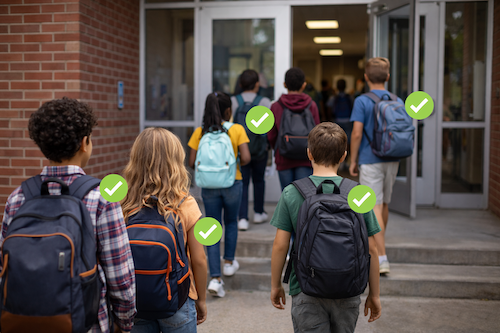
“Days present” is a simple, clean number. While it tells administrators whether a student was physically at school, it doesn’t decipher why they came, how they felt while they were there, or what their experience was like once they arrived. It’s a measure of proximity, not engagement.
As school leaders crunch daily numbers and celebrate progress, they often ignore the most important question: Are we counting what counts–or just counting what’s easy to count?
Here’s the uncomfortable truth: some kids don’t want to be at school. And if administrators and educators don’t take the time to understand why, schools aren’t solving the real problem; they’re just treating the symptom.
What brings students back?
At Eastern Hancock Schools, where I serve as superintendent, we’ve started asking different questions when it comes to attendance. Not just, “How many students are here?” but, “Why do they choose to come?” Because when students are excited to show up, attendance becomes a result, not a requirement.
Over time, school leaders found that students tend to show up–and keep showing up–when they consistently experience four things: joy, connection, growth, and success.
- Joy: Students come back for the moments that light them up. Whether it’s a classroom that feels fun, a performance that sparks creativity, or a lesson that feels more like play than pressure, joy is a reason to return.
- Connection: Students come back because of people–trusted teachers, supportive peers, kind cafeteria workers, and encouraging coaches. Eastern Hancock, for example, celebrates everyone’s birthday on a single day, creating a moment for all students to feel included and valued.
Growth: Students come back when they can see and feel their own progress. That doesn’t just mean rising test scores; it means building confidence, increasing competence, and discovering new possibilities in themselves. Every junior and senior at Eastern Hancock meets with the superintendent and high school principal to discuss their post-high school aspirations, and those conversations help us ensure we’re providing the right support so students can plan their journey forward. - Success: Students come back when they believe school is helping them build a better future. That might look like mastering a skill, earning a credential, discovering a career path, or gaining independence. When the road ahead feels real and reachable, students want to stay on it.
Nationwide, only 39 percent of sophomores say they feel like they belong at school, and unfortunately, student disengagement remains a top driver of chronic absenteeism. However, by finding creative, student-centered solutions to re-engage our kids, Eastern Hancock is beginning to see encouraging signs. Early feedback from our student advisory council indicates that students feel more connected and valued when their voices help shape school decisions, and those students tell us that a sense of belonging is what keeps them coming back.
It’s time to rethink the metric
Yes, attendance data can be useful. But if educators’ only question is, “How many days did they miss?”, districts risk missing the bigger story. A student can be present and still feel disengaged. Or absent because they don’t feel safe, welcomed, or inspired.
What if schools started measuring things that reflect why students come to school in the first place?
- How many students feel like they belong?
- How often do they experience joy in learning?
- Do they believe their work in school connects to life beyond it?
Those things are more challenging to quantify, but they’re what really drive engagement. And if districts want students to attend more often, they need to create the kind of school experience they won’t want to miss.
The real goal isn’t attendance–it’s belonging
Showing up to school is only the beginning. Real attendance–the kind that fuels learning, community, and purpose–comes from students who genuinely want to be there.
So yes, let’s keep an eye on attendance numbers. But let’s also be bold enough to ask better questions to make classrooms places of engagement and support. Because the best way to get kids back into school is to give them a school worth coming back to.
George Philhower, Ed.D., Eastern Hancock Schools
Dr. George Philhower is the superintendent of Eastern Hancock Schools, a rural district located just east of Indianapolis. With five years of experience as a superintendent, George is driven by a vision where every student and staff member wakes up eager to go to school each day. He believes this is possible when everyone feels safe and valued, has opportunities for success, engages in meaningful work, plays and learns with friends, and is supported by caring adults. George holds a Bachelor’s degree in Elementary and Special Education from Cardinal Stritch University, a Master’s in Instructional Leadership from the University of Indianapolis, and both an Ed.S. and Ph.D. from Indiana State University.
Latest posts by eSchool Media Contributors (see all)
