

By: Alin Bennett
Reality Meets Possibility
On the second morning of an Education Reimagined Ecosystem Lab site visit to Colorado, our group gathered inside a small learning community called La Luz.
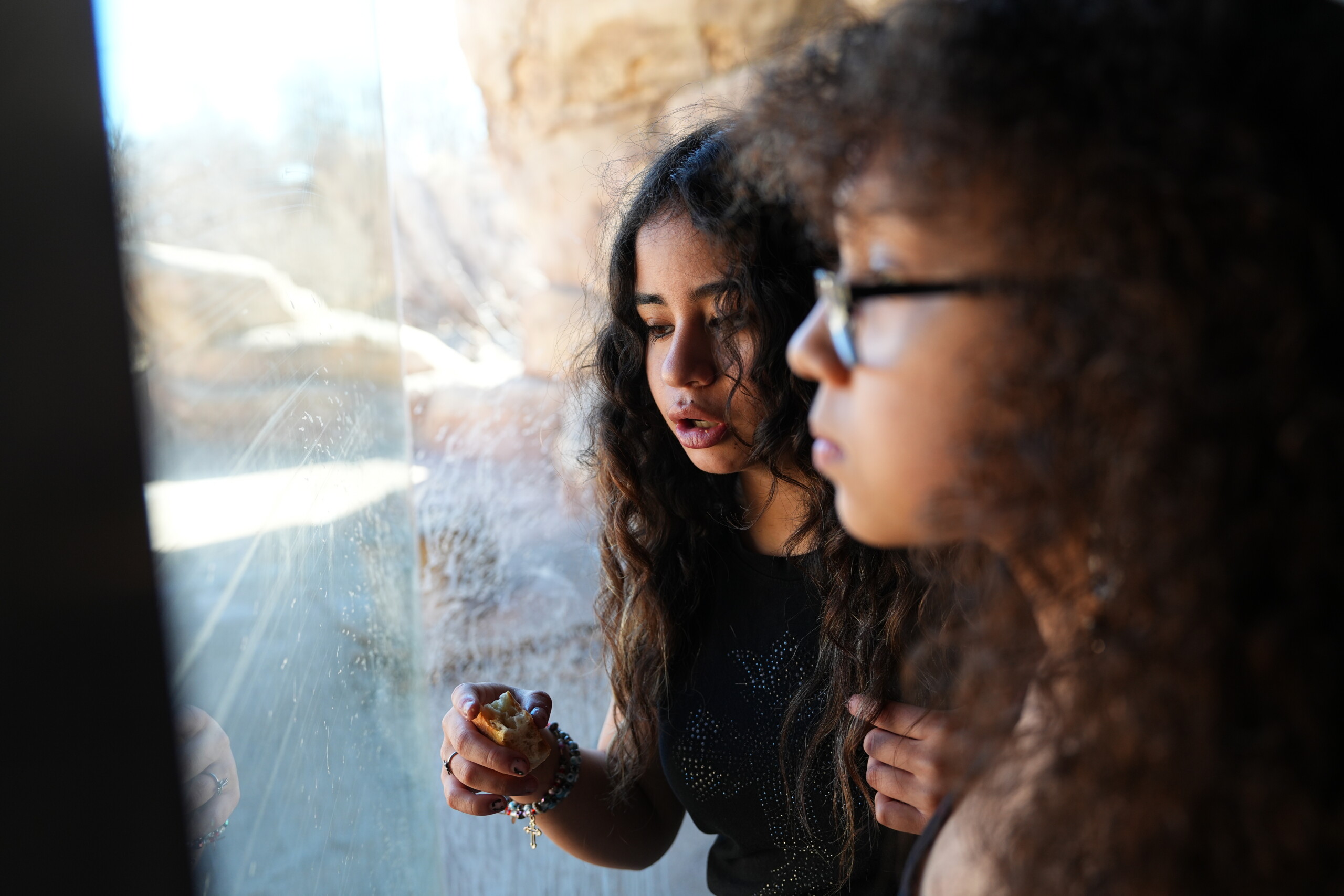
What struck us immediately was the intentionality of the environment. The learning space was intimate, relational, and deeply connected to the identities and aspirations of the young people in the community. As we moved through learning experiences inside and beyond La Luz’s home base, we saw young people engaged not in isolated assignments but in real-world work—building projects, exploring community spaces, and learning alongside adults who functioned less like content experts and more like co-learners.
What stood out most was how natural the learning felt. Relationships were clearly the center of gravity. The work learners were doing was connected to real contexts in their lives and communities. The boundaries between “school” and “world” felt noticeably thinner.
Later that afternoon, the setting shifted.
Instead of a small learning community, we found ourselves in a large conversation with educators, school leaders, district officials, and state education leaders from across Colorado. The goal was not to design a program or draft a policy proposal, but to imagine what might be possible for learning across the state.
As people shared ideas, something became clear. Much of what participants described sounded remarkably similar to what we had experienced that morning.
People spoke about learning that is relational, relevant, and embedded in community. They described partnerships, real-world experiences, and flexible environments that allow young people to pursue meaningful pathways. In other words, the future many leaders were imagining is already beginning to take shape.
Moments like this reveal something important about learner-centered transformation. The most powerful ideas about the future of education are not theoretical—they are already emerging in communities across the country. The challenge is not inventing these possibilities; it is learning how to connect, support, and grow them.
This is precisely the work the Learner-Centered Ecosystem Lab was created to support.
What Happens When Ecosystem Builders Learn Together
Experiences like the one in Colorado reveal an important truth: building learner-centered ecosystems cannot happen in isolation.
Communities experimenting with new approaches to learning are navigating unfamiliar terrain—rethinking partnerships between schools and community organizations, designing infrastructure for learning beyond traditional classrooms, and grappling with policy, funding, and governance systems never designed for this kind of work. In many places, leaders are inventing as they go.
The Learner-Centered Ecosystem Lab, convened by Education Reimagined, was created to support these communities as they navigate that complexity together.
The Lab is a year-long learning journey for leaders actively building learner-centered ecosystems in their communities. Rather than stepping away from their work, participants remain embedded in local efforts while engaging in shared learning, reflection, and design alongside peers from across the country.
This model is intentional. The Lab is not designed as traditional professional development. It is a space where communities bring real challenges, test ideas in context, and learn from one another in real time. Through site visits, advisory structures, and ongoing collaboration, participants are able to see ecosystem elements in action, examine emerging patterns across communities, and adapt those insights to their own contexts.
The current cohort reflects the many ways ecosystems are taking shape. Participants include public school systems such as Tacoma Public Schools and Eden Prairie Public Schools, community-based organizations like Embarc Chicago, microschool networks such as the California Microschools Collective, and independent learning environments like La Luz Education.
Despite their differences, these communities share a common aspiration: to create ecosystems where young people can design meaningful learning journeys across many places, relationships, and experiences.
Building the Backbone: How Communities Are Designing Learning Ecosystems
One of the most powerful aspects of the Ecosystem Lab is that participants are not simply exchanging ideas—they are actively designing solutions to the challenges they encounter as they build ecosystems.
Each community brings a design challenge connected to the development of its local ecosystem. These challenges focus not on improving a single program, but on building the infrastructure needed to support learning across many environments.
In Colorado, leaders connected to La Luz Education are exploring how community partnerships can function as the backbone of a learning ecosystem—codifying practices so community-based learning can deepen and spread.
In Chicago, Embarc is strengthening systems that support collaboration between educators and community organizations, ensuring real-world experiences are not isolated events but part of coherent learning journeys.
In Minnesota, Eden Prairie Public Schools is exploring how a community learning hub could bring together students, educators, and partners in shared spaces designed around interest-driven pathways.
Meanwhile, organizations like the California Microschools Collective are working to build the operational infrastructure needed to sustain learner-centered environments in complex policy contexts.
Across these efforts, a common thread emerges: Communities are not simply redesigning schools. They are experimenting with how learning can live across an entire community.
The Lab creates space not only to advance this work locally, but to examine it collectively—surfacing patterns, testing ideas, and refining approaches across contexts.
This work becomes most visible during the Lab’s culminating experience, where communities share their evolving ecosystem designs through a public gallery. These moments make the work tangible, offering a window into how partnerships, learner pathways, and community connections are taking shape in real time.
When the Work Becomes Shared
What becomes clear through this work is that the Ecosystem Lab is not simply a place to share ideas—it is a space that changes how leaders experience their work.
In many communities, ecosystem builders are navigating complexity without a clear model. They are designing new partnerships, rethinking roles, and building infrastructure that doesn’t yet fully exist. The work is often uncertain, and at times, isolating. The Lab shifts that experience.
As leaders visit one another’s communities, engage in shared design work, and reflect together, something begins to change. What once felt like isolated experimentation starts to take shape as part of something larger. Leaders begin to see that while the challenges they are facing are unique to their circumstance -others are working through similar questions in different contexts
Just as importantly, they begin to see what is possible. Seeing learning environments like La Luz, or systems like Colorado Springs, does more than offer new ideas. It builds belief. It makes the work tangible. It helps leaders recognize that learner-centered ecosystems are not abstract concepts, but living systems already emerging in communities across the country.
This shared experience also creates the conditions for deeper learning. Rather than exchanging best practices, participants engage in a kind of collective sense-making—examining what is working, where challenges persist, and how ideas might translate across different contexts. Over time, patterns begin to surface.
Communities are discovering that ecosystems grow when vision is shaped with a broad and inclusive set of voices. That partnerships become most powerful when they are intentionally coordinated around learner pathways. That responsibility for learning expands across a wider network of adults. And that this work unfolds through cycles of experimentation and adaptation rather than linear implementation.
These insights do not emerge from theory alone. They are grounded in the lived experiences of communities actively building ecosystems in real time.
And perhaps most importantly, the Lab creates a space where leaders are not only building new systems—but are doing so together.
