

Earlier this year, negotiators reached consensus on a critical and long-needed federal higher education accountability and transparency framework. With it, we now share common-sense expectations that span all sectors of higher education: Our graduates will earn at least as much as a high school graduate four years after completing one of our programs. We also have new opportunities to collaborate with our governors’ workforce development boards to expand and build middle-skills pathways eligible for short-term Workforce Pell grants.
As the primary negotiator representing public colleges and universities for the Accountability in Higher Education and Access through Demand-driven Workforce Pell committee, I was impressed by the thoughtfulness of the federal negotiator, the Departments of Education and Labor staff, and my fellow negotiators. We appreciated the historic nature of the moment and the imperative that the framework be durable enough to provide a predictable way for colleges to plan, budget and better serve students.
We also saw that rural learners and rural communities face unique challenges that the One Big Beautiful Bill Act (OBBBA) cannot address. Negotiated rule making elevated some of these challenges while shining a light on the need for Congress to more intentionally think about rural talent development and attraction. Here are some of the challenges that merit further federal action.
- Rural communities are small. Many rural programs enroll as few as four to 12 students. Statistically, this means the postsecondary programs at rural-serving institutions often have cohort sizes that are too small to report needed outcomes data with privacy protections. During the negotiations, the Western Interstate Commission for Higher Education shared a preliminary internal analysis showing programs in the most rural counties in the West were more likely than those in less rural counties to have enrollment sizes too small to be included in the sample earnings tests shared by the Department of Education.
The same scale problem makes the 70 percent job placement requirements in the new Workforce Pell program inherently volatile for rural providers. The new draft regulations provide for cohort pooling over multiple years, but even after several years, the cohort may still be too small. At this point, the accountability requirements won’t apply. Rural learners, institutions and taxpayers need additional ways to describe return on investment and make data-informed choices about programs that need to be improved, shut down or developed. If this oversight isn’t addressed, rural students will be left out of this life-changing opportunity by design.
- Lower regional wages. Median wages in rural communities are 20 to 25 percent below national averages. Programs can fail earnings tests in both the Workforce Pell and OBBBA accountability frameworks even when they lead to good jobs. Virginia, home to my fellow negotiator representing state higher education agencies, Randy Stamper of the Virginia Community College System, provides an illustrative example: The commonwealth is home to some of the highest- and lowest-earning counties in America. Per-capita personal income in Arlington is more than $90,000. On the other end of the spectrum, Buckingham County’s is only around $30,000. The state’s FastForward program is designed to serve local workforce needs, and naturally the graduates of FastForward programs will earn different wages depending on where in the commonwealth they live. A statewide threshold for the earnings test ignores these geographic differences. Without rural wage adjustments, critical federal financial aid resources are at risk for financially vulnerable learners and rural-serving institutions. In this way, a well-intentioned safeguard excludes rural students.
- Limited employer density. In principle, employer engagement in postsecondary pathway labor market validation is always appreciated. However, it may become a barrier due to limited employer density. In many rural counties, one hospital or single manufacturer anchors the labor market, while small businesses account for nearly 85 percent of establishments and 54 percent of workers. As such, most rural employers have limited capacity to regularly hire additional employees, and students often cross county and state borders for work. These limitations require strong coordination between a campus providing training and an employer partner to ensure hiring timelines and program offerings coincide.
Middle-skills gaps are largest in rural communities. Without financially viable postsecondary options, rural communities will not have the education and training backbone to survive, let alone thrive. Middle-skill workers power local growth. Childcare providers, certified nursing assistants, phlebotomists, EKG technicians, emergency medical technicians and medical billing staff sustain rural health systems, while machinists, welders, maintenance technicians, quality specialists and drivers build, maintain and move the infrastructure and products that economies depend on. This backbone in rural communities necessarily will need to involve delivery by local high schools, land-grant university extension networks, nonprofit organizations and other providers and courses that are not currently eligible for federal loans or Pell Grants.
The importance of strong rural postsecondary pathways is a 50-state issue. Whether through a painfully overdue reauthorization of the Higher Education Act or explicit legislation on rural talent development and attraction, the following changes and investments are needed to support state leadership.
- Affordability. States need waiver authority to braid resources across federal agency sources to provide financial packages that make programs “radically affordable” to rural learners.
- Program viability. States further need flexible funds to promote development and expansion of financially sustainable, in-demand middle-skills pathways. This includes paying for learner acceleration tools that the current Pell statute and regulations prevent or restrict paying for, including prior learning assessment, payment of wages for work-based learning, high school dual enrollment and remediation of academic skills gaps. It also includes funds to augment the institutional research capacity of small rural institutions.
- Accountability design. Permit counting cross-county, cross-state and remote work placements for rural completers in the new accountability framework.
- Accreditation flexibility. Specifically, permit and clarify provisional approval for new and emerging rural programs lacking required historical data.
- Data infrastructure. Invest in state longitudinal data systems linked to enhanced unemployment insurance wage records. Our rural challenges can be understood and advanced, but not without more granular data.
As OBBBA implementation moves from policy to practice, success should be measured not only by speed and scale, but by who is able to participate and benefit.
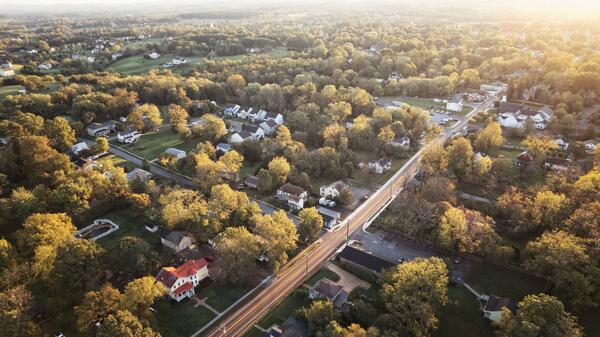
Rural communities are essential to the nation’s workforce and economic resilience. If the goal is accountability, then the guidelines must be applied in ways that recognize rural realities—limited program density, long travel distances, smaller employers and fewer training providers—so that quality standards don’t unintentionally become barriers to participation and success. With smart guardrails and rural-informed flexibility, Workforce Pell can deliver on its promise to both students and taxpayers and ensure opportunity reaches every ZIP code. Accountability without abandonment must be the standard.
Kristin Hultquist is CEO and founding partner of HCM Strategists and an expert in state and federal higher education policy and strategy. She has held positions at the U.S. Department of Education and the National Governors Association and serves on the Metropolitan State University–Denver Board of Trustees as a past chair. Most recently, she served as the primary negotiator representing public colleges and universities on the Accountability in Higher Education and Access through Demand-driven Workforce Pell committee.
