

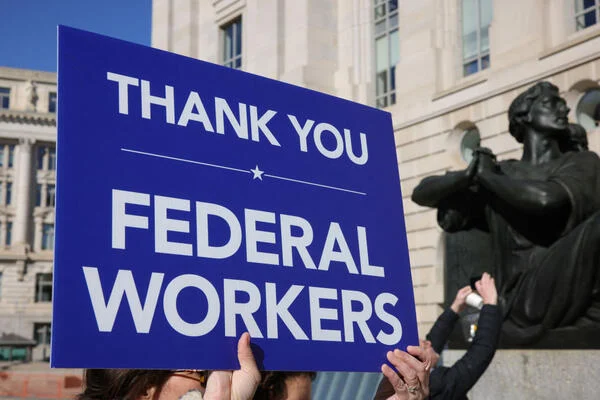
A little over a year ago, in February 2025, I worked with colleagues to launch an initiative to support fired federal workers and others impacted by wide-ranging federal cuts and policy changes.
It started with a conversation with my colleague Aurora Cruz-Torres, immediately after the Trump administration started firing people at the United States Agency for International Development, about how we could use our skills in career advising to help. And then, as federal firings expanded and grants were cut across the nonprofit and research ecosystems, it grew. Ultimately, the program involved more than 100 volunteers and offered support to more than 1,000 impacted workers. That support was always free and took the form of one-on-one advising sessions, asynchronous résumé reviews and a series of workshops on career transitions.
More than half of the volunteers were members of the Graduate Career Consortium, the leading professional organization in graduate-level career and professional development, and we formed the GCC Public Service Committee to facilitate the work. GCC members were a particularly good fit for this project because the needs of impacted workers often resembled those of graduate students and postdocs transitioning to new careers after years of specialized work.
My role was pretty simple. As requests for support came in through an online form, I read the requester’s narrative of what had happened to them, the description of the help they needed and their background. Then I matched them with an adviser who could help. A straightforward job, but one that gave me a broad perspective on what was happening in the DOGE era and its individual and collective reverberations. As request after request after request came in, I heard stories of disruption, confusion and resilience. And through facilitating meetings with volunteers to support one another, I heard even more about ongoing struggles and emerging needs.
In this article, I use that experience to share four things my collaborators and I learned by supporting workers in the chaotic year of 2025. As chaos continues in 2026, I hope these lessons help us all figure out how to continue showing up for one another.
- The world is full of brilliant people. In spring and early summer of 2025, we received well over 200 requests for support each month (in May the number nearly hit 300), and that was only a small portion of the hundreds of thousands of people affected by the firings and cuts. One of my strongest memories of that period, beyond my horror at the volume of need, was a simple thought: “Wow, these people are incredible.”
We worked with people who managed tens of millions of dollars in grants to help communities fight HIV/AIDS and hunger. We worked with countless scientists and public health professionals who developed disease treatment and prevention strategies. We worked with people who funded humanistic research and public history programs across the country. We worked with people who ran programs that help refugees find community and stability in their new homes. And many, many more.
These were incredibly smart, dedicated people who were working to solve so many different problems in our world. My day job involves working with graduate students and postdoctoral scholars, so I’m not a stranger to being a little overwhelmed by the scope and scale of brilliance in the world. But I mostly work with people as they start to transition from school into the world, and this initiative was a great reminder of just how much good they go on to do with their skills.
And so, at times, all of this was almost heartening. So many brilliant people in the world! But it was also often heartbreaking. All these brilliant people, ripped out of public service!
So how could we help?
- Be the old man at the bait shop. One of the key challenges of career advising, even during perfectly normal times, is how you support someone who is doing everything right but still struggling. And that’s even harder in such disastrously chaotic times.
Whenever we gathered our volunteer advisers together to share experiences and advice for one another, this problem always came up. Many of the people we supported had spent years (in many cases decades) building careers in highly specialized fields, and then out of nowhere those fields didn’t really exist anymore. Even if they wrote pitch-perfect résumés and networked for hours a day, they were going to struggle to transition to something new. And all this while feeling deeply frustrated and scared.
So what can you really accomplish in a couple of 30-minute conversations, given a situation like this? You’re probably not going to solve all of their problems (if only!), and you’ll be lucky to identify a few immediately actionable, transformative next steps. But you can be a calm, thoughtful partner. You can offer empathy, encouragement and maybe some new ideas. And that can be enough to move forward.
Laura Coutts, one of our advisers, offered her fellow volunteers a metaphor to capture this: “I have a small mantra for myself while everything is upside down with the job market: I’m the old man who runs the bait shop. I can’t feasibly get into everyone’s boat and help them catch a fish. And it doesn’t help to run around, raving about how the weather is awful and the fish aren’t biting. My job is to sell the bait, share tidbits of wisdom and encourage the fisherpeople to stick with it.”
- We’re better together. Early in this initiative, I noticed something small but meaningful. In request after request and thank-you after thank-you, I kept seeing federal workers talk about “we” and “us” and “workers like me.” Even in the midst of a crisis affecting them individually, they kept thinking in terms of we.
And in the conversations I had with fired federal workers, I also heard their consistent and strongly held desire to keep working in public service. Even when that wasn’t possible right now and a worker was seeking support for a corporate job search, they almost always spoke of their hope to return in the future. I also saw this in all of the mutual support efforts that emerged from within the (former) federal workforce, like Grounded Idealist, Career Pivot and a number of LinkedIn-based mutual aid groups.
What had driven them to their work in the federal government was a desire to contribute to their communities and help other people. And as much as the crisis physically and institutionally scattered them, that core drive remained.
This ethos also drove our volunteers’ commitment to this initiative, which was designed and framed as mutual support. Volunteers regularly told me that they were happy to feel like they were able to help, even if their own jobs felt unstable (several did, indeed, lose their positions) and even if it never felt like enough. As Kristine Lodge, one of our advisers put it, “I remind myself that, although résumé reviews feel like a small drop in the bucket, to the people who receive my feedback, it’s a reminder that they are not alone; they are part of a wider community who cares about them.” Or as another adviser said, “In a moment where so many of us are feeling powerless to stop the forces impacting our institutions and students, being able to provide some support for these dedicated public servants has been very meaningful.”
And so I maintain some hope that the we can persist.
- Stories matter. One of the main ways you can put that we into practice is to listen. Over the course of this initiative, I have read nearly 100,000 words of federal workers’ stories via their requests for support. It was sometimes overwhelming and almost always depressing.
But it also helped me really see and appreciate these workers in a way that headlines couldn’t. These firings were in the news, but as big stories about big numbers—numbers almost too big to wrap your head around and so tempting to look away from. This project reminded me that those big numbers were made up of people.
When wild, terrible things are happening and everyone is struggling, it may be easy to withdraw into yourself and focus only on your own path forward. But that’s exactly when it’s so important to listen to one another.
Telling stories, and hearing them, is an important part of how we understand ourselves. And so opening space for workers to sit with and share their stories and their struggles was crucial. “I also spend time during each session to ask each person about how their office experienced the layoffs,” said adviser Rachel Bernard. “I think just telling the story helps them, both because they start to recognize how inconceivable it all is, but they also start to process and develop a narrative around what’s going on.”
Stories are also how we recognize how intertwined we all are, how our struggles are connected. That sense of solidarity, of seeing and hearing one another, was at the root of this whole effort.
And it offers a guide to what matters as unstable federal policies and a disordered job market continue to impact us all in different but interrelated ways. We can be there for international students and workers as visa policy changes make them feel unwelcome. We can listen when LGBTQ+ workers talk about feeling unsafe in more and more places. We can hear the frustrations of those who spent years training for fields suddenly transformed by technological or economic upheaval. Then we can work to figure out what comes next, together.
Or, as one impacted worker put it to me, “It’s been rough, but I’m so glad to find community in this chaos.”
Derek Attig is assistant dean for career and professional development in the Graduate College of the University of Illinois at Urbana-Champaign. Derek is a member of the Graduate Career Consortium, an organization providing an international voice for graduate-level career and professional development leaders.
