

Get stories like this delivered straight to your inbox. Sign up for The 74 Newsletter
Imagine if America’s favorite businesses had to operate by the same rules as your local public school.
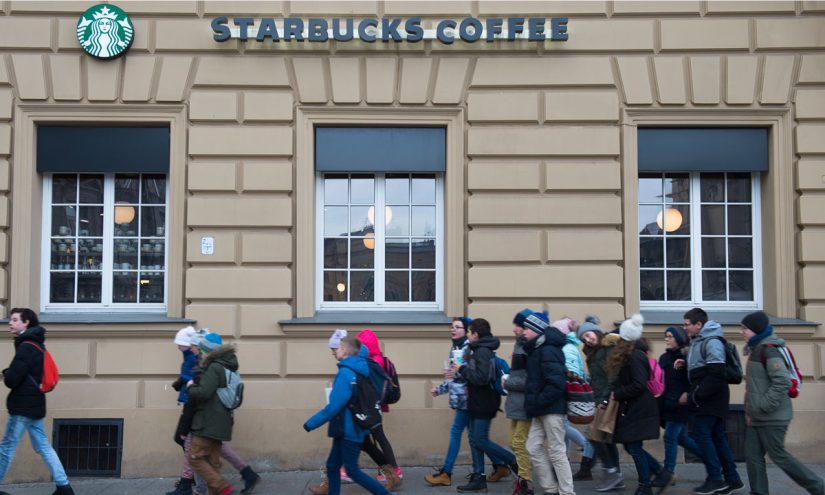
Starbucks would open every morning to a crowd of customers assigned by ZIP code. Managers wouldn’t be able to choose their market or tailor their product to the people most likely to buy it. And if the espresso machine broke, the manager wouldn’t just replace it. They’d apply for a grant, form a committee, hold a public hearing and eventually buy a replacement from a state-approved vendor — at triple the price —sometime around next spring.
When people argue that schools should “run more like businesses,” they usually overlook one small detail: Most businesses wouldn’t survive a week under the constraints schools face every day.
So let’s flip the comparison.
Here’s what it would look like if American businesses had to follow just five of the rules public schools already operate under.
Rule #1: Serve Everyone, No Choosing Your Market
In business, success begins with knowing your audience. Public schools don’t have that luxury.
Schools must serve every child who walks through the door, every ability level, every need, every cost. They can’t specialize. They can’t narrow their mission. And they can’t turn anyone away.
If a bakery had to operate this way, it would be required to serve every resident within a five-mile radius, including customers who need gluten-free, nut-free, sugar-free, dairy-free and dye-free options at the same price.
Businesses pick customers and adapt quickly. Schools serve everyone under rules they didn’t choose.
Rule #2: Prices Frozen by an Outdated Formula
When costs rise, businesses adjust prices. Schools don’t have that option.
Many school funding formulas still reflect assumptions written long before Wi-Fi. Some date back to the era of overhead projectors, and many still rely on decades-old models of state aid. Yet a school’s basic funding structure still doesn’t come close to matching the difference between a child who needs a pencil and a smile and one who needs a full-time nurse and medical equipment comparable to a small clinic.
Imagine running a daycare and being told: “You get $7 per hour per child. Forever. It doesn’t matter what diapers cost now. It doesn’t matter if three children require one-on-one support. Figure it out.”
A business leader would quit.
A superintendent rolls up their sleeves, pulls out the budget puzzle and asks the finance director what changed in the formula this year — and which updates must now be applied retroactively.
Rule #3: Money Comes in Buckets You Can’t Mix
Businesses move money where it’s needed. Schools receive funding in dozens of restricted pots: technology, training, English learners, nutrition programs and special education. Sometimes, deadlines require that the money be spent within weeks or returned.
It’s like telling a grocery store: “This money is only for canned beans. That money is only for ceiling tiles. This money must be spent immediately on customer-service workshops. No, you can’t use any of it to fix the freezer.”
What often looks like waste in schools is usually just the mechanics of compliance.
Rule #4: Every Major Decision Happens in Public
In business, strategic decisions happen behind closed doors. In public education, they happen at open meetings where anyone can speak.
Imagine McDonald’s livestreaming a meeting about a new spatula vendor, only to pause the vote so the public can debate whether the spatulas align with “community values.”
This transparency is essential to democracy. But it also slows decision-making in ways most businesses would find unworkable.
Rule #5: Accountability Without Control
Schools are judged by test scores, attendance, behavior, graduation rates and college-going outcomes. Much of this is shaped by factors beyond their direct control, as research from the Brookings Institution has shown.
Imagine a gym held accountable for every member’s physical fitness. If clients skipped workouts or ignored trainers’ advice, the gym would still be labeled failing.
That’s the environment schools operate in: responsible for outcomes they influence but do not control.
What This Means
The real question isn’t why schools can’t run like businesses. It’s why we keep pretending they should.
Public education operates within a system designed around universal access, equity, transparency and a commitment to every child. Those values impose real constraints. Ignoring them doesn’t make schools more efficient — it just makes the comparison dishonest.
Cities Keep Changing Who Runs Schools. Are They Just Running in Place?
None of this means schools are beyond criticism or improvement. Like any institution, they should constantly look for ways to serve students better. But honest reform begins with an honest understanding of the system we’ve built.
If policymakers truly want schools to operate more effectively, the conversation shouldn’t start with comparing them to businesses. It should start by asking whether the rules governing public education — funding formulas, spending restrictions, bureaucratic processes and accountability structures — actually allow schools the flexibility people assume they already have.
And yet every day, schools open their doors. Not because the system makes it easy, but because the people inside refuse to let children down.
Did you use this article in your work?
We’d love to hear how The 74’s reporting is helping educators, researchers, and policymakers. Tell us how
