

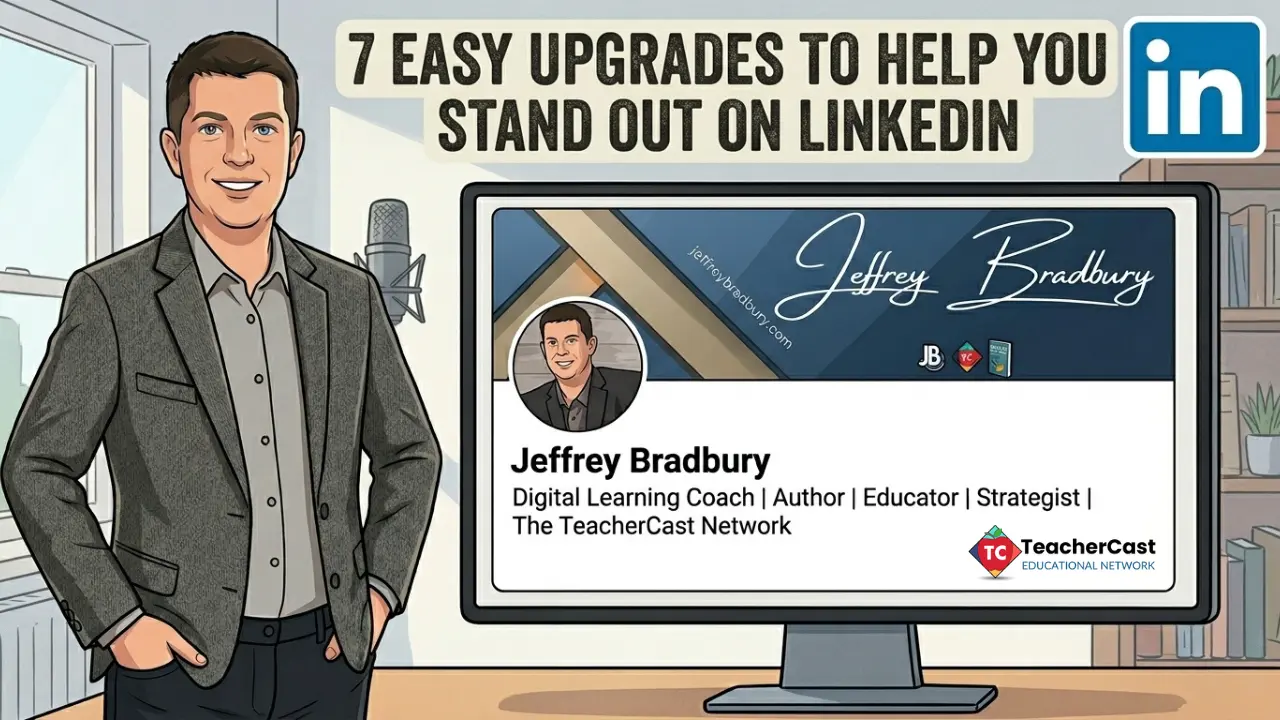
This post is Part 2 of a two-part series for instructional coaches navigating a job search.
Key Takeaways
- Your LinkedIn profile is your digital coaching portfolio — treat it like one
- Optimize your headline so the right decision-makers can find you
- Post consistently using content that demonstrates your coaching expertise
- Networking on LinkedIn is about giving value before asking for anything
- Use LinkedIn”s job search tools strategically — not just as a job board
When instructional coaches think about job searching, LinkedIn often falls somewhere between “I should probably update my profile” and “I don’t even know where to start.” This is where coaches usually get stuck. They give up before they even get started.
Here’s the truth: LinkedIn is one of the most powerful tools available to coaching professionals in education — and most educators are dramatically underusing it.
Whether you’re actively searching for your next coaching role, quietly open to opportunities, or simply building your professional reputation, these strategies will help you show up with clarity, confidence, and credibility.
Before we dive in, remember you don’t have to figure all of this out alone. If you want feedback on your profile, help clarifying your headline, or a second set of eyes on your content strategy, reach out and I’d be glad to help. Connect with me on LinkedIn or visit TeacherCast.net/contact to get in touch.
1. Optimize Your LinkedIn Headline
Your headline is the single most important piece of real estate on your profile. It appears next to your name in search results, connection requests, and comment threads — which means it’s doing marketing work for you 24/7.
Most coaches write something like:
Instructional Coach | XYZ School District
Instead, write a headline that signals your value:
Instructional Coach | Helping K–8 Teachers Build Confident, Student-Centered Classrooms | Literacy & Data-Driven Instruction
or
K–12 Instructional Coach | Coaching Cycles • PLC Facilitation • EdTech Integration | Open to New Opportunities
Tips:
- Use the keywords hiring administrators search for (e.g., “instructional coach,” “literacy coach,” “instructional leadership”)
- Include your specialization or coaching model
- If you’re open to opportunities, say so — LinkedIn surfaces your profile in recruiter searches when you activate the “Open to Work” feature
Your LinkedIn Headling should speak directly to your intended audience.
2. Rewrite Your About Section as a Coaching Narrative
The About section is your chance to speak directly to the hiring committee before they’ve even posted a job. Think of it as your cover letter to the internet.
Structure it like this:
- Hook — Open with the problem you solve or the belief that drives your coaching
- Your approach — Describe how you work with teachers: your coaching philosophy, model, or framework
- Your experience — Who you’ve served, what levels, what results
- What you’re looking for — It’s okay to be clear about your next opportunity
- CTA — Invite people to connect or reach out
Example opening hook:
Great teaching doesn’t happen in isolation — it’s built through trust, reflection, and the right support at the right time. That’s the work I show up for every day as an instructional coach.
3. Use Your Experience Section Like a Portfolio
Don’t just list your job title and dates. Use the description field under each position to showcase your most meaningful coaching work.
For each role, include:
- Your coaching model (e.g., weekly cycles, walkthroughs, co-teaching)
- Who you served and how many teachers/schools
- 2–3 outcomes with data whenever possible
- Key initiatives you led or contributed to
You can also add media to each position — link to a blog post you wrote, a PD session you facilitated, a conference you presented at, or a framework you developed. This turns your experience section into a living portfolio.
4. Build Your Content Strategy (And Stay Consistent)
The coaches who get noticed on LinkedIn are the ones who show up — not just when they’re job searching, but consistently. Posting 2–3 times per week is ideal. Even 1 thoughtful post per week builds momentum over time.
4 types of posts that work well for instructional coaches:
🟢 Growth Posts (Share what you’re learning)
- “Here’s what I noticed after 10 coaching conversations this month…”
- “The question I wish I’d asked teachers earlier in my coaching career”
- Share a book, podcast, or strategy that shifted your practice
🟦 Authority Posts (Show your expertise)
- Walk through a coaching cycle, framework, or observation debrief model
- Break down a common challenge teachers face and how you address it as a coach
- Share a resource you created (template, protocol, one-pager)
- Reference a framework you use — for example, the pedagogy-first coaching cycle model from Chapter 6 of Impact Standards, or the culture-building approach outlined in Chapter 11**. Citing published frameworks signals that your practice is grounded in research and systems thinking, not just experience.
🟡 Conversion Posts (Invite action)
- Share your blog post, podcast episode, or newsletter
- Mention that you’re open to coaching opportunities or consulting
- Promote a workshop or presentation you’re giving
🔴 Personal Posts (Let people know you)
- Reflect on a coaching moment that changed how you think
- Share a “why I coach” story
- Celebrate a teacher win (with their permission)
5. Network Before You Need It
The biggest mistake job-seekers make on LinkedIn is treating it like a job board. The coaches who find opportunities fastest are the ones who’ve been building relationships long before they needed them.
Practical networking strategies:
Connect with intention.
When you send a connection request, always add a personal note. Reference something specific — a post they wrote, a school they work at, a conference you both attended.
Engage with decision-makers’ content.
Follow principals, assistant superintendents, curriculum directors, and instructional coaches in districts you’re interested in. Comment thoughtfully on their posts — not just “Great post!” but something that adds to the conversation.
📚 Know What Districts Are Looking For — Before the Interview
The most confident coaches in any job search are the ones who understand how districts think about the coaching role. Impact Standards by Jeff Bradbury gives you exactly that perspective.
Chapter 3 explains how districts build their Digital Learning Strategic Plans — and why they hire coaches to bring those plans to life. Chapter 6 outlines what a high-functioning, scalable coaching program actually looks like from a district leader’s point of view: pedagogy-first coaching cycles, relationship-based practice, and clear systems for reaching more teachers. Chapter 12 — Coach the People, Not the Technology — captures the philosophy that the most sought-after coaches bring to every conversation.
Reading Impact Standards won’t just make you a better coach. It will make you a more compelling candidate — because you’ll understand the vision districts are trying to build, and you’ll know how to show that your work fits into it.
📚 Get your copy at teachercast.net/standards
Join LinkedIn Groups.
Search for groups focused on instructional coaching, educational leadership, and edtech. Participate actively. These are communities where people share job leads, ask for referrals, and recommend colleagues. If you are an Instructional Coach looking for a great LinkedIn Group, please click here to join our LinkedIn Instructional Coaches Network today!
Reconnect with your network.
Message former colleagues, professors, and mentors. You don’t have to make it about the job search — just check in, share something helpful, and stay on their radar.
6. Use LinkedIn’s Job Search Tools Strategically
LinkedIn’s job board is powerful when you use it right.
Set up job alerts.
Search for “instructional coach,” “literacy coach,” “curriculum coach,” or “learning coach” in your target regions and turn on alerts. You’ll get notified the moment a new role is posted.
Activate “Open to Work.”
You can make this visible only to recruiters (not your current employer) or display it publicly as a green banner on your profile photo.
Research companies before you apply.
Look at the district or school’s LinkedIn page. See who works there, what they post, and whether you have any mutual connections. A warm introduction from a mutual connection is worth more than any cover letter.
Reach out to the hiring manager.
If you can identify the principal, instructional director, or HR lead, send a thoughtful message before or right after you apply. Keep it brief, specific, and genuine.
7. Treat Your Profile as a Living Document
Your LinkedIn profile shouldn’t just be updated when you’re job hunting. The coaches with the strongest profiles are the ones who maintain them consistently.
Monthly LinkedIn maintenance checklist:
- Post 4–8 times this month
- Comment on at least 10 posts from people in your target network
- Send 5 thoughtful connection requests
- Update your Featured section with your most recent work
- Check that your contact info and headline are still accurate
- Respond to all messages within 48 hours
📸 Profile Photo & Banner Tips by Jeffrey Bradbury
Common Pitfalls and Fixes
PitfallFixGeneric headlineRewrite it to signal your specialty and valueNo About sectionWrite a 3–5 paragraph coaching narrativeOnly posting when job huntingBuild a consistent content habit year-roundSending generic connection requestsAlways personalize — reference something specificTreating LinkedIn like a resume dumpAdd media, posts, and recommendations to build a portfolioNot engaging with others’ contentComment, share, and start conversations every week
Quick Wins You Can Do Today
- Update your headline with your specialty and coaching model
- Activate “Open to Work” for recruiters only
- Write a 3-sentence hook for your About section and post it
- Connect with 5 instructional coaches or administrators in districts you admire
- Follow 3 thought leaders in the instructional coaching space
Listen to the TeacherCast Podcast
For more strategies on coaching, professional development, and educator leadership, tune into the TeacherCast Podcast — practical insights for educators who are ready to make a bigger impact.
🎙️ Subscribe on Apple Podcasts
Elevate Your Impact
Looking to grow as a coaching professional? Impact Standards gives you the framework to lead with clarity and confidence in any educational setting.
📚 Get your copy at teachercast.net/standards
Simplify Your Systems. Amplify Your Impact.
Join me every Sunday for my best productivity tips, tricks, and strategic systems delivered straight to your inbox.
Sign up today and instantly receive a free chapter of Impact Standards.
Like this:
Loading…
