

School leaders here took an informal poll of high school students referred to the front office for behavior problems last school year.
They asked: What time did you get to sleep last night?
Every student admitted to falling asleep after midnight, said Adam Swinyard, the district’s superintendent. Many reported that they had been up into the wee hours, scrolling their phones.
First period at most high schools in Spokane starts around 8 a.m. That means these teens likely didn’t get anything close to the 8 to 10 hours of shut-eye experts at the Mayo Clinic recommend for everyone ages 13-18.
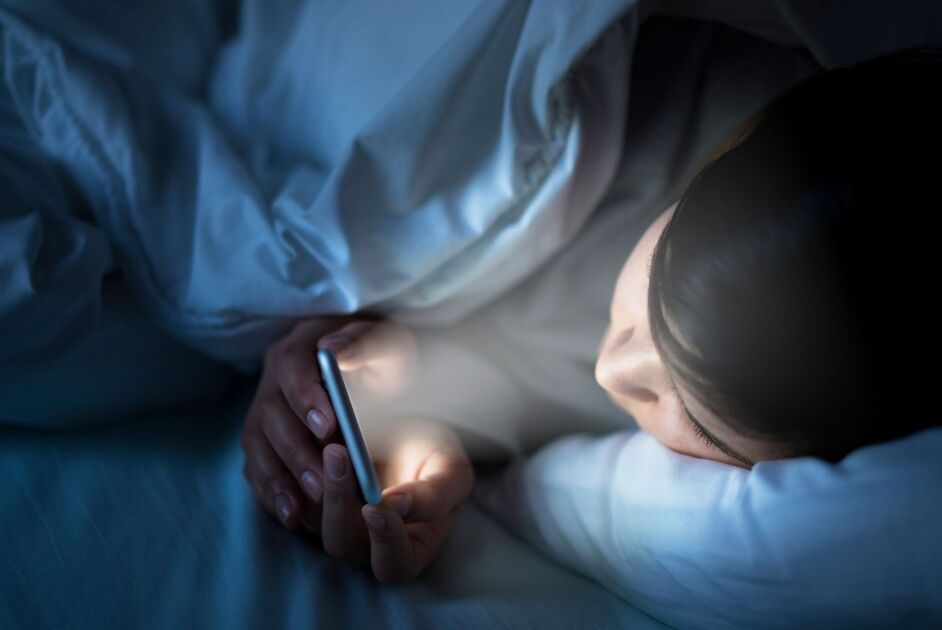
Teachers and administrators also saw plenty of anecdotal evidence that other kids weren’t getting much rest, in part because they were on their cellphones in bed.
A student at Glover Middle School admitted that he stayed up until 6 a.m. playing on his phone, even though he must get up at 7 a.m. for school.
“It was mostly my phone’s fault,” he joked in a video produced by the district.
So, this school year, Spokane has added a snooze-boosting twist to Engage IRL, its sweeping initiative that pairs restrictions on student cellphone use in school with a dramatic expansion of extracurriculars to give students an alternative to staring at a screen.
The 29,000-student district began encouraging students to get off their phones. Not just in class so they could concentrate or after school so they could participate in one of the district’s many clubs and activities.
But also at night. In their bedrooms.
“I think that we would be shocked to know the true reality of how much time kids are spending up late into the night, in the early morning, on a device,” Swinyard said in an interview earlier this school year. “When kids don’t get sleep, it can have a really detrimental impact, particularly on behavior.”
Spokane is giving students and parents facts about sleep
At the beginning of this school year, the district in eastern Washington state sent home information to parents and caregivers with links to resources and research on the connection between sleep habits and a child’s ability to focus and learn, their capacity to manage stress and emotional ups and downs, and their risk of anxiety and depression.
The material offered tips to improve sleep, tailored to different age groups. It suggested, for example, that getting enough sleep can help a kindergartner avoid meltdowns and acknowledged that after-school activities and homework can be a barrier to sleep for high schoolers.
The guidance it included for most age groups suggested a 30- to 60-minute buffer between any screen-related activities and lights-out.
School leaders, including at the district’s five high schools, talked about the challenge at back-to-school nights. The district has continued to share related messaging in biweekly family newsletters. It has shared videos, including one featuring Anne Mason, the interim dean of the college of nursing at Washington State University, who has focused on adolescent mental health.
Allowing kids “unfettered access to screens and things that interrupt them all night long … is really detrimental to kids and their mental health and their daytime abilities,” Mason said in the video.
And Swinyard and Stephanie Splater, Spokane’s athletics and activities director, spoke about good sleep habits on the district’s first podcast of the new school year, back in September.
The goal: Providing parents and caretakers talking points—and backup from educators—as they try to persuade recalcitrant teens to reconsider their nocturnal screen time habits.
“These are challenging parental roads to walk,” said Swinyard, himself the father of teens who attend Spokane schools. Prohibiting kids from taking their phones to bed with them “creates power struggles. It creates arguments,” he acknowledged.
“It’s a totally different conversation when you can look at your kid and say, ‘Hey, I know your teacher is talking about you not taking your phone to bed with you. I know your counselors are. I know your principals are. Your sports coaches. Your club adviser,” Swinyard added.
Teenagers are more than twice as likely as their parents to sleep with their devices right in the bed with them, according to a 2019 report by Common Sense Media, a nonprofit that studies the impact of technology on learning and child development.
Almost a third of teens—29%—kept their device with them in bed, compared to 12% of parents, the organization found.
That’s despite recommendations from the American Academy of Pediatrics, which calls for children’s bedrooms to remain “tech-free zones,” and the National Sleep Foundation, which suggests setting a “digital curfew” of at least 30 minutes before bedtime but ideally longer.
Teens are also more likely than their parents to check their mobile devices in the middle of the night, after they’ve fallen asleep. About 36 percent teenagers say they wake up at least once a night to check their device, compared with 26 percent of parents, Common Sense Media found.
It may feel awkward for educators to suggest that parents restrict screens at night for their kids, acknowledged Cora Breuner, a professor of pediatrics in the adolescent medicine division at the University of Washington.
But there’s a persuasive argument for providing parents with research around kids, digital devices, and sleep.
“Knowledge is power,” Breuner said.
School district officials in Spokane and elsewhere should tell parents and caregivers that “this is what the data shows. … Kids that are on their phones way into the night [are] not able to fall asleep. Their brain is just wired up for hours and hours,” with a real impact on learning and behavior, Breuner added.
She suggested district leaders consider sharing the information through PTAs or other parent groups. That way, “families have a say in how it’s distributed to their peers,” Breuner said.
The school district’s sleep initiative is reaching some kids, but not all
Kata Dean, who has a high schooler in the district, said that when the sleep issue came up at her child’s parent-teacher conference, she felt empowered to help think through how to create a better bedtime routine.
“It’s made a difference,” Dean said in an interview at a family multicultural night at Ferris High School.
But not everyone thinks the district’s push has put the lack of sleep problem to bed.
Gary Gillespie, an engineering teacher at Ferris High School, can tell when a hot new video game is out because his students—particularly those he knows are gamers—arrive bleary-eyed the next day, he said.
And Bridgette Menard, a sophomore at Ferris High School, still sees snuggling up with her phone in bed as both downtime and a chance to catch up on announcements about activities she’s involved in as a cheerleader: spirit days and football games.
Those tend to be communicated on social media platforms like Instagram, she said.
Bridgette admits she sometimes stays up later than she should. But she doesn’t take kindly to adults pointing out that it’s not healthy for her.
“If I am up till 3 a.m., I’m gonna feel it. I’m gonna be tired, and I know I’m not gonna perform as well, so I’m gonna feel that effect and learn for the next day, go to bed earlier,” she said. “I don’t need the school telling me [to get to sleep]. It makes me not want to do it.”
But Madelynn Fox, a junior at Ferris High School, read one of the pamphlets the district handed out at the beginning of the school year and took its message to heart.
Now that she’s started to put her phone away at night, she’s noticed she’s been sleeping a lot better.
The extra shut-eye has helped her performance on the girls’ wrestling team. She plans to keep it up.
“I want to do my best,” Madelynn said.
