

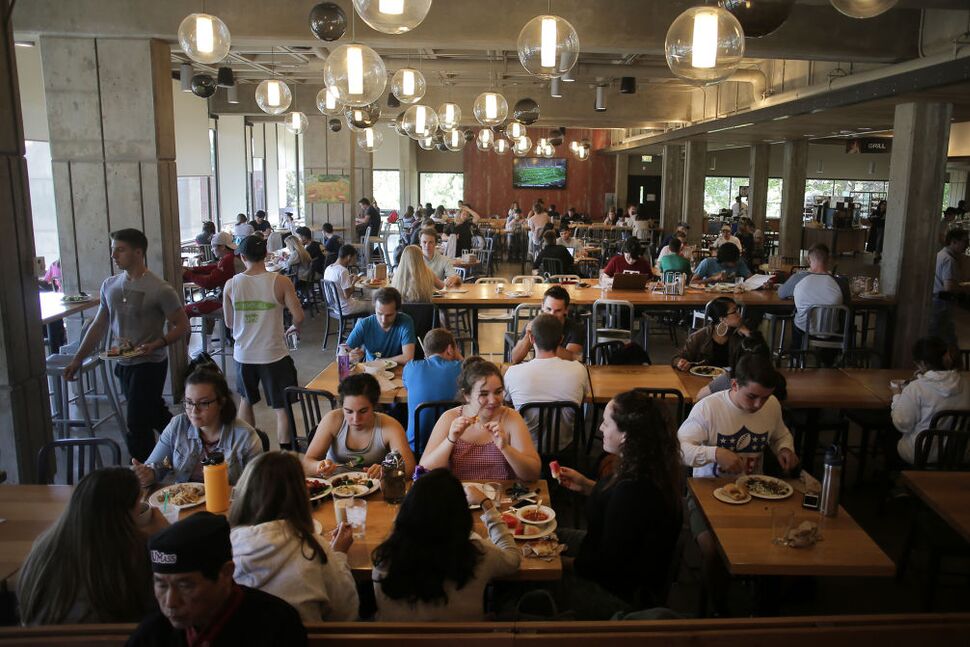
The Trend: No more scoops of instant mashed potatoes and mystery meat in the cafeteria line. Students want college meal plans to offer variety, locally sourced ingredients, flexible hours and a sense of belonging. Sounds expensive, right? Actually, universities are finding ways to keep student costs down.
Exhibit A: UMass Amherst used to bomb the rankings for its food. Then it hired world-class chefs and dining administrators. In 2025, it received Princeton Review’s “Best Campus Food” ranking for the ninth consecutive year, a front-page Wall Street Journal write-up and a New York Times nod to its popular sushi program. Yet arguably, its biggest win is a recent university survey reporting that 88% of students believe UMass Dining contributes positively to their personal well-being.
The Pros: Chef Alex Ong, director of culinary excellence, and his team serve 50,000 meals per day. He refers to diners as “our customers” and the campus as “a resort” for guests from all over the world. “A big goal is to expand our table,” Ong explains. That means celebratory menus for Diwali, Lunar New Year, Nowruz and an annual epic New England dinner that plates 15,000 locally caught lobsters. Students take pride in sharing their cultures and traditions with one another.
The Cons: An annual meal plan costs around $7,200 (higher than the national average of $5,656 but cheaper than the highest, Wellesley College, at $10,776), yet despite the price, UMass has one of the country’s strongest meal plan participation rates. Roughly 85% of students have a meal plan (compared to the 61% national average). The big challenge? Cooking for a diverse student body that craves variety yet also wants comfort food. To cut costs, UMass focuses on minimizing food waste, implementing AI to measure it daily. “Food waste is a reflection of the fact that a student didn’t like what they ate,” says Garett DiStefano, director of residential and retail dining services. To combat this, the dining team champions “just-in-time cooking,” preparing dishes to order in front of students (think dim sum, sushi rolls or global street foods) so they only select what they’ll enjoy.
Reality Check: Feedback from a student ambassador program revealed that students eat four or five meals a day. To prevent overeating, UMass adjusted dishes to be primarily vegetable-based, following a Mediterranean Diet. “The portion size for all proteins is 3 ounces, rather than the industry-standard 4 ounces,” Ong explains. But UMass meals don’t cut nutritional corners. “I don’t believe in cheap food,” he says. To maximize fresh flavors, he prioritizes locally or regionally sourced meats, seafood and produce that are in-season – like quirky “ugly” tomatoes, a student favorite with balsamic vinegar. This supports local businesses and farms and saves on logistics costs.
Get Higher Ground in your inbox each week!
The must-read newsletter for leaders shaping higher education’s future.
By clicking “Sign Up”, you will receive the latest updates, including emails, from U.S. News & World Report and our trusted partners and sponsors, and you agree to our Terms and Conditions & Privacy Policy.
The Upshot: Dining halls are open until midnight daily and hit their buzziest around 10:30 p.m., leading Ken Toong, the assistant vice chancellor for auxiliary enterprises and the mastermind behind the program, to reflect, “Wow, we created a community.”
Danna Lorch is a Boston-based higher education writer and strategist.
