

Get stories like this delivered straight to your inbox. Sign up for The 74 Newsletter
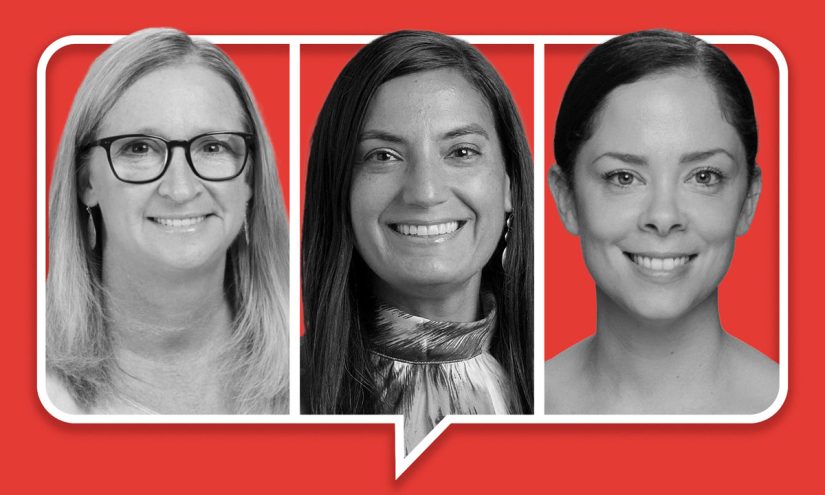
Three school librarians — in New Jersey, South Carolina and California — are among 10 winners of this year’s I Love My Librarian Award, selected for their expertise and dedication. The nonprofit American Library Association bestows the award every year to staff from academic, public and school libraries around the country who were nominated by their communities.
At Cranford High School, located southwest of Newark, New Jersey, Christine Szeluga increased circulation by 300% through the creation of a podcast studio, makerspace and history archive. Jenny Cox, who works at Georgetown Middle School in eastern South Carolina, spearheaded a $400,000 capital campaign to replace school library books across her county. Mia Gittlen reopened the shuttered library at Milpitas High School, near San Jose, California, and has since created a “hub of activity” for its 3,100 students and 200 staff members.
While the American Association of School Librarians recommends that there should be at least one full-time librarian in every school, in 2023-24, the U.S. had 39,450 full-time school librarians and 99,297 schools — .04 librarians per school, and one librarian for every 1,252 students. In recent years, school libraries have been the focus of heated debate around themes of sexuality, gender and race in the books on their shelves.
Szeluga, Cox and Gittlen spoke with The 74 about the challenges librarians face and how they have worked to attract more students to their libraries.
This conversation has been edited for length and clarity.
You were nominated for the work you’ve done in transforming and revitalizing your library. Can you explain what you’ve been doing the past few years?
Szeluga: During my first year at Cranford High School, I asked the kids, “What do you want?” I had a huge chart on the wall, and the kids chose a podcast studio. I wrote a grant, and thankfully, I was funded, and that started everything. My administrators were so supportive of every single crazy idea I had. Because we started with the podcast studio, we were able to incorporate podcasting into our curriculum. So now it’s become an integral part of our school.
I also run student council, and we’re working on a policy for the new cellphone ban in New Jersey, which the kids have strong feelings about. I’m the intermediary between the students and the administrators. At the end of the day, the kids understand why cellphones can be a distraction. I run our [school] literary and art magazine, and that’s been award-winning three years in a row through the National Council of Teachers of English. I’m really proud of that. I also run the school newspaper, the podcast club, and one of the things I want to integrate for next year is basic sewing skills.
Cox: When I started in the library in 2008, we received $17 [of district funding] per student. In 2020, I requested a meeting with my superintendent and I took some data that was from the American Library Association about the rising cost of books. I told him, “12 years later, and we have not received any kind of [funding] increase.” From that meeting, our budgets were increased to about $27 per child.
The capital funds project started last year. One of our media specialists went to her principal about the condition of her library collection, and her principal went to the school board with a request to update the library collections. A lot of our libraries were in need of improvement. The school board went back and forth, but they approved the capital funds project, and I had spearheaded it as one of the lead librarians. That project put over 18,000 brand-new books in our school libraries. It was a $400,000 project that was divided up between 18 schools. While we do have healthy library budgets, it’s still not enough to purchase new materials to constantly replace the need to weed out old books. The capital funds project really helped with that, and I got about 4,000 new books in my library.
Gittlen: Part of the [award] recognition is for reopening our shuttered school library. I’ve been told that there was a librarian who worked a short time during COVID and that was the only librarian [we’ve had] since our long-time librarian passed away in 2017. This is the second year of me being in this role and the second year that the school library has been reopened. Before, the library was used as a storage space, a multipurpose room or it was just closed, with the lights turned off. That’s not too unusual — in California, there is a lack of certificated school librarians and school library professionals in general. There are a lot of spaces where there is a room filled with books but it’s not staffed, or it’s just [managed] by volunteers.
Because the room at Milpitas had books but it wasn’t staffed for many years, it was a cleaning job initially. I officially opened Oct. 1, 2024, so we had over a month of school before people could use the library as a library. It required that I touch every book, reorganize books and see what’s there. Over the course of that year, until I did inventory, I was finding all kinds of books on shelves that were not on our online catalog. That was huge — to shift things where they were supposed to be or get rid of books that had been there too long.
How long have you been a librarian?
Szeluga: Right out of college, I worked as a museum educator, and I worked in a bunch of museums as an educator. I moved my way up and worked at the South Street Seaport Museum for a number of years doing outreach teaching in various schools in New York City. From there, I started working at the Brooklyn Public Library in their local history archive research program. I became a school librarian in 2017.
Jenny Cox: I’m wrapping up my 23rd year in education. I started out as a classroom teacher and I did five years in the classroom, and then I transitioned into the school library in 2008. I took a couple of years off and served as an instructional technology coach for the district office before I returned to the library. This is my 16th year in the library, and I’ve been in Georgetown County School District my whole career.
Gittlen: This is my fifth year as a school librarian. Before that, I was a longtime classroom teacher and an instructional coach. I’ve been a classroom teacher and school librarian for all of the grades now — K-12 — and I started my career at the high school level, so it is definitely full circle to return to the high school level.
Department of Education Reports Near Double Increase in Library Book Removals
Have discussions about book bans and public objections to titles in your library been an issue?
Szeluga: We’ve only had one challenge, but that was quickly resolved after discussion with the challenger. We have a very supportive administration who supports the books that the certified librarians choose for the libraries. We also teach about banned books in our curriculum, which goes in depth about the process, the history and the pitfalls of censorship, and we have a pretty extensive book challenge policy and form for when or if books are challenged.
Cox: It has not really been an issue here. We have strong policies and procedures in place for selecting and reviewing our materials, and we try to follow those guidelines very carefully while still providing appropriate resources that meet the curricular and the interests of the students. We’re all well trained on how to evaluate materials and look at what the reviews are. We’re very cognizant about what we’re putting on our shelves.
Gittlen: Fortunately, I have not personally experienced any book challenges at the three libraries I’ve worked at. This school year, our Amnesty International student club approached me about creating a display for Banned Books Week. This was our first student-organized book display. I’m more impacted by the lack of school libraries and librarians. California has the worst ratio of students to school librarians. Our model school library standards were last updated in 2010. With an expanding view of literacy — including digital literacy, AI literacy, media literacy and financial literacy — librarians are needed more than ever.
What other changes have you made to library operations?
Szeluga: We had amazing librarians before I came in, and they had the foresight to preserve school newspapers, yearbooks and literary magazines. We have some report cards from the 1920s, and we have the original publication of the dedication of the school when it opened in the 1930s. I saw that we had all this stuff in boxes, and I wanted to properly catalog it. So I got another grant to get all the proper archival materials, and I had a couple of student interns help me process all the documents, ephemera and newspapers, so it’s preserved and collected and organized for future generations. It is all together in one area of the library. I call it the local history research section.
There are always kids in the library — before school, after school, during lunch. We have a lot of programs. We have the podcasting. We do puzzles, and I do a monthly alternating craft. We have a Cricket [machine] so the kids can create their own shirts. I have a button maker. I have a lot of hands-on activities that kids can do. And we also have a really strong culture of reading in our school. We have two book clubs. We have an intergenerational book club, so that’s teachers, students and the outside community. We typically read a couple books a year. And we also have a student-led book club called Lit Happens, and we read probably five or six books a year.
Cox: When the teachers bring their kids in and I work with them to plan activities and lessons — that’s my favorite part of my job, the instructional visits. It’s basically to reinforce what the teachers are doing in their classrooms with the students, and it gets the kids into a new environment every now and then. We do exciting, fun things here, because we’ve got a much bigger space in the library than in the classroom, so we can spread out and do bigger things.
When I started here, kids came in and out to check out books, but it wasn’t so much on an instructional basis, and I had to work really hard to make that happen. It starts with building relationships with the teachers so they view me as an instructional partner, not just someone who manages books. My first year, I targeted a teacher from each grade level, and it spread by word of mouth. Then the kids would talk about it and they’d be so excited. And then the kids and other classes were asking their teachers, “When can we go?” I think my first year here probably had less than 50 instructional visits, and now I have to tell teachers no because of my schedule. I get 300 to 350 instructional visits a year now.
Gittlen: I started bringing classes back into the library, and it had been a while since that was provided. A lot of people hadn’t come since the longtime librarian passed away in 2017. I launched a library scavenger hunt for orientation. Last year, probably three teachers from the English department brought their classes in, and this year, every ninth grade English class either came into the library or there was one teacher I went to their classroom with. I do a lot of lessons about searching for information online and utilizing the databases we have access to.
In order to re-engage with the school community, I’ve hosted coffees for staff once a month. They get to come in, sometimes do a quick activity and then there’s treats and coffee. Because I work on such a large campus, it is a chance for people to interact and see one another when they don’t ordinarily do that in their day to day. What has been successful are collaborations with students. We’ve done all kinds of activities, and it’s become a place where student clubs can meet or have special events. We’ve had a number of authors that have visited. It’s becoming a hub of activity for not just students, but the whole school community at large. Last year, we could shut down and not open for one reason or another, but this year it was much tougher to not have that space for students who come in for lunch, etc. I’m working with the music department, and we’re going to launch [NPR-style] “Tiny Desk” concerts using student musicians. They’re going to come in and play at lunch.
What do you want people to know about libraries or being a librarian?
Szeluga: I think a lot of people think that librarians, and particularly school librarians, sit behind the desk and read all day. That’s not the case at all. There’s just no time for that. I meet every single freshman class every September, and I say, “My No. 1 job is to help you become a better student. My secondary job is to help the teachers.” And that is the role of a librarian — it’s to help in any capacity. Funding is constantly getting cut from the federal government and the local government. So I want people to realize how important libraries and librarians are. Not only are libraries important to have a reprieve, have a space that everyone belongs to, but as librarians, our job is to support everybody and meet them where they are.
Gittlen: Libraries are a beautiful intersection between so many things: the books, the ideas, the pleasure reading. There’s so much science, technology, education and math skills connected to the library, all kinds of different literacies, the research piece, the information, media literacy and professional development. So just working with clubs and leadership — it’s just been me finding my “work home.”
Did you use this article in your work?
We’d love to hear how The 74’s reporting is helping educators, researchers, and policymakers. Tell us how
