

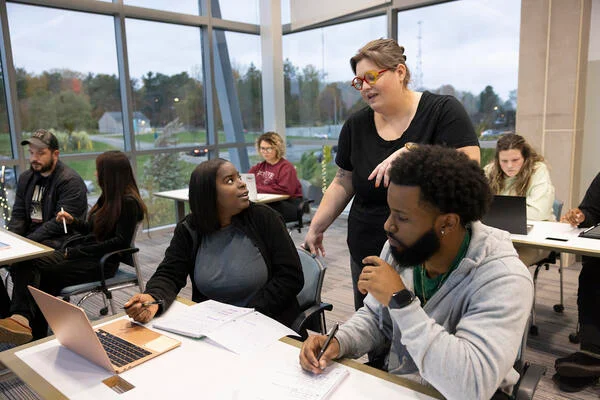
As institutions nationwide navigate the enrollment cliff, new research from the University of Kansas and Florida International University suggests that older, working and commuting students may exhibit characteristics linked to stronger persistence and completion—suggesting ways that colleges can engage with adult learners.
The study examined institutional data from the 2023–24 academic year at a large, four-year Hispanic-serving research institution in the southeastern U.S., including for more than 7,000 undergraduates in the engineering and computing programs.
Researchers found that students older than 25, those working full-time, commuters and students with dependents demonstrated better academic outcomes, including retention, six-year graduation rates and cumulative GPA. The findings suggest that characteristics often viewed as barriers may not necessarily hinder student success.
Haiying Long, a professor of educational psychology at Kansas and a co-author of the study, said many institutions still structure academic programs around the schedules and needs of traditional students. But she noted that the engineering students at the Hispanic-serving institution, which has a large commuter population, reflect the increasingly diverse demographics colleges nationwide are encountering.
“Institutions need to change their mindset and look at post-traditional students as the new norm, not as abnormal,” Long said. “That’s why we refer to them as post-traditional students—not nontraditional students—because ‘nontraditional students’ implies there’s something abnormal about this student.”
“Older students bring in a lot of experience,” she added. “They are mature, they have good study habits, they juggle many different responsibilities in their lives and they have to be highly motivated in order to persist. There are a lot of strengths they have, and they can bring a very diverse perspective into the classroom.”
At the same time, the study found that part-time enrollment consistently correlated with weaker outcomes, including lower retention and GPA.
Bruk Berhane, associate professor of engineering education at FIU and a co-author of the study, said the results suggest institutions may need to devote more attention and resources to supporting part-time students.
“It’s clear with the enrollment cliff that colleges and universities need to explore unconventional approaches to enrolling and supporting these student demographics,” Berhane said. “They bring lived experiences, work experiences, family experiences, grit, determination and resilience that are so important.”
Adapting to adult learners: Long and Berhane said the findings point to the need for a more assets-based approach to supporting adult learners. In particular, Long noted that offerings such as alternate office hours could help institutions better serve students balancing jobs and family responsibilities.
“Think about part-time students. Think about post-traditional students,” Long said. “They have so many things going on in their lives, they might not have time to go to academic advising during a regular 9-to-5 time slot.”
“How about virtual sessions? How about after-hours office support? Some accommodations for their schedules—those little things help a lot with their needs,” she added.
Berhane noted that engineering programs in particular have traditionally encouraged full-time enrollment to keep students engaged and promote on-time graduation. However, the study found that the challenges part-time students face suggest institutions may need to expand support options, such as hybrid in-person and virtual courses, to improve outcomes for adult learners.
“Engineering and computing have long embraced this elite archetype of a student—someone who is undistracted and undeterred by anything outside the classroom,” Berhane said, noting that such programs nationwide have often been slower to adapt to the needs of post-traditional students.
“There’s been growing pushback against the idea that higher education is only for people in the ivory tower while blue-collar workers and others who don’t fit that mold don’t belong,” he added. “By opening the door to post-traditional students, we’re also opening the door to people who have long felt the university environment was not meant for them.”
Why this matters: For Long, the findings underscore the growing importance of post-traditional learners as colleges nationwide confront declining numbers of traditional-age students entering higher education.
“Whichever university can attract [post-traditional students] would be in a very good position for enrollment, but they need to serve their needs and meet them where they are,” Long said.
Berhane agreed, noting that many institutions still treat post-traditional students as exceptions rather than a growing share of today’s college population.
“This is much more normative than we realize, and so we should try to treat these students like there’s not some sort of deviation, but in fact, [they are] part of the mainstream,” Berhane said. “It may take them a little bit longer, but our research shows that large numbers of them are persisting.”
Get more content like this directly to your inbox. Subscribe here.
