

The Trend: An oft-quoted 2021 Pew Research study found that 37% of American Gen Z adults said addressing climate change was their top personal concern. Gen Z students are looking for ways to take action. Schools are looking to cut costs while discovering ways to conserve energy and save money. This is one move in line with Gen Z’s values, and colleges are getting community buy-in.
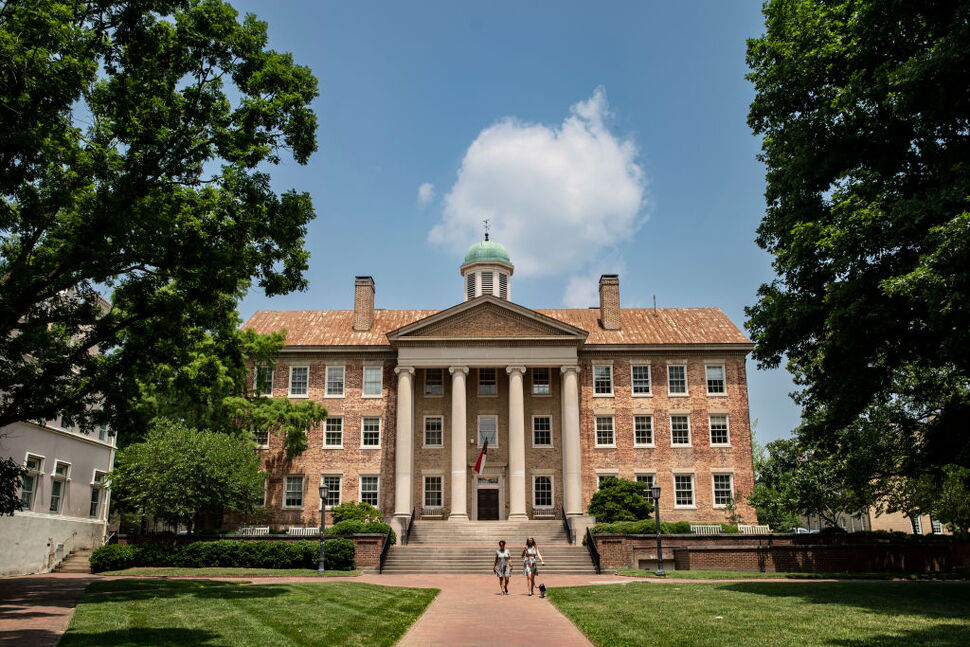
Exhibit A: The University of North Carolina – Chapel Hill saves between $150,000 and $350,000 annually just by turning down the thermostats in unoccupied buildings and residence halls to a crisp 64 degrees during its winter break.
The Pros: “It doesn’t require any upfront cost,” says Vee Veerabhadrappa, director of energy management. “It’s a significant amount of savings, and it’s immediate.” Like clockwork each fall, his office emails the community ahead of winter break the plan to lower the thermostats and offers exceptions for those remaining on campus or operating buildings serving critical functions. Those needing to opt out of the program submit a form.
The Cons: While not insignificant in terms of energy savings, Veerabhadrappa believes this program, which the school piloted more than a decade ago, only scratches the surface of what is possible. Post-COVID-19, space occupancy has changed, as many UNC employees remain on hybrid schedules. Energy management staff is auditing how and when spaces are occupied, by piloting an artificial intelligence tool that uses Wi-Fi-connected devices to assess the number of people in a space and generating a 24-hour heat map that offers clues on how to optimize lighting and HVAC settings. Howard Wertheimer, interim associate vice chancellor for facilities, points out that for a school like UNC, which has both modern and historic buildings, there is no one-size-fits-all setting and not every space can be automated. Energy management workers start new initiatives with a pilot and keep “boots on the ground” for debugging any turndowns.
Get Higher Ground in your inbox each week!
The must-read newsletter for leaders shaping higher education’s future.
By clicking “Sign Up”, you will receive the latest updates, including emails, from U.S. News & World Report and our trusted partners and sponsors, and you agree to our Terms and Conditions & Privacy Policy.
Reality Check: Wertheimer admits that these savings and solutions would not be practical in other climates – especially in the North, where lowering a thermostat during a harsh winter could cause damage. However, there may be other opportunities for these schools to launch a similar initiative, perhaps during summer programming lulls.
The Upshot: The project has conserved energy usage and, in turn, helped spark increasing community support – for instance, a popular student-led Renewable Energy Special Projects Committee. “Students are interested in doing their part, and it’s not hard to get their buy-in, as long as we’re doing something meaningful and impactful,” says Veerabhadrappa.
Danna Lorch is a Boston-based higher education writer and strategist.
