

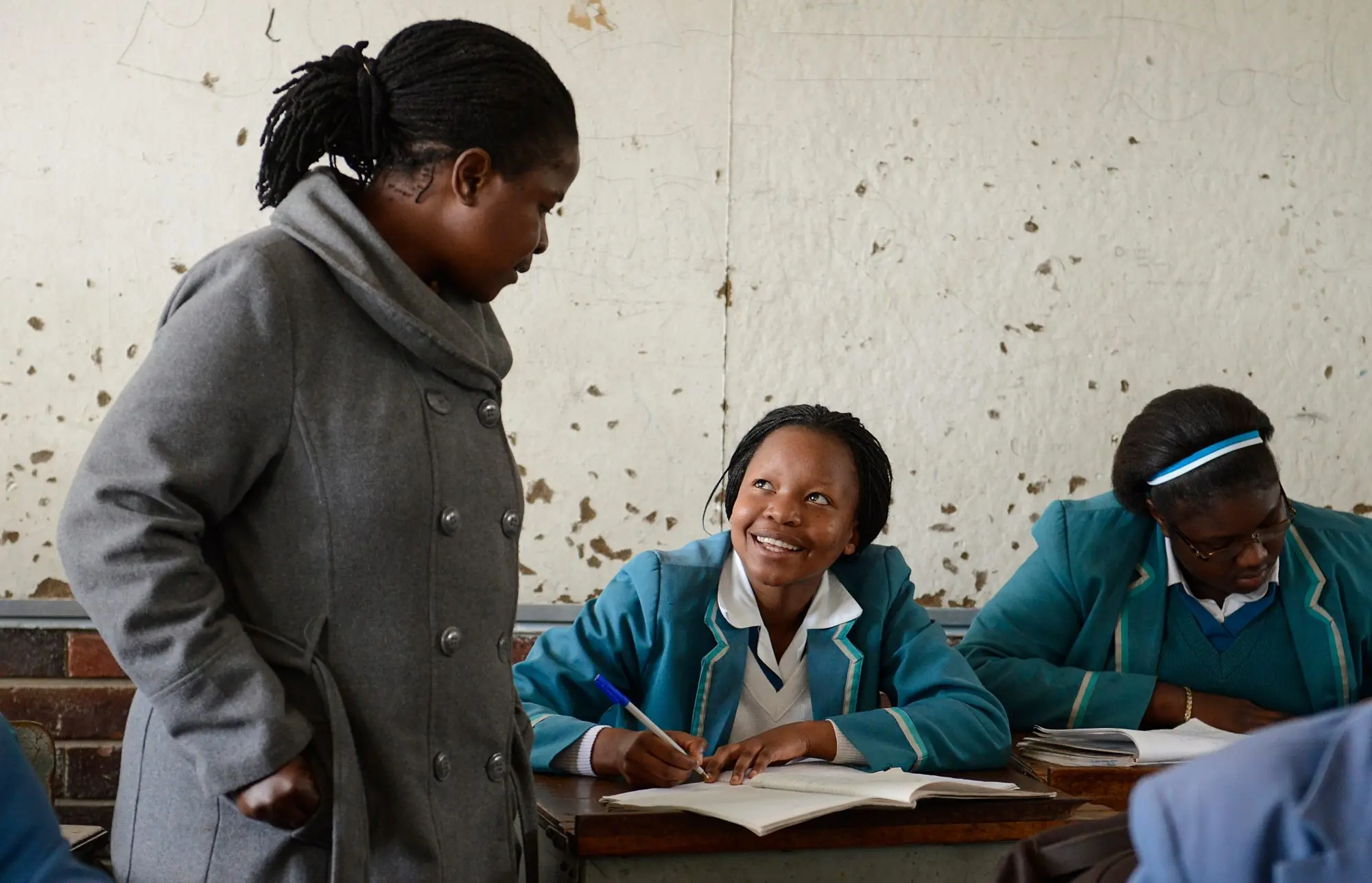
As a 2025 Echidna Global scholar, I spent months in Zimbabwe to understand how teachers interpret and apply gender-responsive pedagogy in Zimbabwean classrooms, and whether good policy alone actually changes what happens in the classroom. Zimbabwe has made strong and visible commitments to advancing gender equality in education. Constitutional provisions, the amended Education Act, the National Gender Policy (2025), and the rollout of Gender Responsive Education Sector Planning (2019) all signal serious intent. Yet, policy ambition has not fully translated into classroom reality, and gender-based exclusion persists. Girls continue to leave school due to early pregnancy, early marriage, and socioeconomic pressures. At the same time, some boys disengage from schooling due to pressure to enter the labor market early and perceptions that education does not lead to meaningful economic opportunity.
Ultimately, education systems are judged not by the strength of their policy frameworks, but by what happens inside classrooms and for every child. Classrooms are where inclusion is either realized or undermined in real time. Pedagogical practices shape who participates, whose voices are heard, how confidence is built, and how opportunity is distributed.
These micro-level interactions can shape whether classrooms reinforce or disrupt societal inequalities. Zimbabwe has increasingly promoted gender responsive pedagogy (GRP), an approach that deliberately addresses the different needs, experiences, and barriers faced by girls and boys, as a practical pathway for translating inclusive education into classroom practice. However, for GRP to move beyond aspiration, teachers require sustained training, ongoing support, and systems that enable changes in practice.
Between July and September 2025, I surveyed teachers and school leaders from 189 schools across Zimbabwe online, conducted focus group discussions, and visited schools for interviews. I also reviewed policy documents and national program reports. The sample was purposively selected to capture diversity in geography, school type, and prior training exposure. The central finding was clear and consistent: Training is the strongest predictor of whether teachers can actually put gender-responsive pedagogy into practice.
What the evidence tells us about teachers and GRP
The research points to both the potential and the limits of current approaches.
Teachers who had received structured training in GRP could articulate concrete strategies, such as inclusive language, deliberate role rotation, intentional encouragement of quieter learners, and equitable participation during class activities. These teachers reported actually using the strategies and described their classrooms as more inclusive, participatory, and safer as a result.
Teachers without access to training, by contrast, often held conceptual or incomplete understandings. While many expressed support for inclusion, they lacked the confidence, tools, or routines needed to challenge entrenched gender norms and struggled to translate GRP into practice. Many relied on established teaching routines that can unintentionally reinforce gender norms.
Importantly, teachers’ gender, years of experience, or school location were not strongly associated with their understanding of GRP. What mattered most was access to sustained, practice‑focused training. The challenge is not teacher motivation or willingness, but the availability of structured, ongoing support systems. In the absence of guidance, mentoring, and follow-up support, teachers reported reverting to traditional classroom dynamics that privilege more vocal or confident learners and reinforce stereotypical roles.
Why a systemic approach is essential
Gender-responsive pedagogy cannot succeed in isolation. Teachers’ practices are shaped by policies, leadership, resources, community norms, and professional cultures. My research underscores three interconnected dimensions where action is needed: structural, relational, and transformational.
Structural foundations. Zimbabwe has established important enabling frameworks through instruments such as the Education Act, the Continuous Professional Development Framework, and the Heritage‑Based Curriculum. However, gaps remain. GRP is often treated as a cross‑cutting theme rather than a core component of teacher preparation, and access to sustained in-service training remains uneven, particularly in resource‑constrained and rural contexts. Large class sizes and limited gender‑responsive teaching materials further constrain implementation.
Relational dynamics. School leadership plays a decisive role in sustaining inclusive practice. Where school heads prioritized coaching, peer learning, and reflection, gender‑responsive approaches were more likely to become embedded across classrooms. Beyond schools, community expectations and social norms shaped how gender roles were perceived by families, teachers, and learners. While many parents were reported to increasingly value gender equality in education, traditional and religious norms were felt to still generate resistance unless schools actively engaged families and local leaders.
Transformational change. Perhaps the most complex dimension is mindset change. Teachers, like all individuals, often reproduce the norms they experienced as learners. Unconscious bias, such as praising girls for neatness and boys for assertiveness, can persist even among well‑intentioned educators. This research shows that structured GRP training, combined with reflection and coaching, was critical in shifting mindsets from “gender equity as policy” to “gender equity as professional practice.” When teachers internalized GRP as part of their professional identity, inclusive routines were described as being the norm rather than the exception.
Turning commitment into practice
Bridging the gap between policy and practice means moving beyond one-off interventions. Gender-responsive pedagogy must be:
- embedded in pre-service teacher education;
- institutionalized within continuous professional development systems;
- supported through practical classroom tools and guidance;
- reinforced by instructional leadership and coaching;
- backed by predictable and sustained funding; and
- extended beyond schools through community engagement.
Crucially, these reforms do not require entirely new systems. They can be achieved by strengthening and aligning existing structures, including curricula, teacher standards, and accountability mechanisms.
Why this moment matters
With more than 153,000 teachers serving a large and growing school‑age population, over 70% of them based in rural areas, teacher practice represents one of the most scalable and cost‑effective levers for advancing both equity and learning outcomes in Zimbabwe.
If classroom practices remain unchanged, exclusion will persist regardless of policy commitments. But when teachers are equipped, supported, and enabled to implement gender-responsive pedagogy, classrooms can become spaces where all learners participate, feel valued, and succeed.
Zimbabwe has already taken the most difficult step: establishing a strong policy foundation for gender equality in education. The next step is to ensure that this commitment is realized where it matters most in everyday classroom practice.
Read the study
The Brookings Institution is committed to quality, independence, and impact.
We are supported by a diverse array of funders. In line with our values and policies, each Brookings publication represents the sole views of its author(s).
