

Listen to the article
This audio is auto-generated. Please let us know if you have feedback.
The U.S. Department of Health and Human Services is working to restart a suicide prevention hotline specialized for LGBTQ+ youth less than a year after President Donald Trump’s administration discontinued it.
The LGBTQ+ hotline is also known as the “Press 3 Option” within the broader 988 Lifeline. The 988 number is a crisis support and suicide prevention hotline for the general population that was passed in 2020, under the first Trump administration.
The hotline launched in 2022 and replaced a previous 10-digit 1-800-273-TALK number, and the specialized “press 3 option” for LGBTQ+ support followed in 2023, both under the Biden administration.
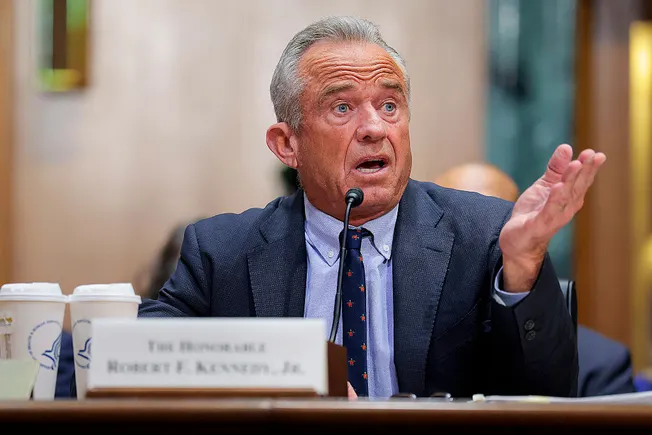
U.S. Secretary of Health and Human Services Robert F. Kennedy, Jr. committed to restarting the LGBTQ+ lifeline while being questioned by lawmakers in an April 21 hearing held by the Senate Appropriations Subcommittee on Labor, Health and Human Services, Education, and Related Agencies.
In her line of questioning, Sen. Tammy Baldwin, D-Wis., called the hotline a “legal requirement” under the fiscal year 2026 funding bill for HHS. That legislation bumped the 988 hotline’s overall funding by $15 million, including directing HHS to support the 988 Lifeline’s Press 3 specialized services at a congressionally directed funding level of $33.1 million, according to a bipartisan Feb. 11 letter sent to Kennedy.
The lawmakers had asked Kennedy “to take immediate, concrete steps to restart specialized services for LGBTQ+ youth” and ensure “these services are fully operational” by Feb. 28.
“Though I want to say that President Trump has a philosophy that we shouldn’t be dividing people, that we should be being inclusive,” said Kennedy about restarting the specialized LGBTQ+ hotline. “We are working on getting it up now.”
Hotline launch followed by lower suicide rates
Kennedy’s announcement came a day before JAMA published a study showing youth suicide rates for 15- to 34-year-olds were 11% lower than what researchers expected between the launch of the broader lifeline in July 2022 and December 2024.
That means nearly 4,400 fewer U.S. teens and young adults died by suicide than projected in the first 2 1/2 years of the 988 mental health crisis hotline.
The LGBTQ+ youth crisis line specifically fielded nearly 1.6 million calls, texts, and chats. It had averaged approximately 2,100 contacts per day, lawmakers said in their Feb. 11 letter sent to Kennedy.
“These numbers underscore the ongoing and urgent need for competent, specialized crisis intervention,” they added. “For a young person feeling isolated or unsafe, access to a trained counselor who understands their lived experience can be the difference between life and death.”
When the Press 3 Option was discontinued last summer, LGBTQ+ rights advocates warned it would be “a major hit” to LGBTQ+ youth — especially for those who have fewer access to resources, such as people living in rural areas. Those resources can include school supports such as gender support plans, inclusive classroom materials and school counselors.
However, many of those school services have come under scrutiny, especially as the Trump administration ramps up its efforts against what it calls “gender ideology.” Those school services are also being targeted by conservative lawmakers and the parental rights movement — which has largely mirrored the administration’s anti-LGBTQ+ efforts in schools — leading to lawsuits against many districts or states that are now working their way to the U.S. Supreme Court.
On Monday, however, the U.S. Supreme Court denied to hear such a case, Littlejohn v. School Board of Leon County. In that case, which is similar to other pending lawsuits, the parents of a 13-year-old sued their Florida school board after it created a “student support plan” for their child’s gender identity in 2021 without their consent.
The family in that case appealed to the Supreme Court after federal district and appeals courts dismissed their claims because the district’s actions were under a past policy and didn’t “shock the conscience.”
