

Get stories like this delivered straight to your inbox. Sign up for The 74 Newsletter
Across Pennsylvania, districts are struggling to recruit, prepare and retain Black teachers, who make up just 3.7% of the commonwealth’s educator workforce. This gap reflects an educator pipeline that has not kept pace with a student population that is now approximately 14.5% Black. Too often, this challenge is framed as a shortage, reducing it to a lack of interest in the profession. While that may play a role, this framing obscures the policies and historical decisions that constrained the Black teacher pipeline in the aftermath of desegregation.
This constriction did not emerge from a simple shortage, but from deliberate policy decisions made in the wake of Brown v. Board of Education. School closures, discriminatory placements and the mass dismissal and demotion of tens of thousands of Black educators occurred alongside formal compliance with desegregation mandates, all but dismantling the Black teacher pipeline.
Report: State by State, How Segregation Legally Continues 7 Decades Post Brown
In the decades since these actions were taken, policymakers have enacted a range of initiatives — from grow-your-own teacher programs to financial incentives and certification reforms — to strengthen the Black educator workforce. However, because these efforts have largely taken a general approach, they have not been sufficient to repair the damage at scale.
Rebuilding the Black teacher pipeline will require sustained, intentional investment in targeted pathways into the profession — particularly programs that provide early, hands-on teaching experience for Black students and aspiring educators.
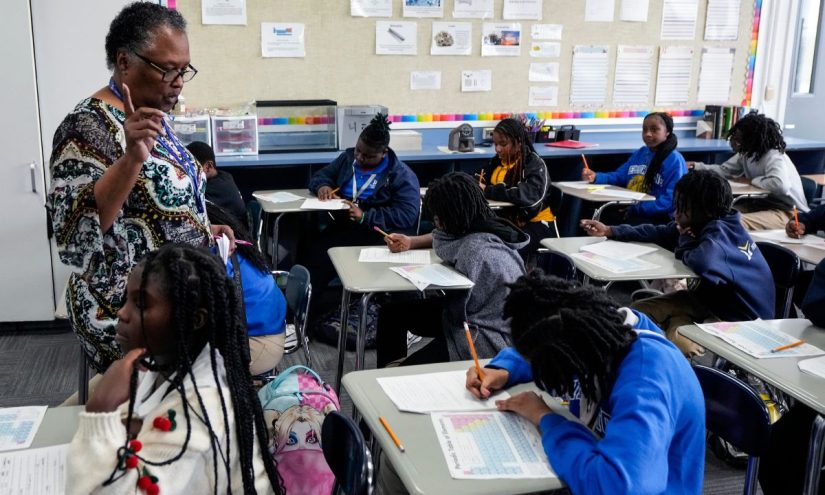
One example is the Freedom Schools Literacy Academy, a five-week summer program offered both virtually and in person at four elementary schools in Philadelphia. It brings together high school and college students who serve as apprentices in classroom- based teaching roles. College-aged Servant Leader Apprentices facilitate instruction, while high school students assist with small-group lessons and classroom activities as Junior Servant Leaders, all under the guidance of experienced educator-coaches who also provide professional development and structured feedback cycles. This builds instructional skill, leadership and a foundation in Black pedagogy. Together, participants gain hands-on experience while supporting students entering first through third grade.
As States Limit Black History Lessons, Philly Gets it Right, Researcher Says
In 2025, 82 apprentices participated across the five sites. In Servant Leader Apprentice-led classrooms, apprentices delivered culturally responsive literacy instruction, academic enrichment and social–emotional support to approximately 10 elementary students. Through this work, the apprentices experienced the demands of planning, leading and supporting a classroom — helping many begin to see teaching as both a craft and a viable career.
This shift in how participants view teaching is reflected in survey data: By the end of the five weeks, interest in teaching among Servant Leader Apprentices rose from 89% to 95%, and 77% of all participants indicated they plan to return the following year. One Junior Servant Leader said, “I learned to be more confident … building bonds was my favorite part.” A Servant Leader Apprentice shared something similar: “My favorite part … was getting to know the scholars and building relationships in my classroom.” In these moments, teaching shifts from an abstract profession to a commitment rooted in trust, care and a growing sense of responsibility.
Student outcomes improved as well. Nearly nine in 10 scholars in the program met or exceeded literacy growth goals. Students reported increased confidence and a stronger sense of self, and 90% of participating families plan to return. For many students, even if only for the summer, the classroom became a place where academic growth and cultural affirmation went hand in hand — demonstrating the kind of learning environment that attracts and retains future educators.
While not every apprentice enters the classroom immediately, the academy serves as an entryway to a longer pathway into the profession, connecting participants to structured fellowship programs that provide academic support, professional development, financial assistance and ongoing guidance as prospective educators progress toward the profession.
Taken together, these outcomes point to a larger conclusion: Rebuilding the Black teacher pipeline will require more than initiatives aimed at strengthening the overall educator workforce. It will need investments in opportunities that allow young Black people to experience teaching and see themselves reflected in it. Programs like the academy create those opportunities, helping aspiring educators build confidence in their ability to influence the futures of the students they serve.
Why America’s Schools Need More Black Male Educators — Like Me
For policymakers, this means investing in early, structured pathways — such as summer learning programs, career and technical education courses and teaching fellowships — as a core strategy for expanding entry points into the teaching profession. Investments in these programs allow young people to discover, through practice, that teaching is not simply a job, but a form of freedom work, a commitment to the communities that shaped them and to the students who will shape what comes next.
At a time when Pennsylvania’s Black educator pipeline remains constrained, failing to invest in these emerging educators will only reinforce the conditions that produced the historic gap.
The question is not whether talent or interest exists — it does. The question is whether legislators, school systems and advocacy organizations will build and invest in targeted pathways that directly address the specific harm done to the Black teacher pipeline in the wake of Brown v. Board of Education.
Did you use this article in your work?
We’d love to hear how The 74’s reporting is helping educators, researchers, and policymakers. Tell us how
