

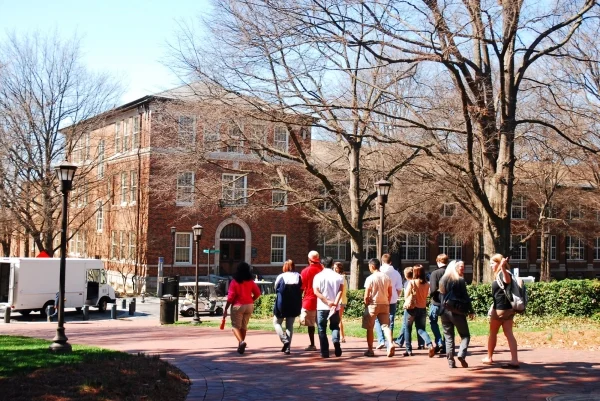
Students and their families are more prepared to apply for higher education with 85 percent of families having toured a university campus or met with a college counselor in 2026, up from 77 percent in 2020.
Kirkikis/iStock Editorial/Getty Images Plus
More students are planning to pursue college, as 72 percent of high school seniors intend to pursue an associate or bachelor’s degree this year compared to 63 percent in 2020, the results of a new survey show.
The polling, led by Sallie Mae, a private student lender, and Ipsos, a global market research firm, also shows that students and their families are generally more prepared to apply for higher education, with 85 percent of families having taken steps such as touring university campuses or meeting with college counselors. That’s up from 77 percent in 2020.
What prospective learners generally remain unprepared for is financing their education. Although savings are up from an average of $26,266 in 2020 to $42,307 in 2026, only 38 percent of families have discussed expected salaries in the student’s anticipated field of study, and even fewer (28 percent) have discussed how those potential earnings compare to the cost of college.
“The shift we’ve seen since the last time we conducted this study in 2020 reflects meaningful progress in how families are preparing for education after high school. Families are motivated and engaged in the planning process, but that hasn’t consistently translated into more informed decision-making,” the senior research manager at Ipsos, Dan O’Leary, said in a news release about the data.
The survey, which was conducted in January and included responses from just over 1,000 high school students and 1,000 parents, is nationally representative.
In addition to a lack of preparation for financing their degree, the survey’s results also show that families lack information about means of assistance like scholarships and loans.
Rick Castellano, vice president of Sallie Mae, said in the release that he was encouraged by the college-pursuit results. Now, he hopes more information can be shared to fill the remaining gaps.
“Families continue to believe higher education is worth the investment, and their actions reflect that confidence,” he said. “But families could also benefit from clearer conversations about long-term outcomes to ensure their investment pays off long after graduation.”
